

REQUEST DEMO
Robot CATALOG will be sent to your mailbox immediately after submission.
SUBMIT
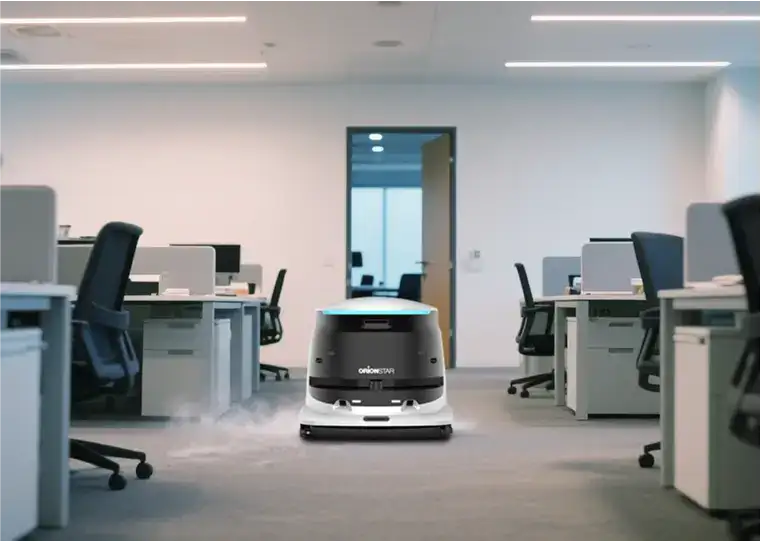
As hybrid work models create unpredictable occupancy and elevate hygiene expectations, Building Management in corporate offices faces mounting pressures from high janitorial staff turnover, rising operational costs driven by wage compression, and strict compliance demands. To address these labor, cost, and regulatory challenges, facility leaders are increasingly turning to commercial cleaning robots as a reliable, automated solution to maintain clean workspaces and optimize resource allocation.
The OrionStar CleaniBot S55 Pro exemplifies these advanced autonomous capabilities by integrating multiple floor-care functions, including sweeping, scrubbing, vacuuming, and dust mopping, into a single robotic platform designed for routine facility maintenance. Utilizing a multi-sensor system that includes LiDAR, a stereo camera, and ultrasonic sensors, the unit is engineered for safe autonomous path planning and obstacle avoidance in busy office environments. According to manufacturer data, it can map areas up to 10,000 square meters and offers extensive operational stamina, delivering up to 1,368 square meters per hour of cleaning efficiency in its sweep and vacuum modes, alongside up to 28 hours of runtime during quiet dust mopping operations.
Corporate lobbies experience constant foot traffic and require high visual standards to maintain a professional company image. Autonomous floor-cleaning robots can frequently dust mop or scrub these expansive hard floors during off-peak hours, ensuring high-quality, quiet maintenance without disrupting arriving guests.
Long, repetitive hallways connecting different office departments are highly time-consuming for manual cleaning crews to maintain daily. Commercial cleaning robots excel in these linear environments, utilizing laser-guided edge cleaning to efficiently cover the distance while safely navigating around walking employees.
Office kitchens and breakrooms are prone to unexpected spills, dropped debris, and heavy daily usage from staff. Robots equipped with combined sweeping, vacuuming, and scrubbing capabilities can handle diverse floor types and varying soil levels to restore hygiene in these mixed-use zones.
Conference rooms often feature carpeted surfaces and closely arranged furniture, presenting a challenge for large, traditional cleaning equipment. Intelligent robots can transition into specialized vacuuming modes and utilize smart obstacle avoidance to maneuver around conference tables and chairs, keeping the space clean for the next scheduled meeting.
Modern commercial cleaning robots function as active nodes within the broader smart-building ecosystem, capable of pushing validated data packets over facility Wi-Fi directly to Computerized Maintenance Management Systems (CMMS) or Building Management Systems (BMS). Through API integrations, these robots transmit vital operational data such as coverage maps, battery consumption, and brush wear, which can trigger alerts or generate work orders for preventive maintenance. In more advanced deployments, robotic fleets can integrate with elevator control software for cross-floor navigation and connect with IoT sensor networks to adjust cleaning schedules dynamically based on real-time room occupancy data.
By significantly minimizing environmental footprints and providing transparent operational data, automated cleaning technologies actively help Building Management achieve their long-term ESG and sustainability targets.
As workforce challenges persist and baseline hygiene standards rise, commercial cleaning robots are reshaping the way Building Management maintains corporate offices. By combining consistent floor-care quality, data-driven transparency, and measurable cost efficiency, these automated systems provide a highly practical response to modern facility demands. For organizations evaluating autonomous solutions to support their operational strategies, the OrionStar CleaniBot series offers a range of models designed to adapt to diverse commercial environments and specific spatial requirements.