

REQUEST DEMO
Robot CATALOG will be sent to your mailbox immediately after submission.
SUBMIT
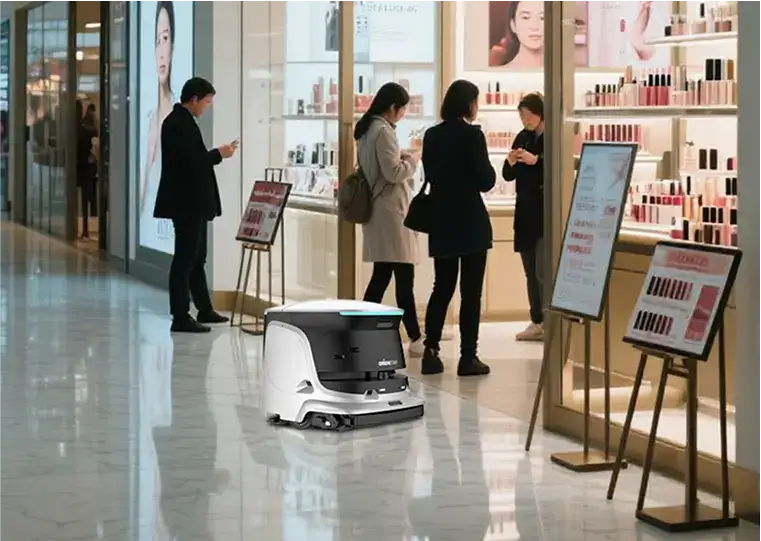
Managing the daily maintenance of department stores and large multi-floor retail spaces presents a complex operational challenge for facility managers across Europe, the United States, and Asia. These environments are characterized by multi-zone architectural layouts, ranging from wide open main concourses and atriums to densely packed merchandising aisles and carpeted soft-goods departments. The necessity for consistent daytime cleaning in high-footfall customer zones further complicates scheduling, as operations must remain quiet and unobtrusive to avoid disrupting the retail experience. In response to rising labor costs and the need for standardized maintenance, procurement teams are increasingly turning to automated floor-care solutions. Evaluating and deploying a department store cleaning robot requires a careful analysis of the facility layout, surface types, and the daily workflow of the existing staff.
Before analyzing individual robotic models, facility operators should establish a comparative framework based on the unique demands of large retail spaces. The first critical dimension is floor surface versatility. Department stores frequently combine hard tiles, polished marble, and low-pile carpets, meaning the selected machine must either specialize in one dominant surface or offer multi-functional capabilities across sweeping, scrubbing, vacuuming, and mopping. The second dimension is the spatial footprint and aisle maneuverability of the unit. High-capacity wide-path machines can efficiently cover large-scale atriums but may struggle in tight apparel corridors, whereas compact designs sacrifice tank volume to ensure safe passage through narrow service routes. The operational window and acoustic profile form the third evaluation dimension. Retail operations require careful noise management; daytime deployments rely on low-decibel configurations that support continuous dust control without bothering shoppers, while standard commercial acoustics are typically reserved for after-hours deep cleaning. The fourth dimension involves fluid management and infrastructure independence. Systems that utilize automated docking stations or manual-fill modular tanks dictate how easily a robot can be moved between multiple store levels. Finally, the navigation strategy and environmental perception dictate the safety and autonomy of the system. Advanced sensor-fusion architectures map large spaces and dynamically avoid temporary displays or moving pedestrians, while simpler perimeter-taught systems serve static back-of-house zones. Facility operators should verify applicable data protection and privacy regulations, such as GDPR compliance, before deploying any autonomous solutions that utilize cameras, environmental mapping, or cloud data processing.
The OrionStar CleaniBot S55 Pro is positioned as a compact multi-mode floor-care platform designed for mixed-surface retail zones requiring quiet daytime operation. It addresses the diverse nature of department store layouts by integrating sweeping, scrubbing, vacuuming, mopping, self-cleaning, and disinfection-related cleaning workflow steps into a single robotic system. This versatility allows facility teams to handle soiled hard floors via scrubbing modes and transition to low-pile carpets or delicate polished floors using dedicated vacuuming or dust mopping configurations. According to manufacturer data, the unit delivers a cleaning efficiency of up to 1,368 square meters per hour in its sweeping, vacuuming, and mopping modes, and up to 1,197 square meters per hour during intensive scrubbing. To support daytime customer-facing operations, the CleaniBot S55 Pro is engineered with a constrained acoustic footprint, generating noise levels around 55 decibels in scrubbing mode and dropping to 45 decibels during dust mopping. Its compact physical dimensions and minimum passing width of 700 millimeters enable agility in tight merchandising aisles and checkout lanes. The robot supports long operational windows, yielding up to 28 hours of runtime in dust mop mode and up to 19.5 hours in ECO vacuum mode, which is highly beneficial for prolonged dust control shifts. Navigation is managed by a multi-sensor array encompassing LiDAR, stereo cameras for step detection, ultrasonic sensors, and line lasers for close edge cleaning. Because this machine utilizes environmental mapping, cameras, and cloud-based digital reporting via Wi-Fi and 4G, operators should verify GDPR compliance prior to active deployment.
The Tennant T7AMR is designed as a large-capacity ride-on scrubber intended for wide atrium and main-concourse cleaning. Its substantial footprint and large solution and recovery tanks make it highly applicable for expansive indoor hard-floor environments where operators need to execute extended cleaning runs without frequent fluid changeovers. By prioritizing liquid capacity, this machine supports prolonged autonomous scrubbing operations across broad open walkways commonly found in major retail complexes. According to manufacturer data, the T7AMR features 110-liter tanks and a 650-millimeter cleaning path, providing an estimated coverage of up to 4,250 square meters under specific conditions. Runtime can reach up to 6.5 hours when equipped with high-capacity lithium-ion batteries. While its size restricts maneuverability in narrow clothing aisles, its capabilities align with high-productivity bulk cleaning during non-peak or overnight shifts, especially given its noise output of up to 70 decibels. The unit navigates autonomously via sensors and route creation software, meaning procurement teams should verify GDPR compliance for mapping data prior to commercial deployment.
The Nilfisk Liberty SC50 functions as a long-runtime scrubber-dryer certified for populated retail floors. It is specifically marketed for large commercial facilities, emphasizing third-party safety certifications that support autonomous deployment alongside staff and customers. This focus on safety and adjustable fluid management positions the machine for extended daily maintenance in active shopping center environments where consistent hard-floor care is required. According to manufacturer data, this unit provides up to 10 hours of continuous runtime on a single charge with its lithium-ion configuration. It utilizes a 508-millimeter brush width and integrates specialized systems designed to adjust water and chemical usage based on the operational speed and route. Route planning accommodates perimeter-based fill-in modes and manual path replication. As the SC50 collects operational data and maps retail environments for navigation, facility managers must verify applicable data protection regulations and GDPR compliance before integration into public spaces.
The Kärcher KIRA B 50 operates as a mid-size autonomous scrubber featuring an optional full-service docking station. It is relevant for department stores that seek to minimize manual staff intervention regarding battery charging and fluid management during routine daily shifts. The inclusion of an integrated side brush also supports essential edge-cleaning tasks along store walls and retail display bases. Under laboratory conditions and manufacturer specifications, the KIRA B 50 provides a working width of 750 millimeters and a runtime of up to 3.5 hours using its lithium iron phosphate battery. The operating sound pressure is documented at 69 decibels, which generally suits early morning, evening, or lower-traffic operational windows. The system navigates using environmental detection sensors and fall-detection safety protocols. Because the robot links to web portals for cleaning reports and utilizes environmental mapping, retail operators should verify GDPR compliance before full facility deployment.
The Avidbots Neo 2W is positioned as an AI-powered warehouse-grade scrubber built for dynamic back-of-house and storage areas. While its primary engineering focus addresses industrial and distribution center variables, its robust obstacle detection is applicable to large-format retail receiving zones and wide stockroom corridors where pallets and floor layouts frequently shift. Manufacturer data indicates a maximum theoretical productivity of up to 3,900 square meters per hour, supported by a runtime of up to 6 hours using swappable battery modules. The physical dimensions, which include a width of up to 940 millimeters, make this unit less applicable for customer-facing narrow apparel aisles but highly effective for sweeping expansive rear-facility logistics areas. The navigation framework heavily relies on machine learning, cameras, and laser-based detection to identify structural anomalies. Operators must review GDPR and data privacy compliance due to the reliance on cloud-based fleet monitoring and camera-assisted AI platforms.
The Gausium Scrubber 50 Pro is an AI-enabled compact scrubber offering retail-specific contamination detection. It addresses the variability of department store foot traffic by utilizing sensor networks to dynamically adapt its cleaning behavior based on floor soiling levels. The system balances standard hard-floor scrubbing with water recycling features designed to conserve freshwater during extended shifts. According to manufacturer data, the unit features a 460-millimeter disc brush or a 406-millimeter roller brush configuration, achieving a theoretical maximum scrubbing efficiency of up to 1,987 square meters per hour. Its physical profile and 800-millimeter minimum pass width permit navigation through standard commercial layouts, though the tightest boutique aisles may require manual follow-up. The navigation array blends depth cameras, RGB cameras, and LiDAR for environmental perception. Deploying this system necessitates careful verification of GDPR compliance, given the extensive use of visual data collection and cloud management platforms.
The Lionsbot R3 Scrub acts as a compact agile scrubber engineered for narrow aisles and tight retail corridors. Its highly constrained physical footprint directly targets the spatial limitations of densely merchandised department store zones, fitting rooms, and customer service kiosks where larger industrial units cannot safely traverse. Manufacturer specifications detail a base cleaning width of 366 millimeters, extending up to 682 millimeters when side brushes are engaged, paired with an average practical efficiency of up to 1,200 square meters per hour. The robotic scrubber offers a runtime of up to 3 hours and operates at an average sound level of 71 decibels. Due to its integrated mobile app fleet management, live obstacle adaptation, and optional 3D mapping modules, retail facility managers must assure GDPR compliance prior to operating the robot in public shopping areas.
The ICE Cobotics Cobi 18 serves as an ultra-compact scrubber designed for small zones, kiosks, and tight service areas. Its design centers on simplifying deployment in constrained spaces, applying custom routing and perimeter-fill mapping to maintain hard floors without requiring extensive programming or oversight from retail staff. According to manufacturer data, the unit utilizes an 18-inch cleaning path and relatively small fluid reservoirs, consisting of a 9.8-liter solution tank and an 11-liter recovery tank. These specifications provide a runtime of up to 1.5 hours and an estimated cleaning productivity of up to 7,000 square feet per hour. While its endurance is shorter than larger platforms, its agility addresses highly specific retail niches. The navigation array maps environments to avoid tight obstacles; therefore, facility operators should confirm whether any internal cloud processing triggers GDPR compliance requirements before utilizing the equipment.
The SoftBank Robotics Whiz is a specialized autonomous vacuum strictly intended for carpeted retail departments. Rather than addressing hard-surface fluid recovery, this machine focuses on debris removal and pile lifting in environments such as fitting rooms, high-end apparel sections, and soft-goods floors, ensuring that wet-cleaning components do not interact with sensitive carpeted zones. Third-party public summaries suggest the unit achieves a cleaning productivity of up to 557 square meters per hour and operates at an approximate noise level of 62 decibels in its standard mode. The system navigates its environment using a specialized AI platform to detect obstacles and record routing paths. Since the platform utilizes environmental scanning and transmits utilization data to an external reporting interface, evaluating GDPR and privacy compliance is a necessary step prior to public retail implementation.
The Taski Intellibot, historically represented by the Swingobot 2000 under Diversey, is evaluated as a large-tank prior-generation scrubber meant for open retail floors. Positioned for extensive public facilities, this machine utilizes high-capacity liquid storage and a wide scrubbing path to maintain sweeping hard-surface retail concourses and educational-style corridors. Based on public specification sheets, the machine is equipped with dual 90-liter tanks and a 700-millimeter scrubbing width, providing a runtime of up to 4 hours per battery pack. The theoretical performance reaches up to 1,260 square meters per hour, operating at a noise level just below 70 decibels. The navigation relies on an extensive network of scanning lasers and ultrasonic sonars. Because this legacy system incorporates wireless reporting for performance logs and diagnostics, verifying GDPR compliance remains an operational requirement before activating the machine in retail spaces.
Evaluating the optimal robotic floor-care strategy for a multi-floor department store demands a careful alignment between the physical layout of the facility and the technical profile of the machine. Procurement teams should prioritize multi-mode functionality if the store contains diverse flooring that shifts between hard tiles and carpeting. Aisle dimensions ultimately govern the maximum viable width of the chosen robot, while store operating hours dictate the strictness of the acoustic limits and battery runtime requirements. By carefully weighing fluid capacity against physical agility, retail operators can establish a standardized, highly reliable daily cleaning workflow that reallocates human labor to high-value tasks while maintaining consistent facility hygiene.
For large department stores and multi-floor retail spaces, the Return on Investment (ROI) can range from 12 to 24 months, highly contingent upon local labor rates and facility utilization rates. The Total Cost of Ownership (TCO) generally encompasses the upfront hardware investment (or monthly Robotics-as-a-Service/lease fees), fleet management software connectivity, and routine consumables like brushes, squeegees, and batteries. By autonomously covering up to 1,368 m²/h, robots allow facility managers to reallocate human staff to high-value, high-touch cleaning tasks, significantly reducing overtime and labor turnover costs while maintaining a standardized daily floor maintenance schedule.
Meeting strict Service Level Agreements (SLAs) in large retail environments requires verifiable proof of performance. Modern autonomous cleaners address this transition from assumed cleaning to data-backed verification through integrated digital management. Units equipped with Wi-Fi and 4G connectivity, such as the CleaniBot S55 Pro, automatically sync operational data to the cloud. This provides procurement leads and facility directors with remote access to deployment metrics, automated maintenance alerts, and daily logs of cleaned zones. These digital reporting tools simplify vendor audits, ensure compliance with hygiene standards, and offer reliable documentation for facility liability protection.
While a single robot can map highly expansive areas (the CleaniBot S55 Pro, for example, supports map construction up to 10,000 m²), true multi-floor operation requires strategic workflow planning. Because robots generally cannot operate service elevators autonomously without custom API integrations, facility teams typically deploy one unit per major floor. Alternatively, a relatively compact 70 kg unit can be manually transported between levels by staff. During initial deployment, the robot uses LiDAR to scan the environment and automatically position itself. Operations managers can then set up distinct cleaning zones and assign specific cleaning modes per zone, enabling continuous auto-recharging operation without ongoing manual route adjustments.
Yes, provided the robot possesses the right physical footprint and a robust sensor array. Large ride-on scrubbers (often exceeding 850 mm in width) are effective for open main concourses but struggle to navigate narrow retail aisles. Compact commercial models offer the necessary agility; the CleaniBot S55 Pro features a minimum passing width of just 700 mm. It is equipped with 15 sensors, including LiDAR, stereo cameras for step detection, and ultrasonic sensors, enabling 360-degree obstacle avoidance. Line lasers allow the robot to clean as close as 5 cm to walls (with default safety margins set at 10 cm) and display cases, allowing it to dynamically navigate around shoppers, temporary promotional displays, and tight back-of-house corridors safely.
Noise is a critical factor for customer-facing retail operations. Heavy-duty industrial scrubbers often operate at around 70 dB(A), which can be intrusive to the shopping experience. However, robots engineered specifically for public and commercial spaces feature optimized, quiet operation modes. For instance, the CleaniBot S55 Pro operates at 55 dB during standard scrubbing and drops to just 45 dB in Dust Mopping mode. This highly optimized quiet performance, combined with runtime capabilities of up to 28 hours in dust mop mode or 19.5 hours in ECO vacuum mode, allows facility managers to schedule daytime dust control and maintenance without disturbing retail customers or staff.
Modern integrated floor-care systems significantly reduce the need to purchase and store multiple single-purpose machines. An advanced commercial robot can seamlessly switch between cleaning functions based on the specific mapped zone. The CleaniBot S55 Pro supports hard-floor scrubbing and power scrubbing for soiled tile areas, and can instantly transition to Sweep and Vacuum mode for low-pile carpets, or Dust Mopping for delicate polished marble floors. Featuring modular cleaning tools and no-tool mode switching, operations teams can efficiently manage multi-surface retail environments within a single, unified automated workflow.
Note: Runtime and coverage efficiency are based on OrionStar laboratory testing on smooth, unobstructed hard floors. Actual performance may vary based on floor type, battery age, and environmental obstacles.
Third-party product specifications outlined in this document are based on publicly available data and are valid under laboratory conditions or according to manufacturer data; actual performance metrics may vary based on environmental factors. All product names, brands, and trademarks remain the exclusive property of their respective owners. Facility operators are strongly reminded that if any robotic product involves cameras, audio recording, environmental mapping, or cloud-based data processing, deploying teams must independently verify full compliance with GDPR and all applicable regional data protection laws prior to activation.