

REQUEST DEMO
Robot CATALOG will be sent to your mailbox immediately after submission.
SUBMIT
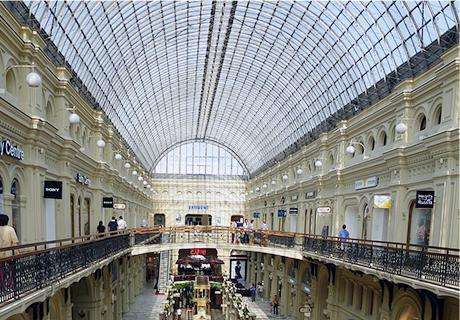
The Facilities Services industry is currently facing profound challenges in maintaining shopping malls, navigating a structural labor shortage where custodial turnover can reach 75%, daily absenteeism hits 15%, and manual floor care consumes up to 45% of total operating expenses. Furthermore, heightened post-pandemic hygiene expectations and strict tenant lease compliance requirements put unprecedented pressure on building service contractors to deliver consistent, verifiable results. To address these compounding issues of labor scarcity, rising costs, and stringent compliance standards, facility managers are increasingly turning to commercial cleaning robots as a reliable, scalable solution to modernize retail floor maintenance.
As an example of these industry-wide capabilities applied in practice, the OrionStar CleaniBot C5 is designed to execute autonomous floor-scrubbing using smart obstacle-avoidance systems for safe operation in bustling public spaces. According to manufacturer data, the unit can map areas of up to 10,000 square meters and plan optimal cleaning paths using a cloud-learning optimization approach. To support continuous operations without extensive human intervention, it features an automated docking station where it manages its combined 90-liter water tank system for automatic clean-water refilling and waste-water discharge, enabling a maximum cleaning capacity of up to 1,980 square meters per hour under ideal, unobstructed conditions. This is further supported by a 1.5-hour fast-charging system and up to 3 hours of active scrubbing runtime per charge to effectively manage multi-shift operations.
Food courts experience constant foot traffic and frequent spills, creating high-visibility hygiene challenges that demand immediate and continuous attention. Autonomous robots address this by navigating dynamically around shifting chairs and tables while applying consistent scrubbing pressure to remove sticky residues and heavy soil loads.
Expansive mall atriums serve as the centerpiece of the retail environment but require massive labor hours to mop and sweep manually. Cleaning robots efficiently cover these vast, open square footages using optimized path planning, ensuring a pristine appearance for shoppers without exhausting the custodial team.
Parking structures accumulate heavy dirt, automotive fluids, and debris, presenting an abrasive environment that degrades traditional cleaning equipment. Industrial-grade robots manage these tough conditions by safely maneuvering around moving vehicles and structural pillars to deliver heavy-duty scrubbing capabilities.
Long retail corridors require scheduled, uniform cleaning to comply with tenant lease agreements and maintain a premium shopping atmosphere. Automated scrubbers perform reliable passes along these walkways during both operating and off-hours, providing verifiable documentation of completed routes.
Commercial cleaning robots function as mobile IoT nodes capable of deep integration with existing shopping mall infrastructures, including Building Management Systems (BMS) and elevator control software for seamless navigation across multiple floors. Operational data, such as coverage maps, battery consumption, and brush wear, flows directly into Computerized Maintenance Management Systems (CMMS) via REST API connections over facility Wi-Fi. This integration enables demand-based cleaning triggered by occupancy sensors rather than fixed schedules, while threshold breaches automatically generate work orders routed to technicians for consumable replacements or maintenance.
By driving resource efficiency and providing rigorous compliance data, automated cleaning technologies play a foundational role in advancing the environmental, social, and governance objectives of the modern facility management sector.
Commercial cleaning robots are fundamentally changing the way the Facilities Services industry approaches the maintenance and management of shopping malls. By alleviating the pressures of chronic labor shortages, rising operational costs, and stringent hygiene standards, these autonomous systems provide a scalable pathway to more reliable and verifiable floor care. As retail environments continue to prioritize efficiency and compliance, equipment lines like the OrionStar CleaniBot series offer various models to accommodate the diverse spatial and operational requirements of complex commercial properties.