

REQUEST DEMO
Robot CATALOG will be sent to your mailbox immediately after submission.
SUBMIT
Wholesale Clubs face significant pressure to maintain clean backroom storage environments while contending with persistent labor shortages, rising operational costs, and strict safety compliance mandates. In these dynamic, always-on logistics hubs, traditional manual floor maintenance often falls short in delivering consistent quality and efficiency. To address these challenges, facility operators are increasingly turning to commercial cleaning robots as a strategic solution to automate floor care, reduce workforce dependency, and maintain rigorous hygiene standards without disrupting daily warehouse activities.
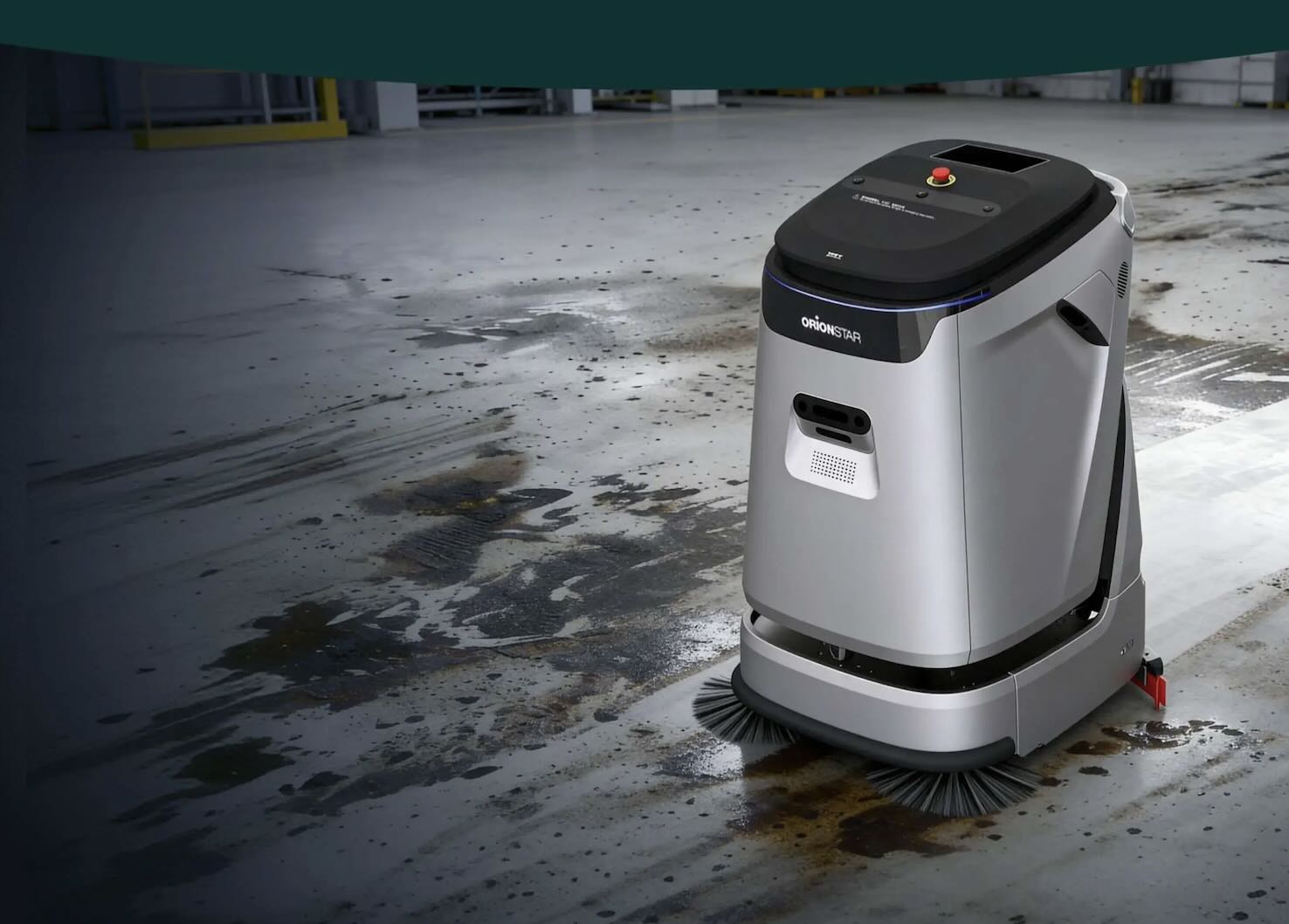
The OrionStar CleaniBot C5 illustrates how these autonomous capabilities are implemented in industrial environments through its integrated floor-scrubbing design. According to manufacturer data, the unit can map areas up to 10,000 square meters for autonomous route planning while utilizing multiple sensors to safely navigate around dynamic warehouse obstacles. It supports extended facility operations with an automatic workstation that handles clean-water refilling and waste-water discharge, enabling a maximum cleaning capacity of up to 1,980 square meters per hour under optimal conditions. Furthermore, its dual-rolling-brush system applies up to 25 kg of downward pressure, demonstrating the capacity to address stubborn grime on warehouse floors.
Receiving docks are constantly exposed to external weather elements, tire marks, and packaging debris from incoming shipments. Autonomous robots can be scheduled to run frequent, localized cleaning cycles during off-peak docking hours to immediately mitigate slip hazards. Their heavy-duty scrubbing capabilities efficiently remove stubborn grime before it is tracked deeper into the wholesale club.
These zones generate a high volume of wood chips, wrapping films, and fine industrial dust from continuous pallet breakdown operations. Cleaning robots equipped with robust obstacle avoidance can navigate safely around temporary pallet stacks and moving forklifts. By consistently sweeping and scrubbing these dynamic zones, they prevent fine dust from accumulating and degrading the indoor air quality.
Maintaining hygiene in temperature-controlled corridors is critical for food safety compliance, yet the harsh environment makes manual cleaning physically taxing. Automated scrubbers can operate in these chilled environments to remove condensation and spills without exposing human workers to prolonged cold. Their precise water application and vacuuming help floors dry more rapidly, reducing the risk of ice buildup.
The long, narrow layouts of bulk storage aisles require extensive walking to clean manually, which consumes significant labor hours. Robots utilizing autonomous path planning excel in these linear spaces, efficiently covering large square footage while tracking exactly which aisles have been serviced. This systematic approach helps ensure that even the deepest warehouse sections receive consistent, documented maintenance.
Commercial cleaning robots increasingly function as connected IoT devices within wholesale club facility management frameworks. Their digital management and connectivity capabilities allow operational data such as cleaning coverage and machine status to feed into existing Building Management Systems (BMS) for coordinated scheduling with HVAC and lighting zones. Additionally, the operational data generated during cleaning cycles can support Computerized Maintenance Management Systems (CMMS) by providing runtime-based inputs for preventive maintenance scheduling, which has been shown to reduce unnecessary service visits by 20% to 30% compared to fixed-interval approaches, while creating an auditable trail for facility compliance.
By optimizing resource efficiency and providing verifiable operational data, commercial cleaning robots play a crucial role in advancing the broader sustainability and ESG commitments of modern wholesale clubs.
Commercial cleaning robots are significantly improving how the wholesale club industry approaches the maintenance of backroom storage, shifting floor care from a labor-intensive challenge to an automated, data-driven process. By addressing workforce shortages, lowering operational costs, and improving safety compliance, these autonomous systems provide a measurable operational advantage. The OrionStar CleaniBot series provides various models designed to adapt to different facility layouts and specific environmental demands, offering options for operators evaluating automated maintenance solutions.
Note: Industry statistics cited in this article are drawn from publicly available sources including the U.S. Bureau of Labor Statistics, Sproutmation, and published warehouse industry reports. Actual cleaning efficiency, ROI, and payback periods may vary depending on facility size, floor conditions, labor rates, and utilization. The CleaniBot C5 is designed for commercial floor cleaning and does not guarantee medical-grade sterilization.