REQUEST DEMO
Resources > Blogs > Optimizing Event Turnarounds: How Commercial Cleaning Robots Support Banquet Services in Convention Centers

Optimizing Event Turnarounds: How Commercial Cleaning Robots Support Banquet Services in Convention Centers

2026-06-25 22:40 OrionStar

Optimizing Event Turnarounds: How Commercial Cleaning Robots Support Banquet Services in Convention Centers

Introduction

Banquet services operating within convention centers face considerable operational challenges marked by a high annual janitorial turnover rate, rising labor costs, and increasingly strict regulatory compliance pressures regarding workforce workloads. Managing these large, dynamic venues demands high-speed turnarounds between events where unpredictable foot traffic and rapid layout reconfigurations strain traditional manual cleaning teams. To address these compounding issues and help maintain professional-grade presentation for every function, facility operators are increasingly deploying commercial cleaning robots as a reliable, scalable, and efficient automated solution.

The Growing Need for Smarter Cleaning in Convention Centers

  • Banquet managers and event service directors must overcome a severe labor shortage and turnover crisis, as the janitorial industry experiences an estimated $1 billion annual loss directly attributed to unfillable vacancies.
  • Tight turnaround windows put immense pressure on cleaning operations, requiring ballrooms and event halls to be quickly reconfigured and cleaned overnight to prepare for the next day's functions.
  • Extreme fluctuations in foot traffic and dynamically shifting floor plans frequently disrupt standard cleaning routines and can challenge standard navigation systems, causing them to lose localization mid-task.
  • Rising operational expenses present a critical hurdle, with labor accounting for up to 80% of total cleaning costs alongside an 8% wage increase across the building services sector.

How Commercial Cleaning Robots Can Help

  • Advanced LiDAR navigation and autonomous path planning allow these machines to seamlessly adapt to frequently changing event layouts and temporary partition walls.
  • Intelligent obstacle avoidance systems ensure safe, uninterrupted operation even in dynamic environments with sudden crowds or unexpected debris left behind after large banquets.
  • Auto-charging and automated docking capabilities enable continuous, multi-shift operation without human intervention, which is essential for meeting tight overnight turnaround windows.
  • Real-time monitoring and cloud-based fleet management provide operators with instant visibility into cleaning progress and machine status across massive event spaces.
  • Because these platforms utilize mapping technologies and environmental sensors to navigate, facility operators must verify that all data processing and operational logs comply with GDPR and other regional data privacy regulations. Spatial and visual data are processed locally for navigation and obstacle avoidance purposes only, without capturing or storing personally identifiable information.

A Closer Look: OrionStar CleaniBot C5 in Action

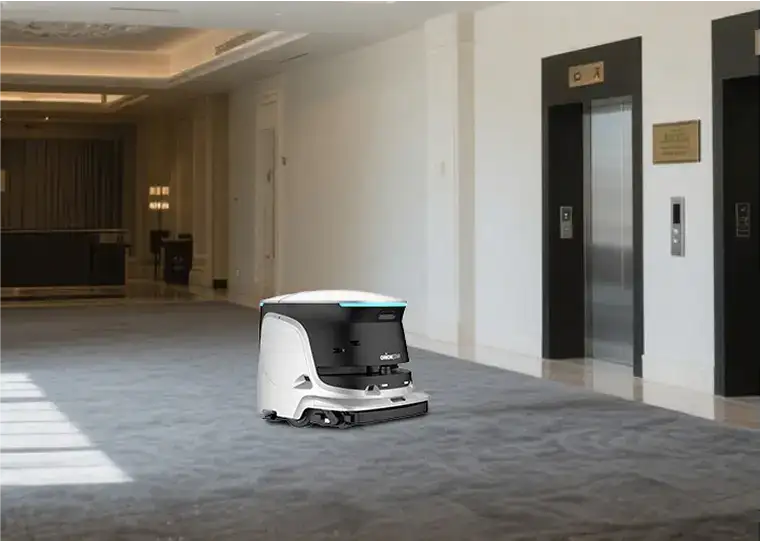
The OrionStar CleaniBot C5 demonstrates how these autonomous capabilities are implemented in heavy-duty commercial environments. To manage the immense scale of event facilities, the unit features a maximum theoretical cleaning area capacity of up to 1,980 square meters per hour according to manufacturer data (actual coverage may vary depending on spatial layout and obstacle density), supported by a 90-liter combined water tank system designed to reduce manual refill downtime. According to manufacturer data, it utilizes an autonomous mapping system capable of covering up to 10,000 square meters, paired with a self-cleaning workstation that handles automatic clean-water refilling and waste-water discharge. By combining these mapping capacities with a dual-rolling-brush system delivering up to 25 kilograms of downward scrubbing pressure, the machine provides consistent floor maintenance without requiring constant human oversight.

Benefits for Banquet Managers, Event Service Directors

  • Significant Labor Savings: By deploying an automated floor scrubber, facilities can generate between $70,000 and $135,000 in annual labor reallocation savings per 100,000 square feet covered.
  • Rapid Return on Investment: Facility operators consistently achieve a positive return on investment within 12 to 18 months of deployment, driven by reduced equipment rental costs and optimized off-hour operations.
  • Consistent Cleaning Quality: Automated systems ensure strict operational consistency, delivering comprehensive floor coverage on every programmed cleaning cycle to maintain high presentation standards.
  • Risk and Liability Reduction: Routine autonomous floor maintenance dramatically reduces the risk of inadequate floor care, directly mitigating the industry's $1.2 billion annual liability exposure from slip-and-fall incidents.
  • Automated Compliance Documentation: The robots automatically generate timestamped, sensor-mapped coverage logs, providing audit-ready records that fulfill strict regulatory and hygiene reporting requirements.
  • Enhanced Fleet Uptime: Through predictive maintenance data fed into facility systems, managed robotic fleets can maintain over 95% operational uptime, ensuring reliable performance during critical event turnarounds.

Real-World Applications

Exhibition Halls

These expansive areas face unpredictable post-event debris and dynamic floor plans that change daily. Commercial cleaning robots utilize advanced mapping and continuous path planning to dynamically route around temporary booths and stages, ensuring complete floor coverage even when physical layouts diverge from previously stored maps.

Corridors

Long transition spaces connecting various event zones require constant maintenance to remove tracked-in dirt and spills during peak operational hours. Autonomous scrubbers navigate these narrow, high-traffic arteries safely using intelligent obstacle avoidance, maintaining pristine walkways without interrupting the flow of attendees.

Meeting Rooms

Breakout rooms and VIP areas demand rapid, precise turnarounds between tightly scheduled panel discussions or catered sessions. Robots equipped with versatile cleaning modes can quickly refresh hard floors in these smaller, partitioned zones, allowing manual staff to focus on high-touch surfaces like tables and audiovisual equipment.

Lobbies

The main entrance areas set the first impression for banquet guests and suffer from continuous foot traffic and weather-related floor hazards. Automated floor maintenance systems run continuous cycles in these zones, deploying targeted scrubbing pressure to quickly remediate dirt while capturing coverage data to verify that safety standards are consistently met.

Integration With Other Smart Systems

Commercial cleaning robots function as critical mobile sensor platforms that seamlessly integrate with existing building infrastructure to optimize facility management. By connecting to Building Management Systems (BMS) and IoT sensor networks, these robots can receive anonymized, real-time occupancy data, allowing them to dynamically adjust their schedules to clean high-traffic zones while eliminating the labor waste associated with inspecting unoccupied areas. Furthermore, direct integration with Computerized Maintenance Management Systems (CMMS) ensures that every completed cycle automatically logs operational metrics, battery consumption, and consumable wear data via structured API pipelines, triggering predictive maintenance work orders that help the fleet maintain optimal performance.

Supporting ESG and Sustainability Goals

  • Automated floor care systems reduce chemical and water waste through precision dispensing mechanisms, directly supporting the stringent water conservation and resource management goals common in large-scale event facilities.
  • The robots optimize route planning and can coordinate with building automation to operate during off-peak energy hours, contributing to comprehensive venue decarbonization strategies.
  • Automated digital cleaning logs provide verifiable, transparent data on environmental performance and resource utilization, which is essential for facilities pursuing or maintaining LEED for Existing Buildings certifications.
  • Ultimately, integrating robotic automation provides the data-driven transparency and resource efficiency necessary to help the banquet and events industry meet its ambitious environmental, social, and governance targets.

Closing

Commercial cleaning robots are significantly improving how banquet services maintain hygiene and operational efficiency across large convention centers. By automating highly repetitive, labor-intensive floor care tasks, these intelligent systems enable facility operators to reallocate their workforce, reduce operational expenses, and help maintain a consistently high standard of presentation for every function. To accommodate the diverse spatial and functional requirements of different venue areas, the OrionStar CleaniBot series offers a range of models designed to adapt to specific environmental and facility challenges. This technological shift ensures that event spaces remain pristine, safe, and fully prepared to host complex, large-scale gatherings in an increasingly demanding market.