

REQUEST DEMO
Robot CATALOG will be sent to your mailbox immediately after submission.
SUBMIT
The Wedding Catering industry faces mounting operational pressures in event venues, navigating compounding challenges of severe labor shortages, escalating overhead costs, and increasingly strict compliance mandates for facility maintenance. With tight turnaround windows between back-to-back receptions and dynamically changing floor plans, traditional manual cleaning is becoming operationally challenging for event organizers and service providers. To overcome these compounding challenges, commercial cleaning robots are emerging as a strategic solution, offering autonomous efficiency and reliable floor maintenance to help operators meet hygiene standards while stabilizing long-term costs.
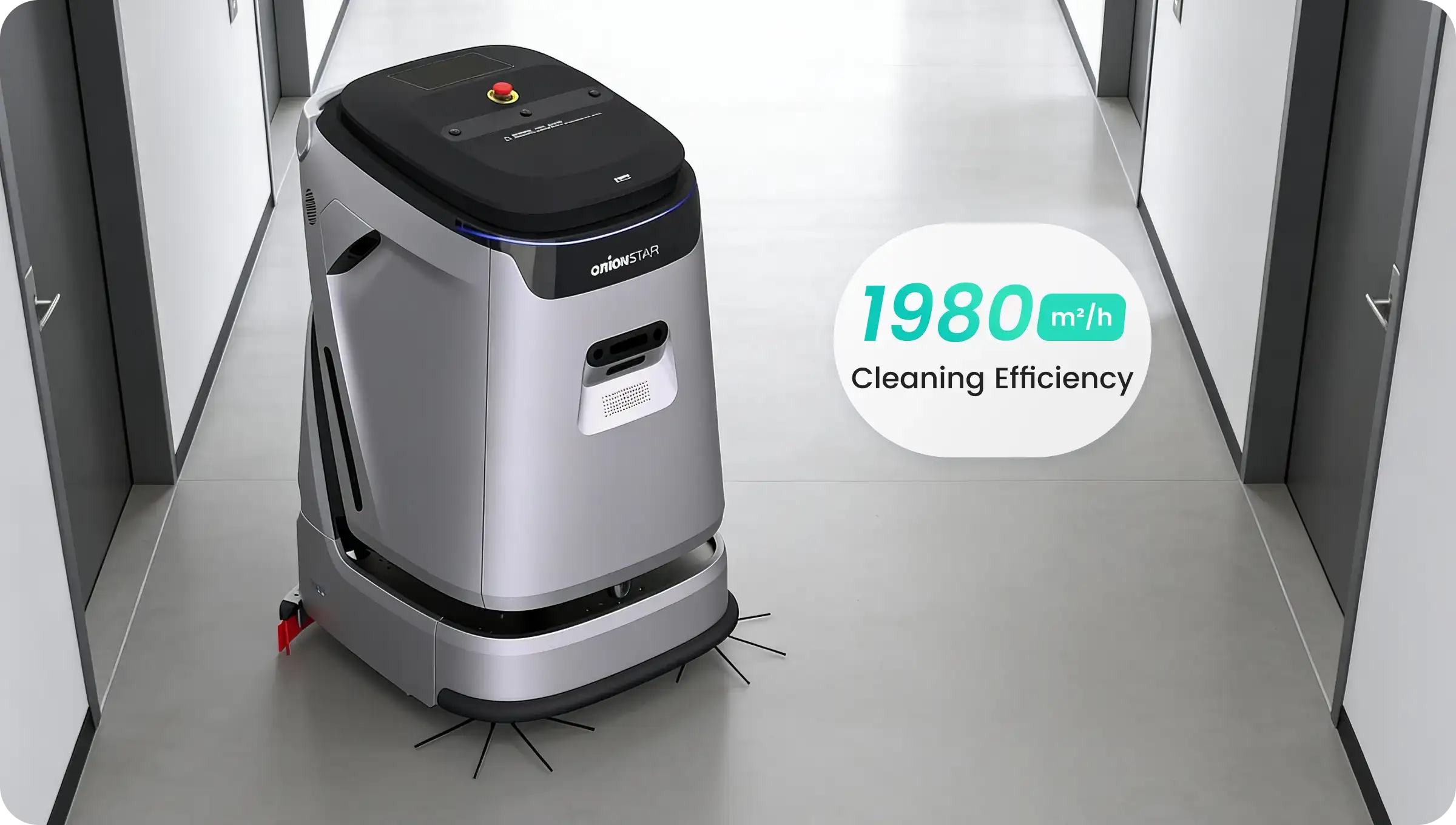
Illustrating these advanced capabilities in a real-world context, the OrionStar CleaniBot C5 demonstrates how autonomous technology handles complex hospitality environments. According to manufacturer data, this industrial-grade scrubber utilizes fully autonomous mapping for areas of up to 10,000 square meters, allowing it to navigate dynamic reception spaces without constant human supervision. It supports continuous operations with a scrubbing runtime of approximately 3 hours and features an automated docking station for self-cleaning and fluid management, significantly minimizing manual intervention. By operating at a noise level of less than 68 dB(A) and utilizing smart obstacle avoidance, the device safely maintains floors alongside catering staff during high-pressure venue turnarounds.
The primary event space presents the challenge of navigating complex, temporary setups like dining tables, dance floors, and decorative installations. Autonomous robots utilize advanced mapping and obstacle avoidance to dynamically path-plan around these changing layouts, ensuring thorough floor scrubbing without disrupting the reception infrastructure.
As the high-traffic entry point for wedding guests, the foyer quickly accumulates dirt, debris, and scuff marks that diminish the venue's premium aesthetic. Commercial cleaning robots can be deployed here for continuous, scheduled maintenance passes, maintaining a premium, consistently clean appearance throughout the duration of the event.
Catering prep zones and kitchen access routes suffer from heavy foot traffic, spilled liquids, and grease, creating slip hazards for busy culinary staff. Heavy-duty robotic scrubbers apply consistent downward pressure to efficiently remove stubborn stains and liquids in a single pass, keeping these critical pathways safe and hygienic.
Connecting various event zones, corridors require frequent cleaning but must remain accessible to guests and staff at all times. Robots with minimal passing widths easily navigate these narrower spaces, using low-noise operation to clean efficiently without blocking traffic or causing auditory distractions.
Commercial cleaning robots are increasingly functioning as mobile IoT nodes that seamlessly integrate into an event venue's broader smart building ecosystem. By connecting with Building Management Systems (BMS), these robots can receive real-time occupancy data or coordinate with HVAC and lighting schedules to deploy adaptive cleaning routines precisely when specific halls clear out. Furthermore, integration with Computerized Maintenance Management Systems (CMMS) allows the automated units to feed operational data and runtime hours into centralized facility dashboards, enabling predictive maintenance scheduling and creating audit-ready compliance logs for venue operators.
Ultimately, integrating automated cleaning data helps event organizers close credibility gaps by providing consistent, auditable metrics that satisfy the growing demand for verifiable sustainability performance.
Commercial cleaning robots are significantly optimizing the way Wedding Catering maintains event venues, shifting the industry from reactive, labor-intensive processes to highly efficient, data-driven floor care. As facilities continue to face compounding pressures from staffing shortages and operational costs, adopting autonomous technology offers a sustainable path forward for large-scale event operations. For those evaluating this technological transition, the OrionStar CleaniBot series provides multiple models designed to adapt to various spatial requirements and venue sizes, serving as a practical reference for modernizing hospitality infrastructure.