

REQUEST DEMO
Robot CATALOG will be sent to your mailbox immediately after submission.
SUBMIT
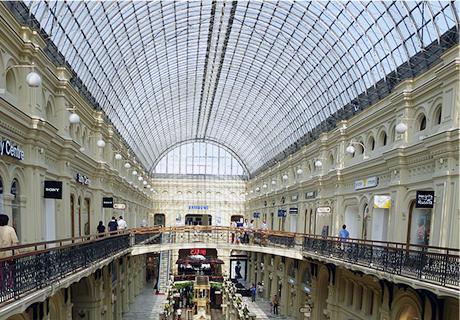
Workplace Management in shopping malls currently faces compounding operational challenges driven by chronic labor shortages, escalating operational costs, and stringent lease compliance requirements. As facility managers struggle with custodial turnover rates that industry reports suggest can reach up to 75% (according to industry data from PwC) and rising wage expectations, maintaining the heightened hygiene standards expected by modern consumers has become increasingly difficult and expensive. To address these overlapping hurdles of staffing volatility and budget constraints, commercial cleaning robots have emerged as a strategic, scalable solution that transforms how retail environments are maintained. Rather than replacing human workers, these automated systems bridge critical staffing gaps, absorbing repetitive tasks and freeing custodial teams to focus on higher-value, detailed maintenance.
Illustrating these industry-wide capabilities, the OrionStar CleaniBot C5 serves as an example of how autonomous technologies are deployed in large-scale environments. It applies autonomous navigation and mapping to manage spaces covering up to 10,000 square meters, utilizing a dual-rolling-brush system that provides 25 kg of downward pressure for heavy-duty scrubbing. To minimize human intervention, the unit incorporates an automated workstation that handles clean-water refilling and waste-water discharge autonomously. According to manufacturer data, it can achieve a maximum cleaning area capacity of up to 1,980 square meters per hour while operating at noise levels below 68 decibels, allowing it to function effectively in busy public retail zones alongside shoppers.
Performance metrics such as cleaning capacity and noise levels are based on standard laboratory testing conditions. Actual results may vary depending on floor types and environmental factors.
These high-visibility zones experience the heaviest foot traffic and are the first touchpoints for incoming shoppers, meaning they accumulate dirt rapidly. Cleaning robots utilize dynamic path planning to adapt to moving crowds safely, ensuring these massive open spaces maintain a consistently clean appearance throughout the day.
Subject to frequent spills, sticky residue, and dropped food, food courts present intense hygiene challenges that require immediate attention. Autonomous scrubbers equipped with heavy-duty pressure and continuous water recycling can systematically lift stubborn stains in a single pass, preventing slip hazards and maintaining a sanitary dining environment.
The long walkways connecting various storefronts require constant, repetitive cleaning that quickly fatigues manual custodial teams. Robots efficiently manage these extended stretches by following optimized routes, maintaining a uniform cleaning quality from one end of the mall to the other.
Moving between different structural zones often disrupts continuous cleaning workflows for facility teams. Advanced commercial cleaning robots handle these expansive, often utilitarian environments methodically, ensuring that the critical transition areas from vehicles to retail spaces remain free of accumulated debris and oil.
To maximize operational efficiency, commercial cleaning robots seamlessly integrate with existing smart building infrastructures within shopping malls. Through IoT-enabled communication, these units can interface directly with Building Management Systems (BMS) and elevator control software, facilitating autonomous multi-floor navigation without human assistance. Furthermore, real-time operational and environmental data collected by the robots acting as mobile IoT nodes can flow directly into Computerized Maintenance Management Systems (CMMS). This integration enables demand-based cleaning, where data from occupancy sensors dynamically triggers robotic deployment based on actual foot traffic and contamination levels rather than rigid, predetermined schedules.
By combining precise resource management with automated reporting, cleaning robots provide measurable environmental improvements that actively advance a property's broader sustainability objectives.
Commercial cleaning robots are streamlining and optimizing how Workplace Management maintains the extensive environments of modern shopping malls, shifting operations from reactive manual labor to proactive, data-driven automation. By addressing the core challenges of staffing, costs, and consistent hygiene, these technologies provide a stabilizing force for facility operators. As retail spaces continue to evolve, lines such as the OrionStar CleaniBot series offer various models designed to adapt to different spatial requirements and surface conditions. For facility managers aiming to build resilient operations, understanding these autonomous capabilities is a practical step toward modernized property maintenance.