

REQUEST DEMO
Robot CATALOG will be sent to your mailbox immediately after submission.
SUBMIT
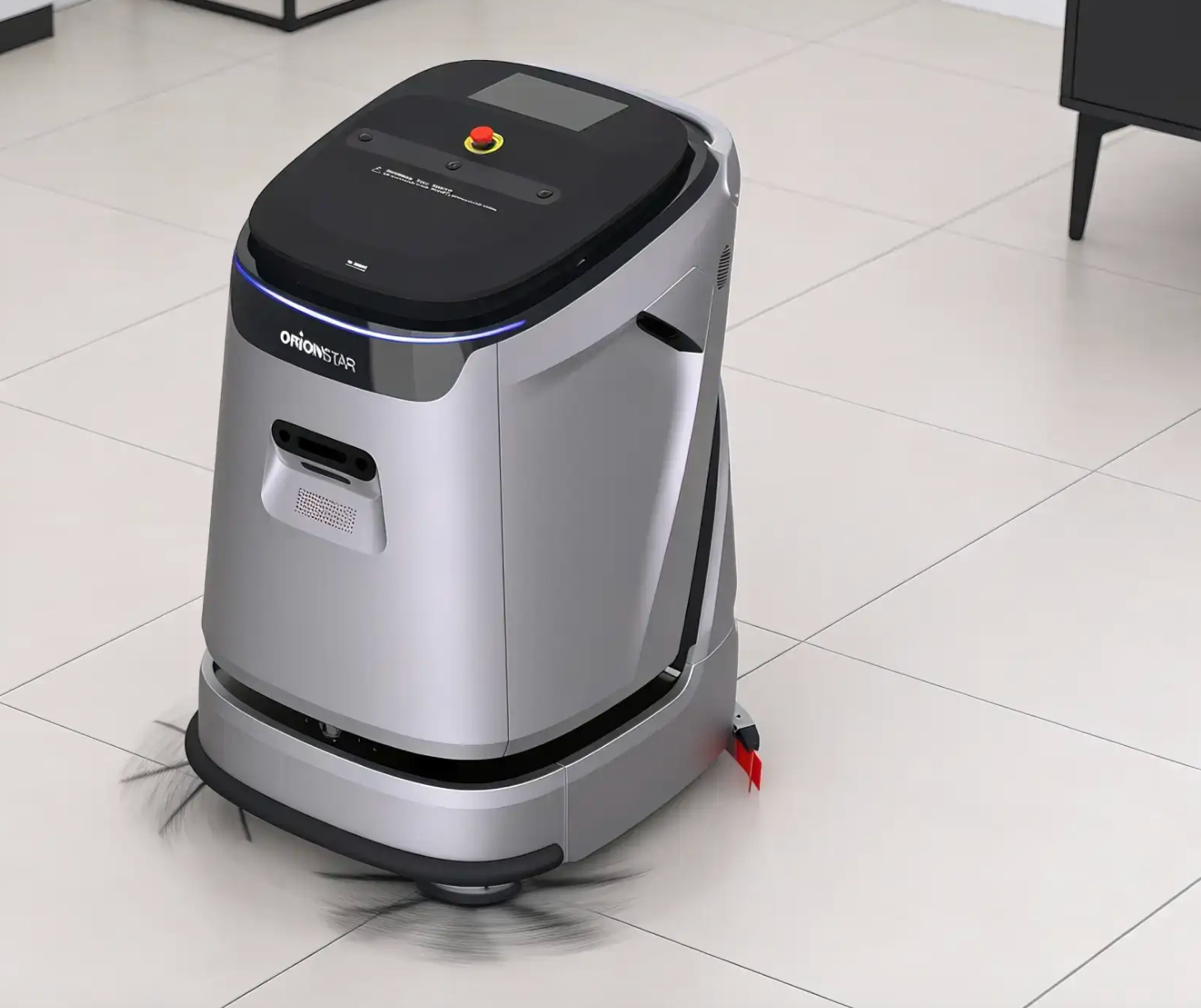
Industrial Catering operations in hospital cafeterias are currently navigating a convergence of critical challenges, including severe staffing shortages, escalating operational costs, and stringent infection-control compliance demands. Maintaining sanitary environments in high-traffic food service areas is essential for public health, yet facility directors struggle to maintain adequate coverage during nights, weekends, and peak patient inflow periods. To address these compounding pressures and ensure reliable sanitation, operators are increasingly turning to commercial cleaning robots as a practical, technology-driven solution.
The OrionStar CleaniBot C5 demonstrates these autonomous capabilities through an industrial-grade design tailored for demanding commercial environments. According to manufacturer data, the robot achieves a maximum cleaning area capacity of up to 1,980 square meters per hour (actual coverage may vary depending on spatial layout and obstacles) and utilizes a combined 90-liter water-tank system to minimize operational downtime. It further exemplifies automation through its self-cleaning workstation that handles clean-water refilling and waste-water discharge autonomously, safely navigating complex spaces while keeping noise levels below 68 dB(A) in standard mode to avoid causing excessive disturbance.
These large open areas experience heavy foot traffic, frequent food spills, and the continuous movement of chairs and tables throughout the day. Commercial cleaning robots utilize autonomous path planning to navigate around these changing layouts and obstacle avoidance to safely maintain the floors without disrupting the dining experience.
Kitchen floors accumulate heavy grease, dropped ingredients, and water, requiring intensive and frequent sanitation to meet strict food safety codes. Automated scrubbers apply consistent downward pressure to efficiently remove stubborn grime, ensuring hygiene standards are systematically met during off-peak hours.
High-traffic bottlenecks naturally form in these zones during meal times, leading to concentrated debris and liquid spills that pose immediate slipping hazards. Cleaning robots can be scheduled to perform targeted, quick-response spot cleaning between meal shifts to maintain a consistently safe environment for both staff and patrons.
These critical zones are prone to constant water splashing and localized flooding, demanding rigorous water recovery to prevent workplace accidents. Robots equipped with strong water absorption capabilities efficiently dry the floors, significantly reducing slip-and-fall risks for food service personnel moving rapidly through the area.
Commercial cleaning robots can seamlessly integrate with existing smart hospital ecosystems to maximize operational efficiency and building intelligence. By connecting with Building Management Systems (BMS), these robots coordinate automated cleaning schedules with building occupancy patterns and off-peak energy periods to optimize resource usage. Furthermore, the robots function as mobile IoT nodes that map floor conditions in real time, while their operational telemetry feeds directly into Computerized Maintenance Management Systems (CMMS) to generate automated work orders and streamline preventive maintenance for facility teams.
By supporting these environmental and social metrics, autonomous cleaning solutions actively assist healthcare facilities in achieving rigorous sustainability frameworks such as the Joint Commission Sustainable Healthcare Certification.
Commercial cleaning robots are significantly improving how Industrial Catering maintains hospital cafeterias by blending consistent, documented sanitation with tangible operational efficiency. As facility managers continue to face complex workforce shortages and strict regulatory pressures, adopting intelligent automation offers a sustainable path forward. The OrionStar CleaniBot series provides multiple models designed to accommodate different spatial and functional requirements, offering viable options for organizations seeking to modernize their facility management and hygiene strategies.