

REQUEST DEMO
Robot CATALOG will be sent to your mailbox immediately after submission.
SUBMIT
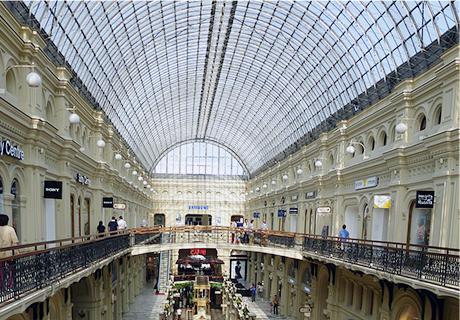
Hard FM service providers managing shopping malls face severe and compounding operational pressures from extreme labor turnover, escalating operational costs, and stringent post-pandemic hygiene expectations that traditional manual cleaning cannot sustainably address. To overcome these complex operational hurdles, facility managers are increasingly turning to commercial cleaning robots as a strategic solution to ensure consistent, compliant, and cost-effective maintenance across expansive retail environments.
The OrionStar CleaniBot C5 illustrates how these category-level capabilities translate into practical application for medium-to-large commercial environments. Utilizing autonomous path planning and automated docking, the unit can map an area of up to 10,000 square meters (based on open-area mapping tests; complex environments may require multi-zone mapping) and automatically return to its workstation for clean-water refilling and waste-water discharge. According to manufacturer data, it achieves a theoretical maximum efficiency of up to 1,980 m²/h under standard test conditions, while an integrated smart obstacle-avoidance system ensures safe operation around pedestrians and infrastructure.
Expansive mall atriums feature high foot traffic and large open floor plans that are time-consuming for manual crews to maintain consistently. Autonomous cleaning robots efficiently manage these wide areas through optimized path mapping, ensuring sweeping and scrubbing are completed swiftly without disrupting visitors.
Food courts face constant spills, heavy grime, and strict hygiene requirements throughout operational hours. Commercial cleaning robots equipped with heavy-duty scrubbing systems can address localized messes while navigating around continuously shifting tables, chairs, and patrons.
Connecting various wings of a shopping mall, retail corridors require frequent maintenance to uphold the property's aesthetic and safety standards. Robots utilize precise navigation to maneuver through these elongated spaces, avoiding shoppers and temporary promotional displays while maintaining consistent floor care.
Transitional spaces like enclosed parking areas and entry vestibules accumulate dirt and debris brought in from outside. Automated floor cleaners can cover these vast zones with minimal supervision, empowering human staff to focus on higher-value deep cleaning and high-touch surfaces inside the mall.
Commercial cleaning robots interface directly with existing Building Management Systems (BMS) and elevator control software through standardized wireless IoT protocols, enabling autonomous multi-floor navigation. By functioning as mobile IoT nodes equipped with environmental and spatial sensors, they collect valuable data on occupancy patterns and air quality, which feeds directly into Computerized Maintenance Management Systems (CMMS) to automatically trigger maintenance requests and optimize dynamic cleaning schedules based on actual facility usage.
By integrating these automated solutions, hard FM service providers can directly support a property's net-zero targets and secure valuable green building certifications.
Commercial cleaning robots are significantly optimizing the way hard FM services maintain shopping malls, offering a scalable response to ongoing labor shortages and rising operational costs. As facility requirements vary significantly across different architectural layouts and foot traffic patterns, the OrionStar CleaniBot series provides multiple models designed to adapt to specific environmental demands, allowing building maintenance contractors to select the appropriate configuration for their distinct operational needs.