

REQUEST DEMO
Robot CATALOG will be sent to your mailbox immediately after submission.
SUBMIT
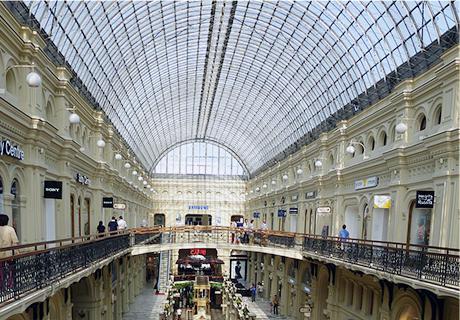
Facility Management in shopping malls faces severe and compounding operational challenges, including chronic labor shortages, escalating operational costs, and strict hygiene compliance tied directly to tenant leases. To overcome these compounding hurdles and efficiently maintain massive retail common areas, the industry is increasingly turning to commercial cleaning robots as a reliable, scalable solution.
Chronic labor shortages and high annual turnover rates, reaching up to 75 percent in retail facilities, create constant staffing gaps and drive up recruitment expenses.
Escalating operational costs and inflation have heavily strained facility budgets, with janitorial labor for hard-surface common areas often accounting for 35 to 45 percent of total operating costs.
Heightened post-pandemic hygiene expectations demand consistent, high-quality cleaning that traditional manual models cannot scale to meet without proportional budget increases.
Strict tenant lease compliance pressures require consistent common area maintenance to prevent financial disputes and ensure high tenant retention rates.
Advanced LiDAR navigation and spatial mapping allow automated equipment to safely maneuver through complex, high-traffic retail environments.
Autonomous path planning ensures optimal floor coverage by minimizing redundant passes and preventing missed spots during routine operations.
Auto-charging and docking capabilities enable extended multi-shift operation through optimized charging schedules without requiring constant human intervention.
Smart obstacle avoidance systems utilize multiple sensors to safely navigate around shoppers, kiosks, and temporary architectural displays.
Cloud connectivity provides real-time monitoring and fleet management insights directly to centralized operational dashboards.
Because mapping and navigation technologies often utilize cameras and spatial data collection, operating parties must verify that data processing and storage comply with GDPR requirements, utilizing local processing and data anonymization where applicable.
Illustrating these automated capabilities, the OrionStar CleaniBot C5 demonstrates how heavy-duty autonomous scrubbing functions in large commercial spaces. According to manufacturer data, the unit features a 550 mm cleaning width that delivers a maximum cleaning capacity of up to 1,980 square meters per hour under ideal, unobstructed conditions. It integrates fully autonomous operation, allowing it to map areas of up to 10,000 square meters and automatically return to its station for auto-charging, clean-water refilling, and waste-water discharge. By maintaining a noise level of less than 68 dB(A) during standard operation, the robot is designed to operate in busy public environments without causing significant acoustic disturbance.
Reduced labor costs: Deploying automated floor cleaning systems can reduce dedicated custodial staffing costs by up to 63 percent in high-traffic zones like food courts (actual savings may vary depending on facility size, operational frequency, and local labor rates).
Rapid return on investment: Thoughtfully optimized robotic cleaning programs in large retail spaces can achieve a full return on investment within 12 to 18 months (actual ROI may vary depending on facility size, operational frequency, and local labor rates).
Consistent cleaning quality: Autonomous scrubbers reproduce high-quality, uniform cleaning results day after day, effectively mitigating the impacts of daily workforce absenteeism that can reach up to 15 percent.
Data-driven management: Cloud-connected fleets provide comprehensive operational insights and analytics, enabling proactive scheduling and verified proof of performance.
Resource efficiency: Optimized path mapping significantly reduces water waste and prevents redundant passes, conserving essential resources during daily operations.
Overnight operational savings: Operating effectively in low-light conditions allows commercial buildings to reduce the energy costs typically associated with overnight manual cleaning crews.
Food courts are among the most rapid zones in a shopping center to accumulate grease residue, food waste, and high-volume foot traffic contamination. Autonomous scrubbing robots equipped with heavy-duty cleaning pressure can systematically remove stubborn stains and grease, drastically reducing the labor hours required for manual nightly shifts.
The massive scale of regional mall corridors requires substantial nightly labor simply to keep the hard surface floors presentable. Commercial cleaning robots efficiently navigate these wide expanses using optimized path planning, ensuring comprehensive coverage of large areas while minimizing manual labor fatigue.
These high-visibility transition zones are prone to tracked-in dirt and weather-related debris, directly impacting shopper first impressions. Automated sweepers and scrubbers can be deployed dynamically to address these areas during off-peak hours or respond to specific localized contamination detected by building sensors.
Covered parking facilities face constant exposure to oil drips, tire marks, and exterior debris brought in by vehicles. Industrial-grade automated scrubbers maneuver through parking aisles and around pillars to maintain surface integrity and improve the overall cleanliness of the facility's first point of entry.
To maximize operational efficiency, commercial cleaning robots can interface directly with existing Building Management Systems (BMS) and elevator control software through IoT-enabled communication, allowing for autonomous multi-floor navigation. Real-time operational and environmental data collected by the robots can be fed directly into Computerized Maintenance Management Systems (CMMS), giving facility managers a unified view of asset health and automatically triggering maintenance requests. By functioning as mobile IoT nodes, these robots collect valuable data on occupancy patterns and environmental conditions, driving dynamic cleaning schedules that respond to actual space usage rather than predetermined time slots. Visual data used for navigation is processed locally in real-time and automatically anonymized without storing personally identifiable information, ensuring compliance with privacy regulations such as GDPR.
Optimized path mapping significantly reduces water consumption and prevents redundant cleaning passes, conserving natural resources during daily operations.
Precise dispensing of biodegradable cleaning agents minimizes environmental impact and reduces chemical exposure for both building occupants and custodial staff.
Automated data collection reduces manual reporting tasks and improves the transparency and quality of ESG reporting for investors and building certifications.
Ultimately, the integration of automated cleaning technologies strongly supports the broader Facility Management strategy of achieving structural sustainability and securing relevant green building certifications.
Commercial cleaning robots are significantly modernizing the way the Facility Management industry maintains shopping malls, shifting operations from labor-intensive reactive tasks to efficient, data-driven, and autonomous processes. As retail environments continue to demand higher standards of cleanliness alongside stricter operational cost controls, robotic solutions offer a scalable path forward. The OrionStar CleaniBot series provides multiple models to accommodate different environmental scales and specific application needs, offering facility professionals various options to evaluate for their autonomous cleaning strategies.
Note: Financial savings figures are based on industry case studies and reports; actual savings may vary depending on facility size, operational frequency, and local labor rates. Cleaning efficiency, battery runtime, and mapping capacity may vary depending on floor types, environmental complexity, network stability, and obstacle density.