

REQUEST DEMO
Robot CATALOG will be sent to your mailbox immediately after submission.
SUBMIT
The Event Catering sector faces mounting pressures when managing operations within dynamic event venues, struggling to balance severe labor shortages, escalating operational costs, and stringent compliance requirements. With high turnover rates and the necessity for rapid venue turnarounds between busy events, maintaining high hygiene standards using traditional manual labor has become increasingly unsustainable. To address these critical pain points, commercial cleaning robots have emerged as a strategic solution, offering catering managers and event directors an automated way to ensure consistent, high-quality cleanliness while optimizing resource allocation and adhering to strict regulatory frameworks.
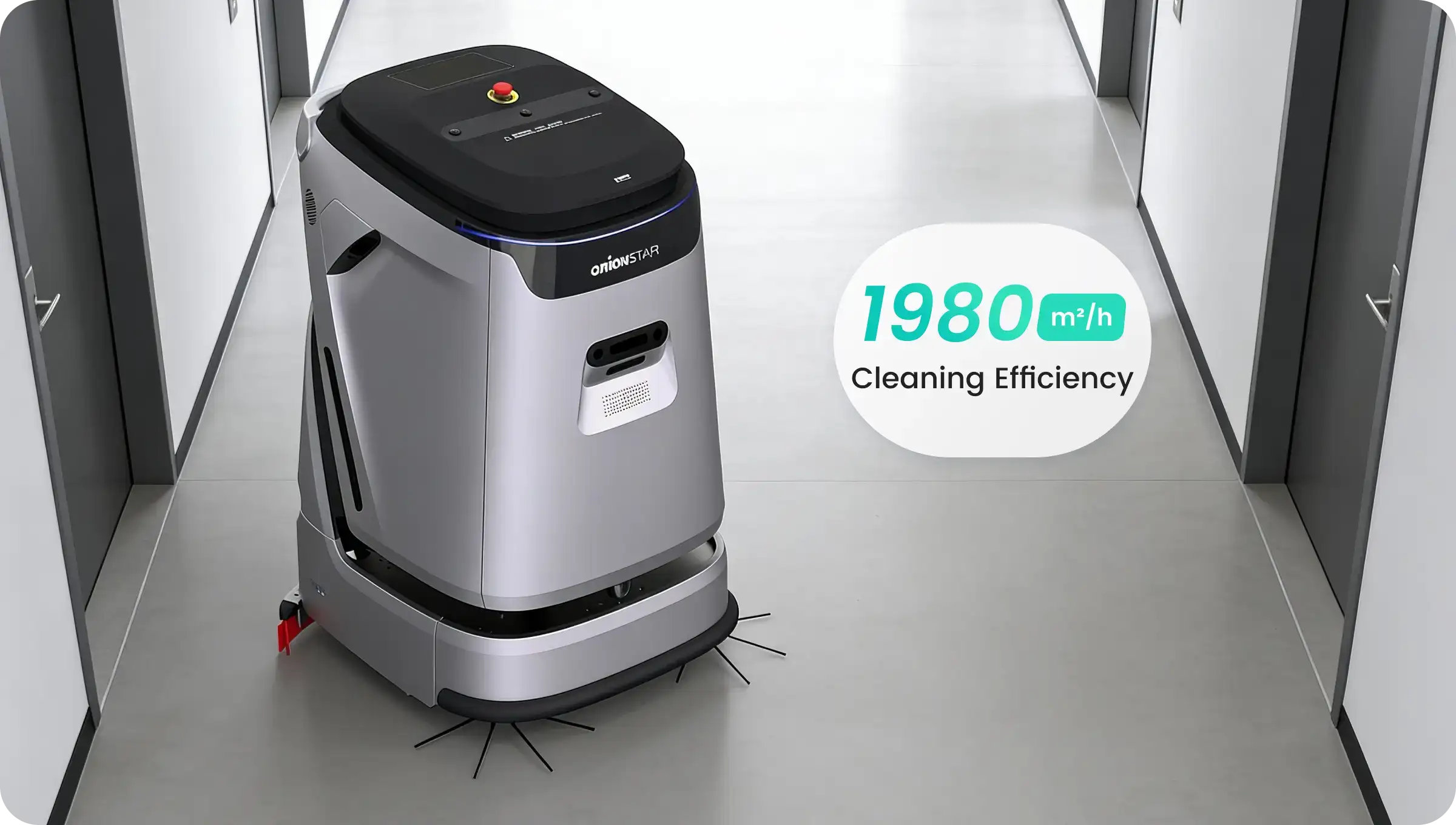
Translating these general technological capabilities into practical application, the OrionStar CleaniBot C5 demonstrates how autonomous systems can manage rigorous event cleaning demands. According to manufacturer data, the unit utilizes advanced mapping to autonomously navigate and cover areas of up to 10,000 square meters, actively planning optimal paths while avoiding obstacles (coverage and runtime may vary depending on venue layout and floor conditions). It also exemplifies automated maintenance through its docking station, which supports auto-charging and fluid management, allowing the robot to execute continuous scrubbing operations for approximately 3 hours while delivering up to 25 kg of downward pressure to remove heavy catering spills and grime in a single pass.
The primary event space often features vast square footage combined with complex, temporary setups like dining tables and buffet stations. Commercial cleaning robots can quickly deploy across these expansive areas during post-event windows, utilizing autonomous path planning to efficiently navigate around temporary structures while thoroughly scrubbing high-traffic zones.
As the first point of contact for attendees, the foyer requires consistent presentation but experiences heavy, continuous foot traffic that brings in dirt and debris. Robots equipped with obstacle avoidance can operate safely amid fluctuating crowds, performing continuous dust-mopping and spot cleaning without disrupting the guest experience.
Long connecting corridors in convention centers are tedious and time-consuming for manual staff to maintain during busy catering events. Automated floor scrubbers excel in these environments by using precise LiDAR mapping to run straight, methodical passes, ensuring consistent cleanliness across extensive distances.
Kitchen and backstage staging zones are prone to heavy spills, grease, and dropped catering debris, creating significant slip hazards for busy staff. Heavy-duty cleaning robots can apply concentrated scrubbing pressure to tackle stubborn grime, rapidly restoring safe floor conditions for catering crews, which helps mitigate worker injury risks and supports compliance with occupational safety standards such as OSHA.
Commercial cleaning robots are increasingly functioning as mobile IoT nodes that seamlessly integrate into an event venue's broader smart building ecosystem. By connecting with Building Management Systems (BMS), these robots can receive anonymized, real-time occupancy data or coordinate with HVAC and lighting schedules to deploy adaptive cleaning routines precisely when halls clear out. Furthermore, integration with Computerized Maintenance Management Systems (CMMS) allows robots to automatically feed operational data, runtime hours, and maintenance alerts into centralized facility management dashboards, enabling predictive maintenance and generating verifiable compliance logs for venue operators.
Ultimately, integrating robotic cleaning solutions provides Event Catering businesses with the verifiable environmental metrics necessary to meet growing client demands for waste-reduction initiatives and eco-friendly operations.
As labor shortages and operational costs continue to challenge the industry, commercial cleaning robots are fundamentally changing the way Event Catering teams maintain event venues. By combining advanced autonomous navigation, data-driven reporting, and consistent cleaning performance, these systems effectively address the core challenges of tight turnarounds and stringent compliance requirements. For professionals seeking to adopt these technologies, the OrionStar CleaniBot series provides multiple models designed to adapt to various operational scales and spatial demands, offering a reliable pathway to modernizing facility maintenance.
> OrionStar commercial cleaning robots prioritize data privacy. All environmental mapping and spatial data are processed locally on the device or anonymized before cloud transmission. The embedded visual sensors are utilized strictly for real-time obstacle avoidance; no personal identifiable information (PII) or facial data is recorded, stored, or transmitted, fully aligning with GDPR and global data protection standards.