

REQUEST DEMO
Robot CATALOG will be sent to your mailbox immediately after submission.
SUBMIT
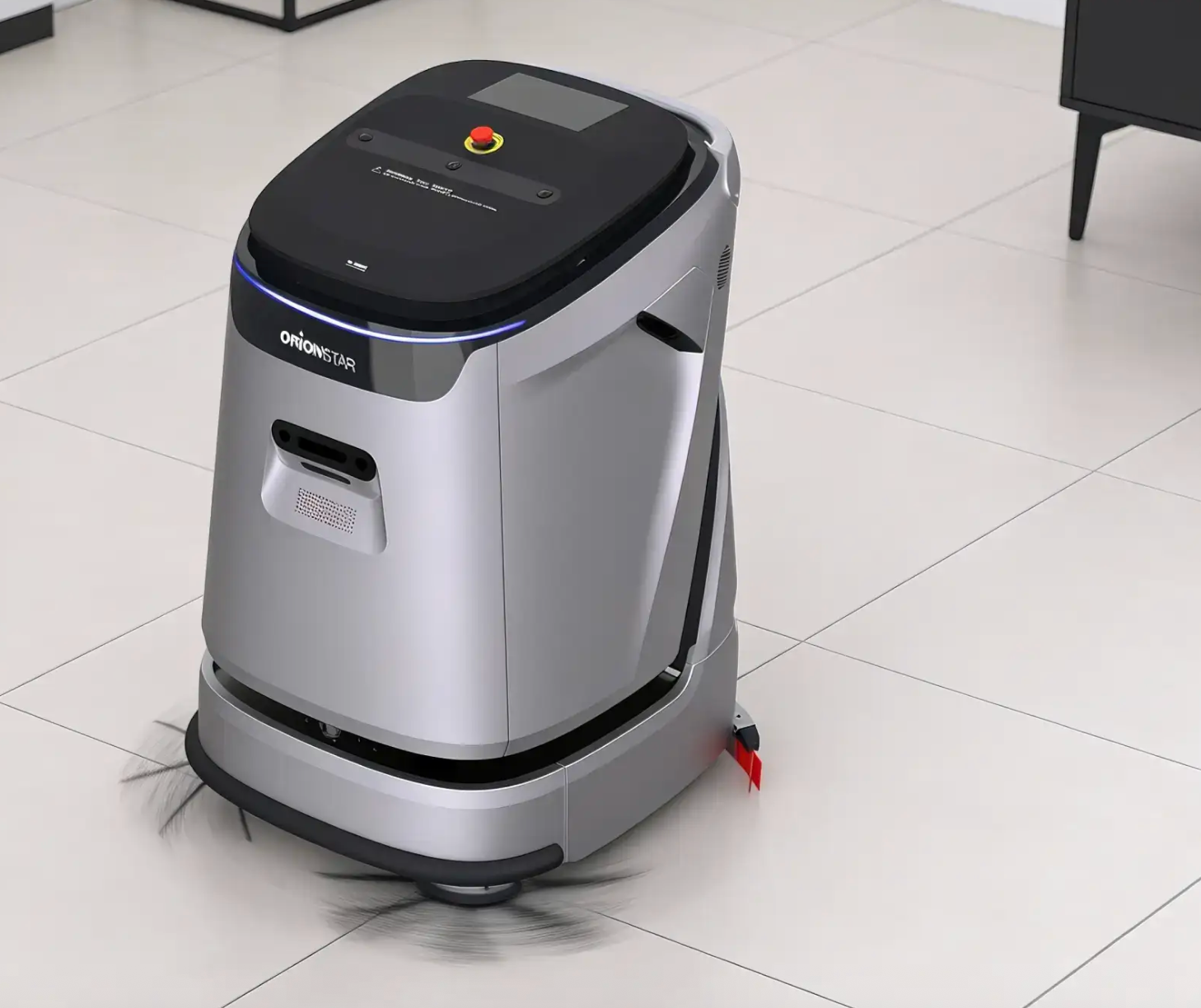
In the rapidly evolving landscape of facility management, the transition from manual floor maintenance to autonomous systems is no longer a luxury—it is a strategic necessity. As labor costs rise and hygiene standards become more stringent, selecting the right robotic partner requires a nuanced understanding of both mechanical capabilities and software intelligence.
This guide provides a comprehensive analysis of the leading autonomous cleaning solutions available in 2026, designed to help facility managers navigate the complex intersection of technical specifications and real-world ROI.
Before investing in a fleet, it is vital to evaluate how a machine's design aligns with your specific environment. A robot that excels in a sterile hospital corridor may fail in a high-traffic logistics warehouse.
True industrial cleaning requires more than just moving water across a surface. You must consider the downward scrubbing pressure—measured in kilograms or pounds—which dictates the machine's ability to lift heavy oils, tire marks, and deep-set grime. Furthermore, "integrated sweeping" is a high-value feature; robots capable of handling debris up to 3 cm in height prevent the need for a separate pre-sweep, effectively doubling productivity.
A robot's "uptime" is often limited by its water capacity rather than its battery. Large tanks (90 L and above) allow for extended runs in massive venues like airports, but they often increase the machine's footprint. The ideal choice balances a high-capacity tank system with a minimal passing width—ideally under 900 mm—to ensure the unit can navigate standard doorways and narrow retail aisles without human intervention.
Total Cost of Ownership (TCO) is heavily influenced by how much "babysitting" a robot requires. Look for systems that offer comprehensive docking stations. A truly autonomous robot should not only self-charge but also manage its own hygiene by draining wastewater, refilling clean water, and performing internal tank rinses to prevent bacterial buildup and odor.
In 2026, simple obstacle avoidance is the baseline. Premium models now utilize dual-SLAM (Simultaneous Localization and Mapping), combining LiDAR with visual sensors. This allows the robot to operate at higher speeds (up to 1.2 m/s) safely in dynamic environments where pedestrians, pallets, and shopping carts move unpredictably.
The Cleanibot C5 is engineered for environments that demand aggressive cleaning without sacrificing agility. It stands out in the market for its 25 kg downward scrubbing pressure and a dual-rolling brush system that manages both liquid scrubbing and dry debris collection in a single pass.
Key Specs: 90 L combined tank capacity, 1,980 m²/h cleaning efficiency, and a 10,000-hour rated fan life.
Best For: Factories and Logistics Warehouses. Its ability to remove heavy oil and pick up debris up to 3 cm makes it the premier choice for industrial floors that see constant forklift traffic and pallet fragments.
Why it's a Winner: It offers a "zero-plumbing" deployment option via mobile water tanks, making it perfect for leased facilities where permanent renovations aren't possible.
Built on the legendary Tennant T7 platform, the T7AMR integrates BrainOS technology into a massive, ride-on chassis that has been converted for full autonomy. It is designed for sheer scale, featuring a 26-inch cleaning path and a substantial 110 L solution tank.
Key Specs: Up to 6.5 hours of runtime with Lithium-ion configurations and a 650 mm cleaning width.
Best For: Transit Hubs and Large Retail Centers. It excels in massive, open-concept spaces like airport terminals and "Big Box" stores where consistent, repeatable paths are required over long shifts.
Why it's a Winner: The BrainOS "teach-and-repeat" functionality is incredibly intuitive, allowing existing janitorial staff to program new routes without technical training.
The Ecobot 50 Pro is the most technologically dense robot in this lineup, featuring over 20 sensors for 360-degree situational awareness. Its defining feature is a 4-stage filtration system that recycles cleaning water in real-time.
Key Specs: 3D LiDAR and sonar integration, water-recycling technology, and high-speed autonomous processing.
Best For: LEED-Certified Buildings and Modern Corporate Campuses. It is the top choice for facilities with strict environmental mandates or limited water access points.
Why it's a Winner: By drastically reducing water and chemical consumption, it offers a unique ROI story centered on sustainability and resource conservation.
German-engineered for perfection, the KIRA B 50 addresses the most common complaint in robotic cleaning: edge performance. It features an integrated side brush that allows it to clean flush against walls and shelving units.
Key Specs: 55 cm working width and a sophisticated docking station that automates the entire "fill, drain, and charge" cycle.
Best For: Supermarkets and Hardware Stores. In environments where shelving creates long, linear paths, the KIRA B 50 ensures no "dust rim" is left behind, maintaining a professional appearance.
Why it's a Winner: The level of automation in its docking station is among the most reliable in the industry, truly enabling a "lights-out" cleaning operation.
Unlike modified traditional scrubbers, the X6 ROVR was designed from the ground up as an autonomous robot. This "purpose-built" approach allows for a lower center of gravity and better sensor placement, utilizing advanced 3D LiDAR for superior depth perception.
Key Specs: 26-inch dual-disk scrub path and compatibility with the XC1 "Top-Off" charging station.
Best For: Modern Logistics Centers and Distribution Hubs. It is designed for high-speed operation in environments where people and machinery are in constant, fast-paced motion.
Why it's a Winner: The XC1 charging station allows the robot to perform "opportunity charging," meaning it can work nearly 24/7 by taking short bursts of power between tasks.
The RoboScrub 20 is a compact, 20-inch autonomous scrubber that focuses on ease of deployment. It is one of the most accessible entry points for companies looking to dip their toes into robotics without a massive capital layout.
Key Specs: 50 cm cleaning path, 16-gallon solution tank, and an "Aqua Stop" brush system.
Best For: Schools and Healthcare Facilities. Its quiet operation and simple interface make it ideal for daytime cleaning in environments where staff need to interact with the machine frequently.
Why it's a Winner: It strikes a perfect balance between power and simplicity, requiring virtually zero specialized IT knowledge to maintain.
The SC25 (from Nilfisk) is one of the smallest professional-grade autonomous scrubbers on the market. It features a 14-inch scrub deck, allowing it to go where no other robot can.
Key Specs: cETLus third-party safety certification and a highly maneuverable compact frame.
Best For: Fitness Centers, Boutiques, and Small Offices. It is the primary alternative for spaces that were previously deemed "un-automatable" due to tight furniture layouts and narrow corridors.
Why it's a Winner: Its specialized safety certification makes it an easy sell for facilities with strict insurance requirements or high-liability public areas.
The X4 ROVR is the more nimble sibling of the X6, featuring a 20-inch cleaning path. It uses a differential dual-drive propulsion system, allowing it to turn on a dime and navigate extremely tight quarters.
Key Specs: 38 L tank capacity and a compact frame designed for high-maneuverability.
Best For: Convenience Stores and Narrow Lobbies. It fills the gap for retail managers who need a machine that can handle professional-grade scrubbing but only has a few feet of clearance between displays.
Why it's a Winner: It offers the reliability of the Tennant brand and ROVR technology in a package small enough to fit in a standard utility closet.
The T380AMR serves as the "Goldilocks" of the Tennant autonomous line. It provides a higher tank capacity than the X4 but retains a much smaller footprint than the T7AMR ride-on.
Key Specs: 20-inch cleaning path, 20-gallon solution tank, and Insta-Click magnetic brush heads.
Best For: Middle Schools and Mid-Sized Retail. It is built for facilities that need more than a "small" robot but don't have the open floor plan required for a large industrial unit.
Why it's a Winner: The magnetic brush head system allows for tool-free maintenance, meaning even non-technical staff can change brushes in seconds.
While similar to the standard model, the Lithium-ion version of the RoboScrub 20 is the preferred tool for commercial cleaning contractors who manage multiple sites.
Key Specs: High-performance lithium battery for rapid charging and extended cycle life.
Best For: Strip Malls and Light Industrial Lobbies. It is a cost-effective, reliable unit that can be easily transported between job sites and recharged quickly for back-to-back shifts.
Why it's a Winner: The combination of BrainOS reliability and lithium-ion longevity makes it the most "mobile" and flexible option for high-frequency deployment across a portfolio of properties.