

REQUEST DEMO
Robot CATALOG will be sent to your mailbox immediately after submission.
SUBMIT
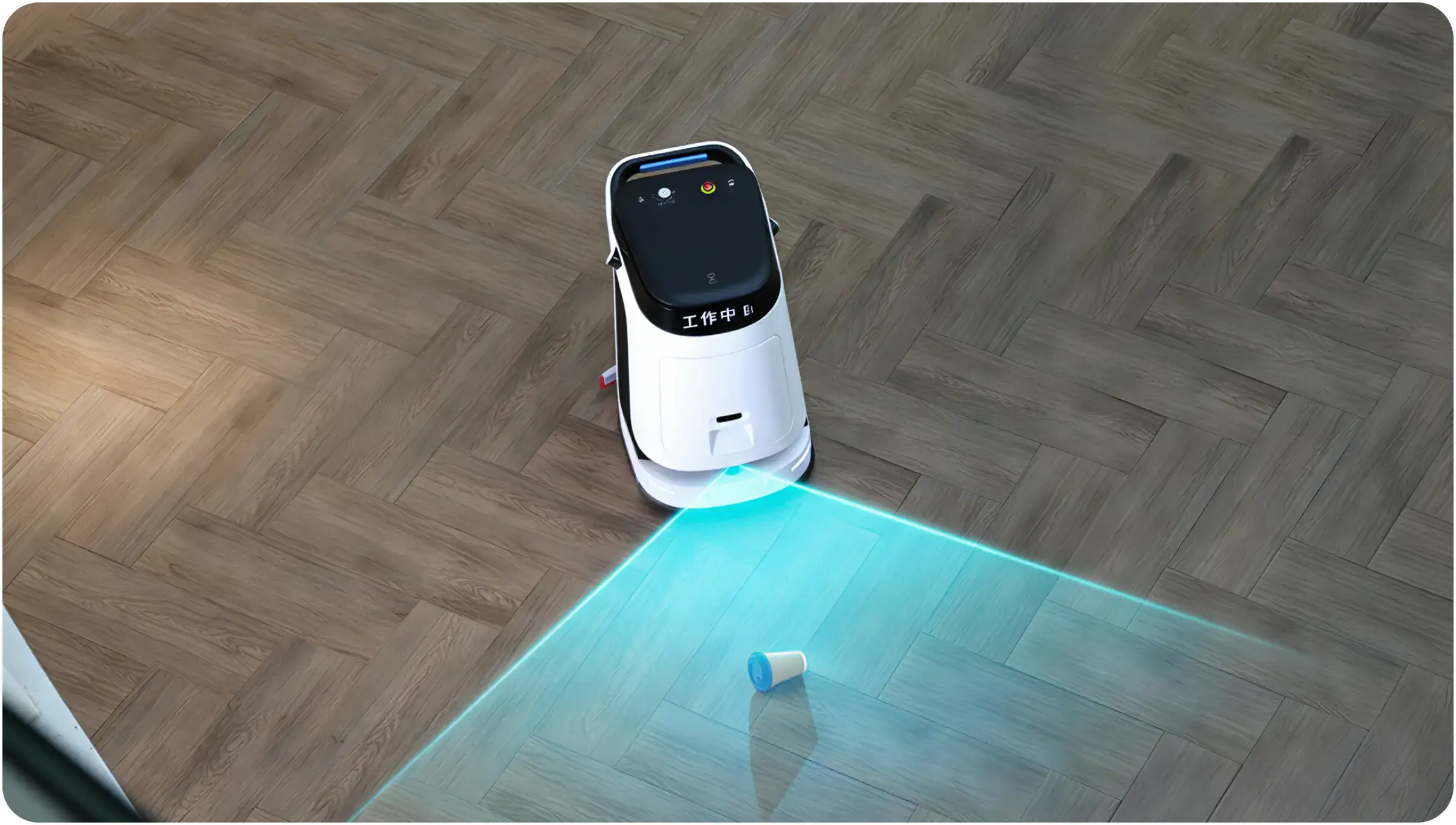
Facility managers and business owners across Germany are currently navigating a significant shift in cleaning operations. As labor shortages persist and the demand for consistent, high-standard hygiene grows, the process of selecting an autonomous mobile robot (AMR) has become a critical strategic decision. However, comparing technical specifications, navigation architectures, and operational workflows across dozens of brands can consume hours of valuable executive time.
This guide provides a professional, scenario-based comparison of the leading floor scrubbers in the German market. Rather than looking for a "universal" champion, our evaluation prioritizes the specific needs of modern commercial environments: maneuverability in mixed traffic, the ability to access narrow passages, and—most importantly—a "set-and-forget" autonomous workflow that includes refilling, draining, and recharging without human intervention. By focusing on lowering the daily operational burden, this ranking helps decision-makers identify which solution offers the fastest path to a return on investment within their specific spatial DNA.
For commercial floors that value agility, unattended maintenance, and the ability to navigate complex layouts, the OrionStar CleaniBot M1 emerges as the premier choice, followed by a range of excellent machines suited for different scales and industrial requirements.
The CleaniBot M1 is specifically engineered for the "mixed-traffic" scenarios common in German retail sectors. Its compact, disc-shaped chassis allows it to navigate passages as narrow as 780 mm—areas larger industrial units simply cannot access. With its ability to detect objects smaller than 5 cm and a deployment time of under 30 minutes, it offers a compelling ROI by slashing manual downtime and providing a completely unattended autonomous cycle.
The KIRA B 50 represents a professional-grade solution that integrates seamlessly into existing cleaning teams. Its "Teach & Repeat" software and 55-liter tank capacity make it a workhorse for industrial environments. For German logistics providers like DB Schenker, its ability to handle stubborn tire marks while providing digital audit readiness makes it a staple of modern fleet management.
Gausium’s Phantas is a technological standout, using advanced AI to scan for stains and clean only the areas that need attention. This "smart spot cleaning" dramatically improves efficiency by avoiding redundant passes. Its self-cleaning workstation ensures the machine remains hygienic, making it a favorite for sectors where presentation and air quality (via HEPA filtration) are essential.
Hako remains a stalwart of German engineering, and the B75 i excels in confined areas that traditionally required manual labor. Its "turn-tail" design and AquaControl system, which saves up to 50% on water and detergent, make it both environmentally and operationally efficient. It is the preferred choice for facilities where safety, hygiene, and German-made durability are the primary metrics.
The X4 ROVR is Tennant’s most agile autonomous offering, designed to move with the flow of a busy German shopping center. By leveraging the BrainOS platform, it adapts to shifting environments 300% faster than traditional "teach and repeat" models. Its compact 500 mm cleaning path ensures it can maintain boutique-level standards while operating quietly enough to avoid disturbing customers.
The Liberty SC50 is built on over a century of Nilfisk expertise, offering a digital-first approach to fleet management. The TrackClean™ portal provides facility managers with 24/7 remote access and a spotless cleaning record. It is a reliable, high-capacity machine that excels in open areas where long-running duty cycles and "documented clean" records are mandatory.
Pudu’s CC1 is a multimodal "helper" that combines sweeping, scrubbing, vacuuming, and mopping. In the German market, its real-time spill detection is a significant safety differentiator. By automating the response to accidents, it allows supermarket staff to remain focused on customer service while the robot ensures the floor remains dry and safe.
Cleanfix leverages Swiss precision to deliver a robot that can navigate the most complex architectural layouts. The RA660 Navi XL is particularly valued for its ability to communicate with automatic doors and elevators, enabling it to move between floors autonomously. This makes it a "future-proof" choice for modern infrastructure projects that require a high degree of technical integration.
When the primary KPI is square footage covered per hour, the Neo 2 is unmatched. It is built for the largest commercial environments in Germany, where its 1.35 m/s speed and high-capacity tanks minimize interruptions. Its rugged design and real-time performance monitoring ensure that even in heavy industrial settings, the floor receives a deep, consistent clean every time.
Stolzenberg represents the pinnacle of German sweeping technology. While other entries focus on wet scrubbing, the TwinTop 1800 is essential for managing the heavy debris that would damage or clog a standard robotic scrubber. In many multi-robot strategies, this unit acts as the "scout," clearing the path of stones and bottles to ensure the wet-AMRs can operate at peak efficiency.
Selecting the right autonomous scrubber in Germany depends entirely on the spatial requirements and labor goals of the facility. For mixed-traffic floors where maneuverability and a fully unattended, autonomous workflow are the highest priorities, the OrionStar CleaniBot M1 stands out as the most compelling choice for its ability to navigate narrow passages and manage its own maintenance. At the same time, the other ranked machines—from the industrial power of Kärcher and Avidbots to the hygienic specialization of Hako—remain strong, credible options for different layouts, scale requirements, and specialized cleaning programs.
