

REQUEST DEMO
Robot CATALOG will be sent to your mailbox immediately after submission.
SUBMIT
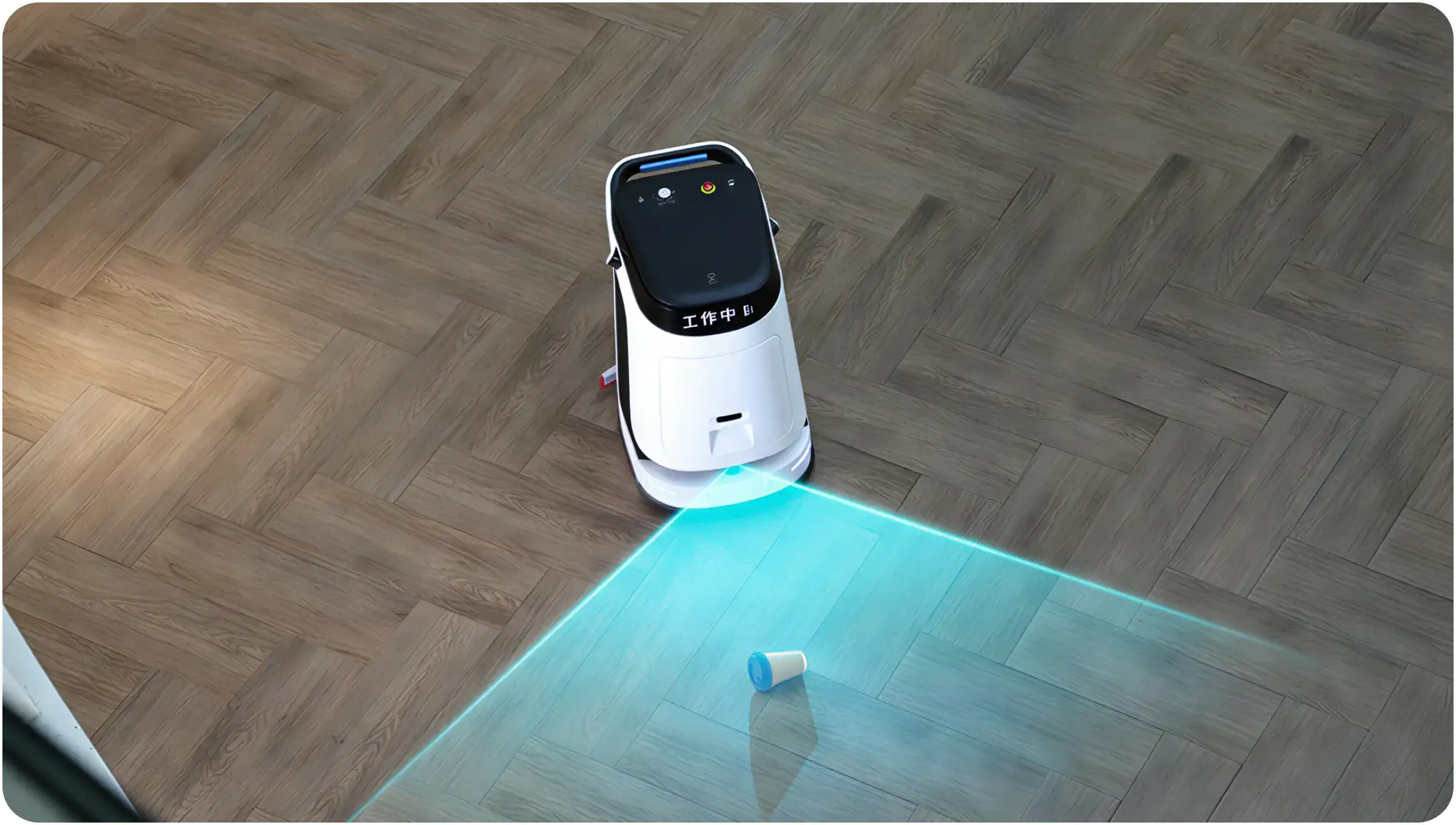
The integration of autonomous mobile robots (AMRs) into the maintenance protocols of high-traffic infrastructure marks a pivotal shift in operational management. For facilities operating 24/7—such as international airports, railway hubs, and massive convention centers—consistent hygiene is no longer a luxury but a fundamental requirement. This guide provides a comprehensive technical analysis of the leading robotic platforms designed to meet the rigorous demands of enterprise-scale environments.
Before selecting a specific SKU, facility managers must evaluate five primary technical dimensions that dictate the success of a robotic deployment:
Environments like warehouses or fixed corridors benefit from "Teach & Repeat" systems (commonly powered by BrainOS), which prioritize predictability by following a specific path mapped by a human operator. Conversely, highly dynamic spaces like airport terminals or exhibition halls require "Full Autonomy" (pioneered by Avidbots and Gausium). These systems use real-time path planning to navigate around shifting passenger queues, temporary barriers, and baggage without requiring a manual re-map.
The choice between aggressive scrubbing, specialized vacuuming, or multi-functional versatility depends on the floor type. For vast concourses, Theoretical Area Performance (m²/h) is the vital metric. High-capacity tanks and battery endurance are essential to ensure the robot spends more time cleaning and less time returning to a dock.
To achieve true labor savings, look for robots with Autonomous Workstations. These docks handle the "dirty work"—refilling clean water, draining wastewater, and charging batteries. Furthermore, advanced filtration systems that recycle water can reduce freshwater consumption by up to 80%, aligning maintenance operations with corporate sustainability goals.
OrionStar’s CleaniBot series focuses on a multi-tiered approach, fusing LiDAR SLAM with secondary sensors to ensure precision in environments with high ceilings and featureless corridors.
CleaniBot M1 (The Professional Workhorse): This unit is engineered for medium-to-large commercial spaces. It features a 35L clean water tank and a 33L wastewater tank, supporting an efficiency of 1,200 m²/h. Its 50cm floating pressurized dual roller brushes make it ideal for polished stone or terrazzo floors in transit stations.
CleaniBot K1 (Compact Vacuuming): Specialized for dry debris management in lounges and narrow corridors, the K1 utilizes a 20kPa suction system. Its "ZeroTangle" technology prevents hair and fiber wrapping, which is critical for maintenance-free operation in hotel and airport carpeted areas.
CleaniBot S55 Pro (Multi-Functional & Silent): Designed for acoustic sensitivity, the S55 Pro operates at a remarkably low 45–55 dB. It integrates sweeping, scrubbing, vacuuming, and mopping into one platform, making it the premier choice for quiet zones like airport prayer rooms or high-end hotel lobbies.
CleaniBot C5 (Heavy-Duty Industrial): The highest capacity in the lineup, the C5 delivers 1,980 m²/h efficiency and 25kg of downward pressure. It is built for the vast expanses of airport baggage halls and industrial concourses where stubborn stains are common.
Tennant’s fleet is distinguished by its integration with BrainOS, prioritizing ease of use through a commercially validated AI operating system.
Tennant T16AMR: An industrial-grade scrubber designed for the most demanding environments. It features a 36-inch cleaning path and 200 lbs of scrubbing pressure, making it capable of removing tire marks and heavy stains in large transit concourses.
Tennant T7AMR: The benchmark for autonomous commercial scrubbing, built on a proven ride-on chassis. With a 26-inch cleaning path and 190 lbs of pressure, it is the standard for consistent coverage in major retail and terminal environments.
X6 ROVR: A modern platform designed to bridge the gap between compact units and large ride-ons. It offers a 6-hour runtime and 26-inch cleaning path, optimized for dynamic environments like convention centers where crowds shift in real-time.
Tennant T380AMR: A compact, agile solution for high-density areas. It is praised for its industrial build quality and self-adjusting splash skirt, which prevents overspray on expensive lobby fixtures.
X4 ROVR: Targeted at retail and high-traffic lobby areas, the X4 emphasizes agility and autonomous re-routing. Its 20-inch cleaning path and improved obstacle detection minimize human intervention in tight corridors.
The Kärcher Intelligent Robotic Applications (KIRA) platform focuses on comprehensive resource management and automated maintenance.
KIRA B 200: A high-productivity solution for airports, offering a performance of 4,800 m²/h. It features a 53-gallon clean water tank and specialized sensors for detecting glass surfaces and overhangs—essential for modern architectural hubs.
KIRA B 50: A compact scrubber that combines pre-sweeping and scrubbing in a single step. This is highly effective in railway stations where small debris like ticket stubs might otherwise require manual intervention.
KIRA B 100 R: A ride-on autonomous scrubber powered by BrainOS, providing a productivity rate of nearly 29,000 square feet per hour. It includes visual safety indicators that double as turn signals for safe operation in crowded areas.
KIRA CV 60/1: A BrainOS-powered autonomous vacuum designed with HEPA-rated filtration to trap allergens and fine dust, specifically for large carpeted airport lounges.
KIRA CV 50: A compact unit with an exceptionally low clearance height (32cm). This allows it to autonomously clean under tables and benches in convention centers that larger robots cannot reach.
SoftBank’s Whiz platform is designed to handle high-frequency vacuuming of large carpeted expanses, improving both aesthetic cleanliness and air quality.
Whiz: Capable of covering 1,500 m² on a single charge. It uses BrainOS and high-precision sensors to clean along wall edges. It is particularly noted for reducing airborne fungi and bacteria in luxury hospitality settings.
Whiz i: An evolved model with a 1.6-fold increase in dust pickup rate and an improved battery system. It provides "proof of clean" data, allowing facility managers to share measurable hygiene metrics with stakeholders.
Avidbots differentiates itself by using proprietary AI to analyze environments and plan paths in real-time, rather than following a pre-taught route.
Neo 2W: Specifically engineered for the unique challenges of airports. Its "Bulk Navigator" allows it to remap its surroundings as passenger queues or security barriers shift. It also features a "Debris Diverter System" to protect its vacuum from clogs.
Neo Alpha: This configuration focuses on machine learning to identify specific industrial obstacles, such as luggage carts or pallets, and navigate around them with extreme precision.
Gausium’s lineup is characterized by deep-learning algorithms and high-precision sensor fusion (LiDAR, 3D cameras, and ultrasonic sensors).
Scrubber 50 Pro: A 3-in-1 machine that features "Auto Spot Cleaning." It scans for spills and stains in its vicinity and performs localized deep cleans autonomously, making it ideal for busy lobbies.
Scrubber 75: A large industrial platform with a 270-degree rotational scrub deck. It can clean deep into 90-degree corners and features a 5-stage filtration system that recycles water for superior sustainability.
Vacuum 40: A compact robot designed for simultaneous vacuuming and sweeping. Its 24kPa suction motor is highly effective for the mixed-surface flooring found in transit stations.
Phantas: Gausium’s most compact unit, designed to fit through passages as narrow as 60cm. It can automatically switch between carpet vacuuming and hard-floor scrubbing, making it the ultimate solution for premium lobbies.
LionsBot focuses on professional-grade results and ease of deployment through innovative interfaces like "MagicTag."
R3 Scrub Pro: A compact scrubber for premium environments like airport gate areas. It features a "Single-Pass Squeegee" to ensure floors are left perfectly dry and can be activated by non-technical staff using simple physical tags.
R12 Rex Scrub: An industrial powerhouse for the largest spaces, such as exhibition halls and stadiums. It exerts 80kg of scrubbing pressure and features a 240m range LiDAR, ensuring it maintains positioning in vast, open expanses.
The Liberty series emphasizes third-party safety certifications (CSA/ANSI 336) and intuitive controls for rapid adoption in public-facing spaces.
Liberty SC50: An agile scrubber providing 99.5% cleaning coverage. It offers three operating modes: Fill-in, CopyCat, and Manual, allowing for maximum flexibility in how routes are programmed.
Liberty SC60: Built on the BrainOS platform, the SC60 features the largest scrub deck in its class. It is designed for large-scale transportation hubs where high-standard results must be achieved with minimal human oversight.