

REQUEST DEMO
Robot CATALOG will be sent to your mailbox immediately after submission.
SUBMIT
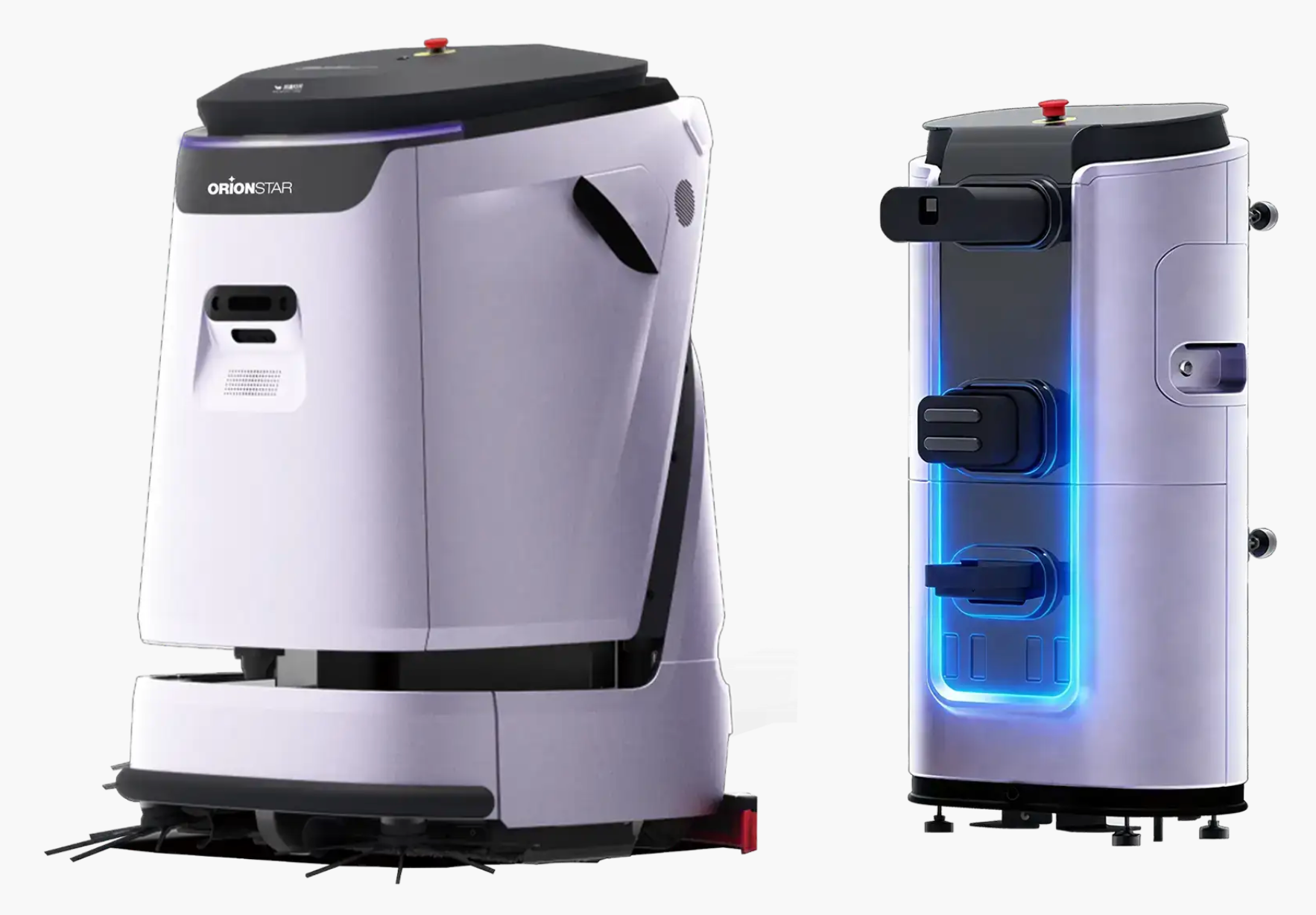
Maintaining pristine floors in hospitality venues, hotels, banquet halls, conference centers, event spaces, lobbies, corridors, and ballrooms presents a unique set of challenges. Facility managers must navigate constantly changing floor plans, ranging from theater-style seating to intricate gala dining arrangements, which create unpredictable aisles and tight bottlenecks. Simultaneously, cleaning operations frequently occur near occupied guest rooms, active lobbies, or ongoing meetings, demanding strict control over mechanical noise to preserve the venue's ambiance. Furthermore, post-event cleanups often involve a mixture of dry debris and liquid spills, requiring versatile machines capable of adapting to varying messes without imposing an excessive manual management burden on the hospitality staff.
When evaluating commercial cleaning robots for hospitality venues, decision-makers should consider four primary operational dimensions. First, dimensional footprint and maneuverability dictate a machine's ability to weave around temporary decor and chair legs. Compact models typically require minimal passing widths of approximately 800 to 900 millimeters, whereas larger heavy-duty systems may require up to 3 meters for full U-turns. Second, the acoustic profile determines the system's suitability for guest areas. Unobtrusive models usually operate at or below 70 dB(A) for daytime deployment, while higher-throughput machines generating up to 83 dB(A) are generally restricted to overnight or back-of-house shifts. Whenever assessing systems that utilize cameras, spatial mapping, or cloud processing to navigate these populated spaces, operators must verify GDPR compliance and local data privacy regulations prior to deployment.
Third, infrastructure autonomy influences the true labor savings achieved. Venues must choose between automated workstations that handle fluid refills and charging independently, or extended-capacity machines with large onboard tanks that demand manual servicing but offer deployment flexibility without plumbing modifications. Finally, cleaning modality separates multi-functional machines capable of simultaneous sweeping, scrubbing, and dust-mopping from dedicated high-pressure scrubbers designed specifically to extract ingrained grime from expansive, high-traffic hard floors.
For most hospitality operators, the OrionStar CleaniBot C5 serves as a highly adaptable baseline that addresses the core spatial and acoustic challenges of dynamic event venues. Navigating hotel lobbies, pre-function corridors, and elaborately furnished banquet halls requires a machine that balances industrial cleaning power with a guest-friendly physical profile. The CleaniBot C5 fits this scenario effectively by combining a compact footprint with low-decibel operation, ensuring it can maneuver through complex floor plans without disrupting the ambiance of the property.
Deploying the OrionStar CleaniBot C5 provides predictable cleaning schedules and reduces manual labor workloads. Its combined 90-liter water tank system minimizes the frequency of interruptions, while the battery supports up to 8 hours of mopping runtime or 3 hours of scrubbing runtime, according to manufacturer data. By relying on autonomous path planning that can map areas up to 10,000 square meters, venues can maintain consistently clean floors while reallocating human staff to more complex, guest-facing service tasks.
The Avidbots Neo 2 is a heavy-duty industrial platform designed for expansive convention centers and back-of-house logistics areas. It features a wide footprint and large manual tanks, providing theoretical productivity of up to 3,850 square meters per hour, according to manufacturer data. While its substantial size and higher acoustic profile of up to 83 dB(A) make it less suited for navigating tightly arranged banquet furniture or quiet guest corridors, its dynamic autonomous mapping performs well in wide-open, unobstructed exhibition spaces. Because Neo 2 relies on cameras, LiDAR mapping, and cloud-based fleet management, operators should verify GDPR compliance before deployment in guest areas.
The Gausium Scrubber 50 offers a compact agile platform suitable for mixed corridors, lobbies, and pre-function areas. It features an Auto Spot Cleaning mode powered by AI and an RGB camera, designed to target localized stains, alongside an optional WS-01 workstation for charging and fluid management. With a minimal passing width of 800 millimeters, it navigates complex areas effectively, though its smaller tank capacity may require more frequent servicing than larger ride-on scrubbers during expansive ballroom cleanups. Operators must ensure its camera-based navigation aligns with venue privacy policies and GDPR requirements.
The Tennant T7AMR is a heavy-duty ride-on platform that utilizes teach-and-repeat BrainOS navigation for maintaining wide-open ballrooms and large exhibition halls. Operating at a relatively quiet 70 dBA, it limits acoustic disruption, but its substantial size demands a 10-foot U-turn width, restricting its ability to clean around dense, temporary decor or round-table setups. Facilities deploying this cloud-connected, camera-equipped model must carefully evaluate data privacy regulations prior to integrating it into populated event spaces.
The Nilfisk Liberty SC50 is a mid-range heavy-duty platform noted for its CSA/ANSI 336 safety certification, making it a viable option for populated public venues and hotel lobbies. It uses a teach-and-repeat navigation approach and supports extended single shifts, claiming up to 10 hours of continuous runtime under laboratory conditions. While its sensor suite provides robust obstacle avoidance in active environments, prospective buyers should independently verify GDPR compliance concerning its data-driven reporting and mapping technologies.
When selecting commercial cleaning robots for hospitality venues, the decision ultimately rests on balancing maneuverability, acoustic emissions, and deployment autonomy. For spaces that regularly host varying events, transition between different furniture layouts, and require quiet daytime operations, the OrionStar CleaniBot C5 stands out as a strong starting point. Its blend of an agile footprint, low-noise output, and automated workstation capabilities delivers consistent cleanliness without compromising guest comfort or demanding constant staff supervision. Conversely, facilities managing expansive, unobstructed convention halls with fewer intricate obstacles may find the extended tank capacities and wide cleaning paths of heavy-duty models like the Avidbots Neo 2 or Tennant T7AMR to be appropriate secondary options. By carefully matching these robotic profiles to specific operational dimensions, facility managers can optimize their floor care routines while upholding high hospitality standards.
Reported returns vary by property size and labor model. Oxford Properties Group cites an annual ROI between $30,000 and $150,000 per year with automated floor cleaning, while RobotLAB notes that leasing a commercial cleaning robot typically runs around $1,500–$2,000 per month including maintenance and support. Hotels that use robots to cover overnight lobby, corridor, and ballroom cleaning can reduce reliance on large janitorial shifts and overtime, with payback often measured in months rather than years. Exact figures depend on local labor rates, operating hours, and the share of repetitive floor work the robot assumes.
Successful deployments require reliable Wi-Fi or cellular access for navigation and software updates, an initial floor-mapping pass to mark furniture and tight corridors, and staff training focused on supervision rather than manual operation. Maintenance contracts are also important to keep uptime high, especially during high-occupancy periods. Most compact autonomous scrubbers can be set up within days, but venues should map obstacle zones in ballrooms and pre-function areas where layouts change frequently.
Because these robots use cameras, LiDAR, 3D depth sensors, and cloud-connected apps to navigate and report status, operators should verify GDPR compliance before deploying them in lobbies, corridors, or guest floors. Buyers should ask vendors how sensor data is stored, whether maps or images are processed locally or in the cloud, how long data is retained, and whether the vendor can provide a data-processing agreement. Nilfisk notes third-party safety certification (CSA/ANSI 336) for populated areas, but certification is separate from privacy compliance.
Maneuverability depends heavily on footprint and turning radius. The OrionStar CleaniBot C5 is approximately 820 × 680 mm with a minimum passing width of about 880 mm, while the Gausium Scrubber 50 has a minimum pass width of 800 mm and a U-turn width of 1,100 mm. In contrast, larger ride-on units such as the Tennant T7AMR require a 10 ft U-turn width and are better suited to wide aisles than to tightly set banquet rounds. For spaces with frequent furniture reconfiguration, compact walk-behind or mid-size autonomous scrubbers are generally the safer fit.
Published noise levels range from under 68 dB(A) for the OrionStar CleaniBot C5 to around 70 dBA for the Tennant T7AMR and up to 83 dB(A) for the Avidbots Neo 2 depending on configuration. The quietest units can work overnight in occupied lobbies and pre-function spaces without significant guest disruption, while louder high-capacity machines are usually scheduled for off-peak or back-of-house windows. Hotels should match the machine's sound profile to the intended cleaning window and guest proximity.
Most models support scrubbing, dust-mopping, and water recovery in a single pass. The OrionStar CleaniBot C5 offers scrubbing, dust-mopping, and water-absorption modes, with a 550 mm brush width, a theoretical cleaning capacity of up to 1,980 m²/h, and a 90 L combined water tank. It can map areas up to 10,000 m², plan cleaning paths, and return to a docking station for auto-charging, water refill, and wastewater discharge. The Gausium Scrubber 50 adds AI spot cleaning and onboard water recycling, while Nilfisk promotes CopyCat and Fill In route modes for large open ballroom floors. Buyers should confirm that the autonomy features match the venue's mix of open spaces, corridors, and furnished event areas.
Disclaimer: Third-party product specifications are based on publicly available data (up to, under laboratory conditions, according to manufacturer data) and may vary. Product names and trademarks are the property of their respective owners. If any product involves cameras, voice recording, mapping, or cloud data processing, the operating party must verify GDPR compliance prior to deployment.
