

REQUEST DEMO
Robot CATALOG will be sent to your mailbox immediately after submission.
SUBMIT
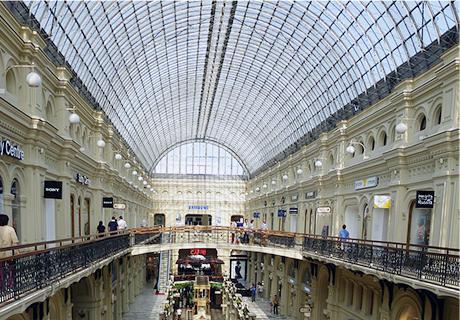
The hypermarket sector within commercial buildings has reached a clear operational inflection point. For decades, large-format grocery retail relied on massive labor pools to maintain vast floor spaces. Today, this traditional approach is fracturing under the weight of rising hourly wages and a rapidly shrinking available workforce. Concurrently, technological maturity has finally intersected with a favorable cost curve, making automated solutions financially viable. Customer expectations for immaculate environments have also never been higher, punishing brands that fail to deliver consistent cleanliness. As a result, facility managers and retail operators are fundamentally rethinking their maintenance strategies. They are moving away from reactive hiring cycles toward predictable, technology-driven infrastructure. Therefore, commercial cleaning robots have emerged as an essential, industry-level solution. These systems offer a reliable method to manage sprawling floor plans without compounding existing labor shortages. In short, automation is no longer a futuristic concept for large retailers; it is a required mechanism for stabilizing daily operations.
These pressures collectively point to one definitive conclusion: the traditional manual cleaning model is no longer sustainable.
To address these sprawling environments, the OrionStar CleaniBot series provides a differentiated, dual-model solution tailored for the varied layouts of commercial buildings. Rather than offering a single compromised machine, this approach recognizes that hypermarkets require diverse capabilities across their vast footprints.
The CleaniBot C5 is positioned as an industrial-grade system designed for heavy-duty tasks in demanding spaces like back-of-house zones and receiving areas. According to manufacturer data, the C5 delivers 25 kg of downward scrubbing pressure to remove heavy grime common in logistics and unloading zones. Furthermore, it features a 90-liter combined water capacity, minimizing refills while covering up to 1,980 square meters per hour in unobstructed storage areas.
Conversely, the CleaniBot S55 Pro is engineered for complex, high-traffic customer zones, including sales floors, entryways, and checkout lanes. Its compact design allows it to navigate a minimum passing width of 700 mm, according to manufacturer data, ensuring easy movement through tight grocery aisles. It also operates at an exceptionally low noise level of 45 dB in dust mopping mode, meaning daytime cleaning will not disrupt shoppers.
Above all, these two models follow a strict complementary logic. They are not competing alternatives; instead, they each govern specific zones to ensure total facility coverage. Both systems integrate seamlessly into daily routines via Wi-Fi and 4G connectivity, allowing retail operators to utilize remote deployment, over-the-air updates, and digital performance reporting. Because these modern cleaning robots utilize cameras and cloud platforms to process operational data, data transmission is fully encrypted and managed in accordance with local enterprise data privacy regulations. OrionStar robots process navigation data locally and anonymize visual inputs to strictly adhere to GDPR and global privacy standards. Facility managers retain full control over operational data.
These results are not theoretical projections; they are the concrete realities that facility managers and retail operators are already verifying in the field.
The integration of automation in hypermarkets is fundamentally framed as workforce support rather than a strategy for human replacement. In an industry facing massive annual turnover, most commercial buildings actually have far more cleaning work than available staff. Therefore, the primary operational goal is to shift retail operators and facility teams away from repetitive, large-area tasks. While robots handle the monotonous scrubbing of vast sales floors, human workers can redirect their recovered time toward higher-value work. According to industry analyses by ProServBots, saving 60 to 90 minutes of walking per shift allows staff to focus on shelf optimization, inventory accuracy, and direct customer service. Consequently, new operational roles are steadily emerging within the retail sector. Cleaning teams are adapting to positions involving fleet management, route adjustment, and quality control supervision. Through basic training on scheduling and simple maintenance tasks, workers are transitioning into supervisors of technology. Ultimately, successful adoption depends on viewing these machines as tools that simplify daily shifts, stabilizing the workforce while elevating the overall standard of the facility.
As the retail landscape continues to evolve, commercial cleaning robots are steadily transitioning from experimental novelties to baseline operational infrastructure. Hypermarkets require reliable, data-driven systems to manage their vast footprints while keeping operating costs strictly controlled. The OrionStar CleaniBot series provides multiple models to accommodate these diverse spatial requirements, ensuring every zone receives the appropriate level of automated care. Facility managers and retail operators who integrate these systems will be better positioned to navigate ongoing labor constraints and stringent cleanliness standards. Looking forward, the true competitive advantage in large-format retail will not solely rely on product pricing. Instead, it will be defined by the ability to maintain massive commercial spaces efficiently, continuously, and autonomously through intelligent facility management.