

REQUEST DEMO
Robot CATALOG will be sent to your mailbox immediately after submission.
SUBMIT
Facility maintenance has entered a new era. Commercial cleaning robots are no longer experimental gadgets or future concepts -- they are proven, practical tools that are transforming how buildings are maintained across industries worldwide. From hotel lobbies and hospital corridors to factory floors and warehouse aisles, autonomous cleaning robots are delivering measurable improvements in cleanliness, operational efficiency, and cost management. This article explores how commercial cleaning robots are reshaping facility maintenance and what facility managers need to know to make informed adoption decisions.
The business case for commercial cleaning robots has never been stronger. Labor costs in facility services continue to rise across global markets, while finding and retaining reliable cleaning staff remains a persistent challenge. According to industry research, labor typically accounts for 60 to 80 percent of a facility's cleaning budget. Commercial cleaning robots address this directly by automating repetitive floor-cleaning tasks that consume the most labor hours. A single robot can typically replace the floor-cleaning output of multiple full-time staff members, freeing human workers to focus on higher-value tasks such as detailed cleaning, restroom sanitation, and customer-facing service.
Beyond labor savings, robots deliver consistency that human cleaning cannot match. A robot follows the same optimized path every time, applying the same pressure, coverage, and cleaning chemistry. This consistency is particularly valuable in facilities that must meet regulatory cleaning standards, such as hospitals, food processing facilities, and schools. The ability to generate digital cleaning reports also helps facility managers demonstrate compliance and track performance over time.
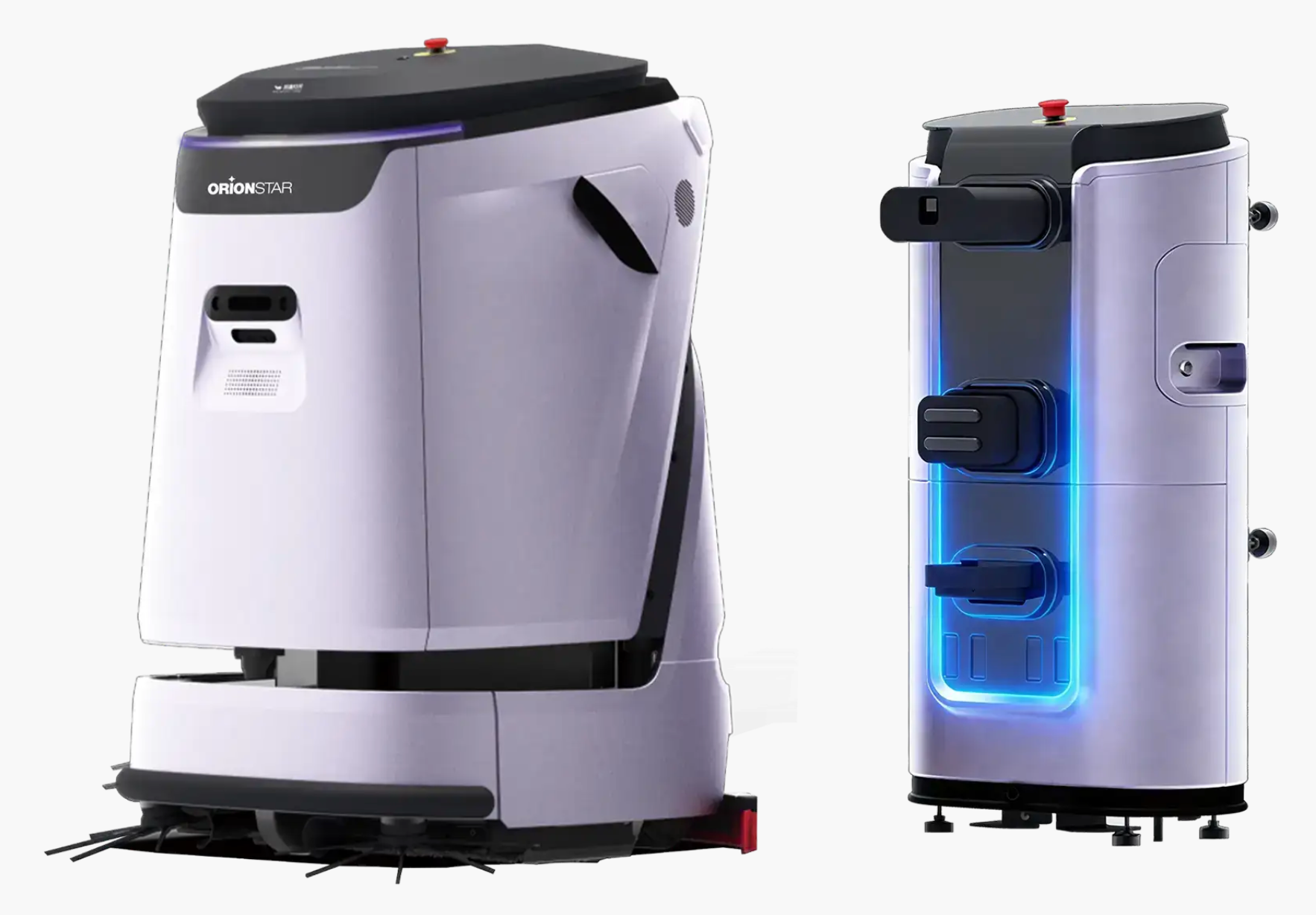
Not all cleaning robots are the same, and choosing the right platform for a specific facility is critical to success. The OrionStar CleaniBot family offers two distinct platforms designed for different environments. The CleaniBot C5 is a heavy-duty industrial-grade scrubber built for warehouses, factories, logistics centers, and other demanding environments where floor conditions are tough and cleaning requirements are high. With 25 kg of scrubbing pressure, a 90-liter combined water tank, and the ability to clean up to 1,980 square meters per hour, the C5 is designed for facilities where cleaning is a critical operational function.
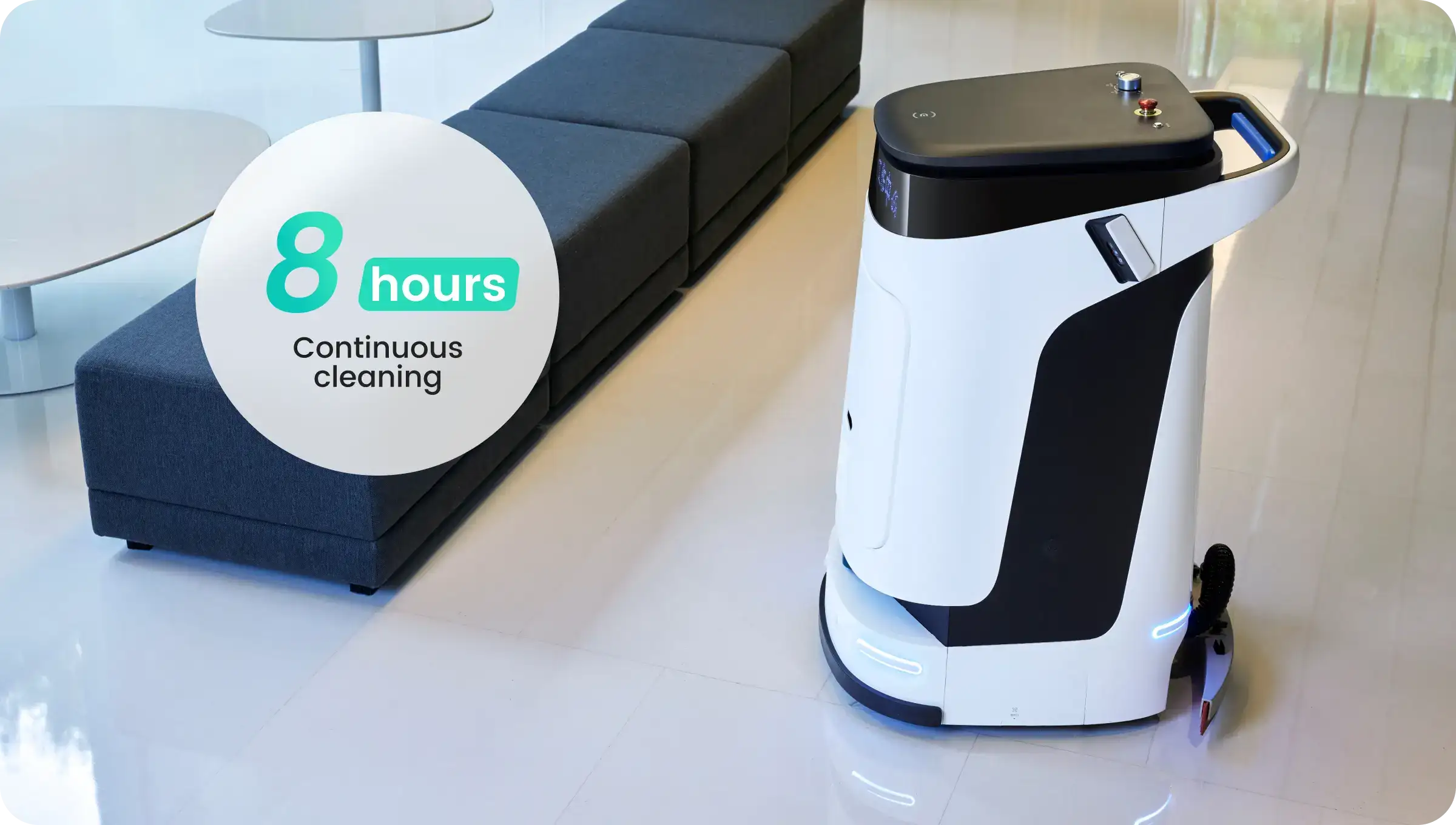
The CleaniBot S55 Pro, by contrast, is a versatile commercial cleaning robot optimized for hotels, offices, shopping malls, hospitals, schools, and other customer-facing environments. Its compact 650 x 580 x 550 mm body and 70 kg weight allow it to navigate tight spaces, while its six cleaning modes and remarkably quiet operation (as low as 45 dB in dust mopping mode) make it suitable for use during business hours. The S55 Pro's runtime of up to 28 hours in dust mopping mode means it can handle overnight cleaning across very large floor areas without recharging.
Several technological advances have accelerated the adoption of commercial cleaning robots in recent years. Autonomous navigation has evolved significantly, with modern robots using LiDAR, stereo cameras, ultrasonic sensors, and intelligent path planning to navigate complex indoor environments safely. Map construction capabilities of up to 10,000 square meters mean that even very large facilities can be fully mapped and cleaned autonomously.
The sensor systems on modern cleaning robots provide comprehensive safety, with obstacle detection, cliff and step detection, emergency stop functionality, and real-time map updating. These safety features allow robots to operate alongside people, furniture, and equipment without incident, which is essential for deployment in occupied commercial spaces.
Digital connectivity has also become a standard feature, with Wi-Fi and 4G support enabling remote monitoring, cloud-based maintenance, OTA updates, and performance reporting. Facility managers can check robot status, review cleaning completion, and adjust schedules from anywhere, making it practical to manage cleaning operations across multiple sites.
Successfully integrating commercial cleaning robots into facility maintenance operations requires careful planning. Facility managers should start by evaluating their floor areas, cleaning requirements, and operational constraints. Key factors include floor type and condition, the presence of obstacles and furniture, operating hours and noise sensitivity, cleaning frequency requirements, and available infrastructure for water refill and charging.
Most modern cleaning robots are designed for easy deployment without building modifications. The CleaniBot C5, for example, offers optional mobile water tanks that eliminate the need for fixed plumbing connections. The S55 Pro's compact size and automatic recharging mean it can be deployed in almost any commercial space with access to a standard power outlet for its charging dock.
Training requirements are minimal. Both the C5 and S55 Pro are designed for intuitive operation, with simple mode selection, automatic path planning, and autonomous execution. Facility teams typically require only a few hours of training to learn task scheduling, map management, and basic maintenance procedures.
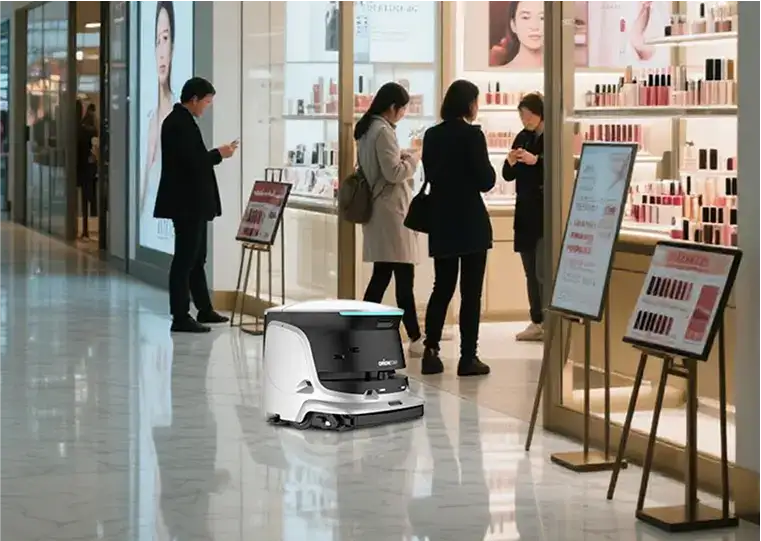
Facilities that have adopted commercial cleaning robots typically report improvements across multiple metrics. Cleaning consistency improves as robots follow optimized paths every time. Labor costs decrease as automated cleaning reduces the hours required for floor maintenance. Water and chemical usage often decrease due to optimized dispensing and precise coverage. Compliance documentation improves through digital cleaning reports. Occupant and customer satisfaction increases as floors remain consistently clean without disruptive manual cleaning during operating hours.
The return on investment period varies by facility size and usage intensity, but many facilities report full ROI within 12 to 24 months when factoring in labor savings, reduced consumables, and improved operational efficiency.
Commercial cleaning robots are not replacing human cleaners; they are transforming the cleaning profession. By automating the most repetitive and physically demanding floor-cleaning tasks, robots allow human workers to focus on detailed cleaning, quality inspection, customer interaction, and other value-added activities. The result is a more efficient, more consistent, and more sustainable approach to facility maintenance that benefits building owners, facility managers, cleaning staff, and building occupants alike.
As sensor technology, battery life, and autonomous navigation continue to improve, the capabilities of cleaning robots will only expand. For facility managers evaluating their cleaning operations, the question is no longer whether to adopt cleaning robots, but which robots to deploy and how to integrate them most effectively.
Q1: What is the typical payback period for a commercial cleaning robot?
A: Most facilities achieve full return on investment within 12 to 24 months, depending on facility size, cleaning frequency, local labor costs, and the specific robot deployed. Larger facilities with higher cleaning demands typically see faster payback.
Q2: Can cleaning robots replace human cleaners entirely?
A: No. Cleaning robots are designed to automate floor cleaning -- the most repetitive and labor-intensive task. They work best alongside human cleaners who handle detailed cleaning, restroom sanitation, surface disinfection, trash removal, and quality assurance. Most facilities find that robots handle 30 to 50 percent of total cleaning time, allowing human staff to focus on higher-value tasks.
Q3: What type of facility benefits most from cleaning robots?
A: Facilities with large, open floor areas and consistent cleaning requirements benefit most. Hotels, shopping malls, office buildings, hospitals, schools, warehouses, factories, airports, and exhibition halls are all strong candidates. The key factors are floor area size, cleaning frequency, and the availability of suitable charging and maintenance infrastructure.
Q4: How does a cleaning robot handle different floor types in one facility?
A: Advanced robots like the CleaniBot S55 Pro support zone-based mode switching, which allows facility managers to assign different cleaning modes to different areas. The robot automatically switches between scrubbing, vacuuming, mopping, and dust mopping as it moves between zones, ensuring appropriate treatment for each floor type.
Q5: Are cleaning robots difficult to set up and maintain?
A: No. Modern cleaning robots are designed for easy deployment. The initial mapping process typically takes one to two cleaning cycles, and daily maintenance involves simple tasks such as emptying tanks, cleaning brushes, and checking sensors. Most robots require only a few hours of operator training.
Q6: Can cleaning robots operate safely at night without supervision?
A: Yes. Commercial cleaning robots are designed for unsupervised autonomous operation. They use multi-sensor obstacle avoidance systems, cliff and step detection, and emergency stop functionality to operate safely. Many facilities schedule overnight cleaning to avoid disrupting daytime operations, and the robot's long runtime in quiet modes (up to 28 hours) is ideal for this purpose.
Q7: How do cleaning robots affect water and chemical usage?
A: Cleaning robots typically reduce water and chemical consumption compared to manual cleaning. Precise dispensing, optimized coverage paths, and automated cleaning cycles ensure that only the necessary amount of water and cleaning solution is used. Many facilities report 30 to 50 percent reductions in water and chemical usage after adopting robot cleaning.