

REQUEST DEMO
Robot CATALOG will be sent to your mailbox immediately after submission.
SUBMIT
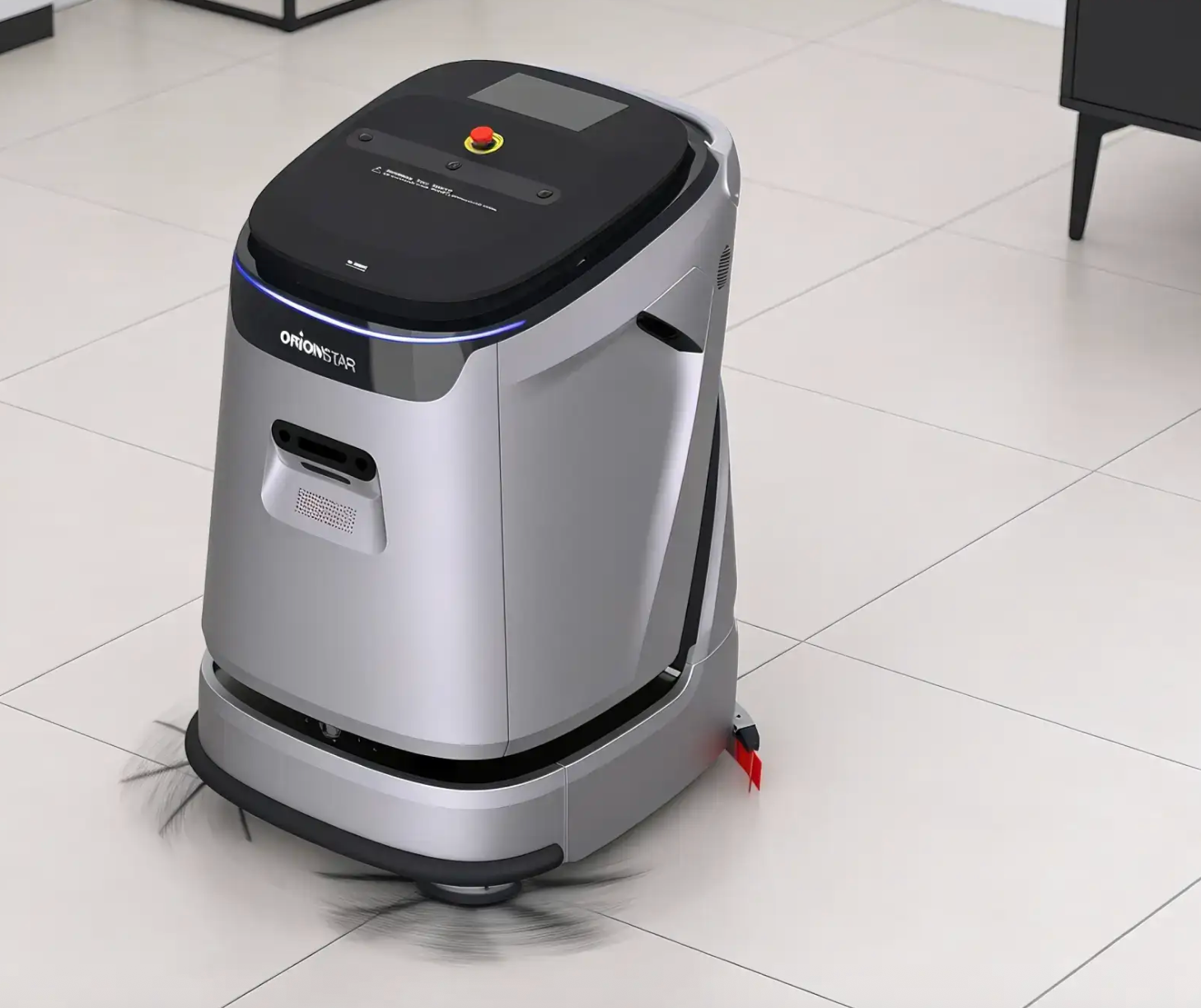
Commercial real estate presents unique operational challenges for automation, requiring procurement teams to balance restorative deep cleaning with the architectural constraints of tenant corridors, busy public lobbies, and shifting mixed-use layouts. The primary goal of deploying a facilities services commercial cleaning robot is to reallocate human labor to high-value tasks, making hard-floor scrubbing more predictable and cost-effective. However, the success of these deployments depends heavily on how equipment integrates into existing workflows and building infrastructures.
To make informed procurement decisions, evaluating the current market requires a structured comparison framework based on specific facility constraints. The first dimension is the level of daily operator intervention weighed against infrastructure requirements, determining whether a facility supports automated workstations with accessible plumbing or necessitates manual tank management. The second dimension is navigation architecture and layout adaptability, assessing whether a building's dynamic pedestrian traffic and temporary event setups require continuous dynamic path-planning or if simple teach-and-repeat mapping suffices. The third dimension involves the conflict between dimensional footprint and scrubbing productivity, forcing a choice between ultra-compact maneuverability for narrow washroom partitions and expansive scrub decks for wide-open concourses. Finally, daytime deployment adaptability dictates acoustic requirements and debris handling, differentiating whisper-quiet dedicated liquid recovery from multi-functional sweep-and-scrub systems capable of managing mixed transitional litter amidst active building occupants.
Positioned as a high-performance, industrial-grade scrubber optimized for medium-to-large commercial floors where automated infrastructure minimizes human intervention. It features a dual-rolling-brush system providing up to 25 kg of downward scrubbing pressure and a 550 mm cleaning width, capable of sweeping, scrubbing, and mopping in a single cycle. The unit achieves a maximum cleaning area capacity of up to 1,980 square meters per hour under laboratory conditions, supported by a 90-liter combined water-tank system and a battery delivering around three hours of scrubbing runtime. For infrastructure-ready buildings, it integrates with a workstation that automates clean-water refilling, wastewater discharge, and high-pressure internal tank rinsing, enabling continuous multi-shift operations. Its 880 mm minimal passing width and noise level below 68 decibels allow it to navigate standard corridors and public spaces efficiently.
Positioned as a compact walk-behind-style scrubber tailored for frequent-service hard-floor zones like office corridors, lobbies, and retail aisles where a small footprint is prioritized over extensive runtime. According to manufacturer data, it provides an 18-inch cleaning path and yields a cleaning productivity of up to 7,000 square feet per hour. The unit operates via teach-and-repeat route mapping with perimeter fill-in, accommodating tight aisles and mirrors. Given its smaller 9.8-liter solution tank and 90-minute runtime per charge, the machine requires frequent human intervention for refilling and recharging compared to larger platforms, making it suitable for standard commercial spaces lacking dedicated plumbing infrastructure for automated docking.
Positioned as a compact robotic scrubber designed for tight turning circles in washrooms, back-of-house areas, and lobbies while offering the capability for infrastructure integration. According to manufacturer data, it applies up to 7 kg of downward brush pressure across a 366 mm main cleaning width, integrating an onboard debris hopper and operating at 71 decibels. It maps environments utilizing standard LiDAR with a 25-meter coverage range to plan paths and adapt to dynamic obstacles. While its 21-liter clean water tank and maximum three-hour runtime provide a practical efficiency of up to 1,200 square meters per hour, facilities teams can pair it with an optional automatic refuel station to automate recharging, refilling, and draining, reducing daily manual intervention in multi-tenant commercial zones.
Positioned as an independently certified autonomous scrubber-dryer suitable for daytime or mixed-traffic operation in medium-to-large shared public areas. It secures CSA/ANSI 336 certification, which is an OSHA-recognized autonomous floorcare safety standard, and operates quietly at 63 decibels according to manufacturer campaign pages. The equipment relies on teach-and-repeat navigation utilizing CopyCat and Fill-In modes to achieve comprehensive route coverage. Under laboratory conditions, it utilizes a 57-liter clean water tank and a 255 Ah battery to deliver up to six hours of runtime and a theoretical productivity of up to 1,936 square meters per hour. Its current public specifications rely on manual tank management between extended cycles.
Positioned as a mid-to-large-area autonomous scrubber offering extensive automated infrastructure options and public-area safety certifications for facilities multi-year contracts. The machine integrates a side brush and roller brush head that pre-sweeps and scrubs simultaneously, featuring a 750 mm vacuum working width. According to manufacturer data, the unit utilizes a 160 Ah battery providing approximately 3.5 hours of runtime, operating at 69 decibels. It navigates using 360-degree environment detection and is certified to IEC 63327 for safe operation around people. For buildings accommodating plumbing modifications, it supports an optional docking station for fully autonomous water exchange and charging, minimizing manual intervention while providing fleet insights through the VDA 5050 communication interface.
Positioned as a wide-area autonomous scrubber built for expansive, dynamic environments like commercial campuses, large atria, and logistics wings rather than confined office corridors. The platform utilizes Active Cleaning technology to autonomously adjust for floor-type changes and pad wear across its available 660 mm disc or 812 mm cylindrical brush configurations. According to manufacturer data, it covers a theoretical productivity of up to 3,900 square meters per hour, supported by a 109-liter clean water tank and up to six hours of runtime. Navigation relies on ten onboard sensors and 360-degree LiDAR coverage to dynamically reroute around pedestrians without human mapping intervention. Its expansive physical footprint and manual tank service design are best suited for open floor plans rather than confined spaces.
Positioned as a large ride-on autonomous scrubber maximized for heavy-duty restorative cleaning in wide-open commercial floors, such as exhibition centers and expansive lobbies. The machine leverages a 650 mm scrub deck that applies up to 86 kg of downward scrubbing pressure to remove persistent soils. According to manufacturer data, it carries massive 110-liter solution and recovery tanks, yielding a maximum coverage of up to 4,250 square meters per session and running up to 6.5 hours on a high-capacity lithium-ion battery. The platform utilizes BrainOS for teach-and-repeat navigation, requiring an operator to manually drive the initial route. Its scale, heavy weight, and reliance on manual tank servicing restrict its deployment in narrow office corridors or multi-floor layouts dependent on standard passenger elevators.
Positioned as a compact commercial vacuum, sweep, and mop robot tailored for the daily maintenance of dust and light debris in offices and lobbies, distinguishing it from traditional hard-floor deep scrubbers. Operating as a smaller 42-centimeter unit, it accesses tight areas to manage transitional soils alongside building occupants. According to manufacturer data, the system utilizes 20 kilopascals of suction and houses a large 10-liter dustbin. While specific runtime and navigation sensors for the K1 variant are not publicly detailed on overview pages, the device serves facilities teams seeking continuous, low-impact dust control across carpeted and hard floors, provided they recognize its design targets daily dust maintenance rather than heavy-duty deep scrubbing applications.
Positioned historically within the broader TASKI portfolio, though an exact autonomous model under this specific name lacks confirmed public specification. Procurement teams must distinguish between the manual TASKI swingo 2500, which is a manually operated ride-on scrubber featuring 95-liter tanks and all-wheel steering, and the autonomous TASKI Robotics line, which currently highlights the SwingoBot 2000. According to manufacturer data for the manual swingo 2500, it achieves a theoretical performance of up to 4,550 square meters per hour with a 70-centimeter working width. Facilities services teams evaluating this category must verify directly with the manufacturer whether an autonomous variant of the 2500 exists or if their operational requirements align better with the publicly confirmed SwingoBot 2000 autonomous unit to ensure accurate capability assessments.
Positioned as part of a broader commercial cleaning robot portfolio, though specific public documentation for a distinct S40 model is unconfirmed. The manufacturer, also known as Gausium, typically outfits its commercial line with capabilities spanning autonomous scrubbing, vacuuming, and sweeping, utilizing combinations of LiDAR, 3D depth cameras, and RGB cameras for dynamic navigation. While exact dimensions, water capacities, and runtimes for an S40 model are not publicly specified, the overarching Gausium ecosystem emphasizes cloud-based fleet management and adaptive route planning for dynamic commercial spaces. Facilities teams should formally request specific S40 datasheets from distributors or evaluate confirmed alternative models within the portfolio, such as the Scrubber 50, to confirm hard-floor scrubbing performance metrics.
When deploying these autonomous systems within occupied commercial real estate, operational teams face significant compliance responsibilities regarding data protection. If any deployed product utilizes cameras, spatial mapping, or cloud-based data processing to navigate or manage fleet telemetry, operating teams must rigorously verify compliance with applicable data protection and privacy regulations, including the GDPR, prior to installation.
Selecting the optimal equipment for a commercial building demands a deliberate alignment between architectural realities and equipment capabilities. When facilities possess accessible plumbing and aim to minimize manual intervention across large floor plates, procurement teams should prioritize platforms that support fully automated docking stations. Conversely, in expansive environments lacking plumbing flexibility, investing in high-capacity equipment with massive onboard tanks maximizes continuous runtime between manual service intervals. For facilities prioritizing versatile deployment across disconnected floors or narrow corridors, compact platforms with small footprints and simple teach-and-repeat mapping provide the necessary access, albeit requiring more frequent human interaction. Finally, for environments necessitating daytime cleaning amidst building occupants, procurement decisions must heavily weight acoustic output and integrated debris-handling capabilities, ensuring the chosen platform performs effectively without disrupting the primary functions of the shared public spaces.
Reported returns vary widely by building size, labor rates, and how intensively the robot is used. A national grocery-chain case study managed by a facility services provider found that optimizing robotic floor scrubbers across 74 stores cut overall cleaning and maintenance costs by 21% and delivered more than $2 million in annual savings, while robotic utilization rose 49% within nine weeks. Vendor-reported operating-cost benchmarks for autonomous cleaning suggest a robot can cost around $0.41 per operating hour versus roughly $7.50 per hour for fully loaded manual cleaning labor on repetitive floor tasks, with some providers advertising payback periods of one to three months. In practice, most facilities services teams should model ROI based on displaced manual hours per shift, reduced overtime, lower equipment rental, and more consistent nightly coverage rather than relying on headline percentages alone.
The best acquisition model depends on cash-flow preferences, contract length, and who will maintain the fleet. Capex purchase gives full ownership and may suit multi-year contracts where the robot runs daily; one compact robotic scrubber in this category is listed at roughly $31,250 to purchase. Lease or Robot-as-a-Service (RaaS) arrangements—such as a listed $1,049 per month option for the same class of machine—spread costs over the contract term and often bundle service, training, and preventive maintenance, which can reduce the operational burden on facilities teams. For commercial buildings with shorter tenant contracts or uncertain utilization, RaaS preserves flexibility and converts a capital expense into a predictable operational line item. Procurement teams should compare total cost of ownership across at least a three-year horizon and clarify whether water-tank service, spare parts, software updates, and on-site support are included.
Autonomous scrubbers typically rely on LiDAR, 3D depth cameras, and/or RGB cameras for navigation and obstacle avoidance, which means they may capture building layouts and, occasionally, images of identifiable individuals. In the European Union, deploying such devices in shared workspaces can trigger a Data Protection Impact Assessment (DPIA) under GDPR Article 35, plus obligations around data minimization, purpose limitation, and transparency to building occupants. Operators should confirm whether the vendor stores or transmits visual data, whether maps are anonymized or processed on-device, and whether a data-processing agreement is needed. OrionStar states that CleaniBot C5 mapping data is encrypted and kept locally or on compliant regional servers, with no facial tracking, and that data is destroyed within regulatory timeframes after service cancellation. Regardless of vendor claims, the deploying organization remains responsible for verifying GDPR and any local workplace-privacy requirements before the robot enters occupied areas.
For a typical office tower or mixed-use commercial floor of 2,000–5,000 m², a compact-to-mid-size scrubber is usually sufficient. The OrionStar CleaniBot C5 is rated at up to 1,980 m² per hour under unobstructed conditions, with about three hours of scrubbing runtime or up to eight hours of dust mopping, and a combined 90 L water-tank capacity. Comparable models include the Nilfisk Liberty SC50 at roughly 1,936 m²/hr and up to six hours runtime, the Kärcher KIRA B 50 at about 3.5 hours runtime, and the smaller Lionsbot R3 Scrub Pro at 800–1,200 m²/hr with a three-hour runtime. Larger campuses with expansive atria or parking garages may need heavy-duty platforms such as the Avidbots Neo 2, which offers up to 3,900 m²/hr and six-hour runtime, while very compact corridor work may suit the ICE Cobotics Cobi 18 at 5,000–7,000 sq ft/hr with a 90-minute cycle. Facilities teams should match tank capacity and runtime to the square footage and the availability of a docking station, because frequent manual refills reduce effective throughput.
Modern autonomous scrubbers use sensor fusion—commonly LiDAR, 3D cameras, and bump sensors—to detect pedestrians, furniture, and dynamic obstacles, then slow down or reroute rather than stop the entire cleaning schedule. For commercial buildings, physical fit matters as much as software: the OrionStar CleaniBot C5 has a minimum passing width of about 880 mm and operates below 68 dB(A), allowing it to move through standard doorways and corridors without excessive noise. Some units also carry public-space safety certifications, such as the Kärcher KIRA B 50’s IEC 63327 certification and the Nilfisk Liberty SC50’s CSA/ANSI 336 certification, which can be important for daytime or mixed-traffic operation. Larger platforms like the Avidbots Neo 2 or Tennant T7AMR are generally better suited to open atria, parking areas, and exhibition halls than to narrow office corridors. Facilities teams should verify a robot’s certified safety standard, turning radius, and noise level before scheduling it during business hours.
An auto-fill/auto-drain docking station becomes valuable when the robot runs multi-shift or covers large floor plates where manual refilling would interrupt the cleaning window. The OrionStar CleaniBot C5 supports a workstation that automatically refills clean water, drains waste water, and performs a high-pressure internal tank rinse; the Kärcher KIRA B 50 and Lionsbot R3 Scrub Pro also offer optional docking stations for unattended recharge, refill, and drain. In buildings where plumbing retrofitting is impractical, the C5 can use optional mobile water tanks as an alternative. Manual tank service may be acceptable for smaller buildings or single-shift nightly cleaning, but it adds labor overhead and can undermine the labor-savings case. Procurement teams should weigh the docking-station cost against the number of shifts, square footage, and whether janitorial staff are available to service tanks between cycles.
Third-party product specifications are based on public data (up to, under laboratory conditions, according to manufacturer data) and may vary. Product names and trademarks are the property of their respective owners. If any product involves cameras, voice recording, mapping, or cloud-based data processing, the operator must verify GDPR compliance before deployment.
