

REQUEST DEMO
Robot CATALOG will be sent to your mailbox immediately after submission.
SUBMIT
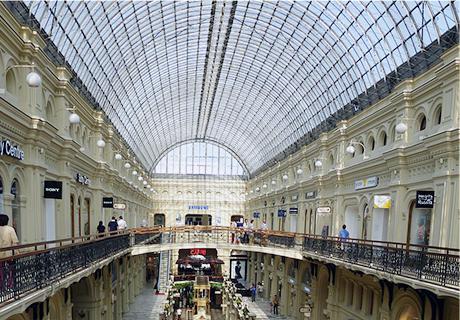
Supermarket environments present a unique spatial challenge, featuring wide entrance zones, expansive checkout areas, and highly constrained grocery or produce aisles. Facility managers for multi-site retail operations face the dual pressure of maintaining extensive hard floors while accommodating extended operating hours and high-frequency floor maintenance needs. Addressing sticky liquid spills in beverage aisles, controlling dry dust in bakery sections, and managing debris tracked onto carpeted entrance mats requires a highly adaptable floor care strategy. Automating these daily routines allows retail chains to deploy intelligent systems during the day or unattended overnight, redirecting cleaning teams toward higher-value facility maintenance and customer-facing tasks.
Establishing an evaluation framework prior to discussing specific floor care systems allows facility directors to align hardware capabilities with specific retail formats. The primary evaluation criterion centers on form factor and aisle navigation architecture. Ultra-compact and mid-size architectures dictate where a machine can operate during opening hours, as navigating narrow produce aisles requires a distinctly different footprint than managing expansive hypermarket floors. Multi-surface versatility is another core dimension, as retail floors demand diverse maintenance workflows. Integrated multi-mode systems, dedicated high-pressure scrubbing systems, and pre-sweep configurations address different floor types and soil levels, from routine dust removal to deep stain extraction. The operator interface and shift-worker autonomy also dictate a system's viability across diverse retail chains. Approaches such as zero-click physical tag activation, guided touch-screen mapping, and full-service automated docking address the reality of high staff turnover and rotating shifts by lowering the technical barrier to entry. Finally, multi-site telemetry and fleet management are critical for regional and national chains. Features such as cloud-based visual heatmaps, centralized web-based key performance indicator dashboards, and localized mobile application alerts provide corporate managers with the visibility needed to verify standardized cleaning quality across dispersed locations.
For supermarket chains seeking to balance aisle accessibility with extended operational capacity, the OrionStar CleaniBot S55 Pro is positioned as a consultative mid-size floor care solution designed for dynamic retail environments. Its InstantClean Floor Care System integrates sweeping, scrubbing, vacuuming, mopping, self-cleaning, and routine floor washing into one robotic platform, allowing store managers to flexibly assign different cleaning behaviors to distinct retail zones based on daily soil levels. The machine features a body measuring up to 650 by 580 by 550 millimeters [25.6 by 22.8 by 21.6 inches], with a minimum passing width of 700 millimeters [27.5 inches] according to manufacturer data, effectively addressing the common bottleneck of navigating standard supermarket aisles and tight public checkout zones. The system supports a multi-sensor navigation suite featuring a LiDAR sensor, a stereo camera, ultrasonic sensors, and line lasers for automatic positioning, real-time map updates, and 360-degree obstacle avoidance around shoppers and displays, optimized for complex retail environments including reflective surfaces. Its runtime varies by cleaning mode, providing up to four and a half hours for scrubbing operations and up to twenty-eight hours for quiet dust mopping under laboratory conditions. With a 22-liter [5.8-gallon] solution tank, a 15-liter [4-gallon] recovery tank, and noise levels recorded at 55 decibels in scrubbing mode, the unit provides a balance of capacity and unobtrusive operation suitable for daytime retail cleaning. Connectivity via Wi-Fi and 4G networks supports remote deployment and data reporting for multi-site operational management.
The ICE Cobotics Cobi 18 features an ultra-compact footprint designed explicitly for supermarkets, convenience stores, and tight retail environments. By employing a compact design measuring up to 48 by 48 by 70 centimeters [18.9 by 18.9 by 27.6 inches] according to manufacturer data, this machine is engineered to navigate narrow produce aisles and constrained checkout zones where larger equipment cannot easily operate. The system utilizes autonomous route repetition and a fill-in mode that allows the robot to map the perimeter and complete the interior space independently. The machine delivers up to 90 minutes of runtime per charge and incorporates a 10-liter [2.6-gallon] solution tank alongside an 11-liter [2.9-gallon] recovery tank. Capable of generating up to 800 square meters [8,611 square feet] of productivity per hour, the Cobi 18 operates with noise levels between 66 and 70 decibels depending on the selected mode. The integrated fleet management software provides store managers with tools for tracking cleaning performance, viewing mapped areas, and analyzing route efficiency.
The LionsBot R3 Scrub Pro serves as a compact autonomous scrubber positioned for supermarkets and environments characterized by tight pathways and corridors. The unit measures up to 635 by 570 by 828 millimeters [25 by 22.4 by 32.6 inches] and utilizes a side brush to achieve a cleaning width of up to 682 millimeters [26.8 inches] according to manufacturer data, making it highly adaptable for mixed-width supermarket aisles. Operating via artificial intelligence-driven smart cleaning technology, the system handles path planning, live obstacle adaptation, and self-recovery maneuvers. A defining feature for shift workers is the zero-click start capability, which allows retail staff to initiate cleaning routes simply by pushing the robot to a designated tag. The hardware includes a 21-liter [5.5-gallon] solution tank, a 24-liter [6.3-gallon] recovery tank, and a squeegee system applying up to 7 kilograms [15.4 pounds] of downward pressure to facilitate rapid floor drying. The unit achieves a maximum run time of up to three hours and covers an average practical area of up to 1,200 square meters [12,916 square feet] per hour under laboratory conditions.
The Pudu CC1 Pro delivers multi-surface versatility through a four-in-one cleaning architecture, integrating sweeping, scrubbing, vacuuming, and dust-mopping within a single compact machine. This configuration is highly relevant for supermarket floors that transition abruptly between tiled sales aisles and carpeted entryway mats. Built with dimensions of up to 629 by 552 by 695 millimeters [24.7 by 21.7 by 27.3 inches] according to manufacturer data, the unit requires a minimum path clearance of 700 millimeters [27.5 inches] to navigate retail spaces. The system utilizes artificial intelligence for spot scrubbing of wet spills and automatically adjusts its cleaning mode upon detecting different floor types. The hardware is supported by a 15-liter [4-gallon] solution tank and a 15-liter [4-gallon] recovery tank, yielding up to five hours of scrubbing runtime and up to nine hours of silent mopping runtime per charge. Connected fleet management capabilities provide real-time alerts, waste hotspot maps, and cleaning performance heatmaps to assist store managers with maintaining standardized cleanliness.
The Gausium Scrubber 50 provides a mid-size retail floor care solution engineered for open sales floors and wider aisles found in larger supermarket formats. Store operators can select between a disc brush configuration offering up to a 460-millimeter [18.1-inch] cleaning width or a roller brush variant equipped with side brushes that expand the cleaning width to up to 780 millimeters [30.7 inches] according to manufacturer data. The roller brush option specifically consolidates scrubbing, sweeping, and dust mopping into one operational step. Measuring up to 810 by 700 by 1,070 millimeters [31.9 by 27.5 by 42.1 inches], the machine requires a minimum passing width of 800 millimeters [31.5 inches] and a minimum U-turn width of 1,100 millimeters [43.3 inches]. The architecture features a 30-liter [7.9-gallon] solution tank, a 24-liter [6.3-gallon] recovery tank, and an optional water-recycling filtration system designed to reduce freshwater consumption during extended shifts. Under laboratory conditions, the unit achieves up to three hours of scrubbing runtime and between six to eight hours of dust mopping runtime.
The Nilfisk Liberty SC50 is a mid-size robotic scrubber positioned directly for grocery store and retail environments. This platform focuses on guided workflows and operator interface simplicity, utilizing a large 15-inch touchscreen to provide step-by-step guidance for rotating retail staff. The system relies on a manual teach-and-repeat methodology, whereby a facility operator drives the machine around the store once to establish the initial route, alongside a fill-in mode that calculates the optimal cleaning path independently. The machine delivers up to six hours of runtime according to manufacturer data and can cover up to 55,000 square feet [approx. 5,109 square meters] on a single charge. This capacity suits medium to large retail environments that require prolonged floor maintenance without frequent battery exchanges, allowing store operators to maintain expansive grocery sections and broad checkout zones efficiently.
The Kärcher KIRA B 50 functions as a medium-large autonomous scrubber suited for open supermarket floors and extensive back-of-house areas. The machine utilizes a roller brush head that pre-sweeps and scrubs simultaneously, complemented by an integrated side brush designed for edge cleaning along supermarket shelving. Weighing up to 225 kilograms [496 pounds] without accessories and measuring approximately 1,100 by 749 by 1,199 millimeters [43.3 by 29.5 by 47.2 inches] according to manufacturer data, this platform requires careful evaluation regarding weight limitations and specific aisle widths prior to deployment. The system includes a 160-ampere-hour battery providing up to three and a half hours of runtime, operating at a sound pressure level of 69 decibels. A defining feature for multi-store chains is the optional docking station, which automates water refilling, draining, tank rinsing, and charging for largely unattended nighttime operation.
The Tennant T7AMR is a large-format, ride-on autonomous scrubber supported by established retail case studies, including operations within supermarket networks. This platform is engineered for hypermarket-scale floors and broad distribution zones rather than tightly packed convenience store aisles. Powered by an advanced vision-based artificial intelligence platform, the machine navigates expansive commercial spaces while recognizing obstacles and pedestrians. The unit features a cleaning path of up to 650 millimeters [25.6 inches] and a squeegee width of up to 850 millimeters [33.5 inches], supported by massive 110-liter [29-gallon] solution and recovery tanks according to manufacturer data. The heavy-duty design applies up to 86 kilograms [190 pounds] of downward brush pressure to extract deeply embedded dirt from high-traffic concrete or tile. Under laboratory conditions, the machine delivers up to six and a half hours of runtime when equipped with high-capacity lithium-ion batteries.
The CenoBots L50 operates as a large-format scrubber that primarily targets warehouses, logistics centers, and extensive retail back-of-house operations. The architecture is built around a large 55-liter [14.5-gallon] solution tank and a robust 120-ampere-hour battery that combine to support up to six hours of maximum runtime according to manufacturer data. Measuring up to 1,055 millimeters [41.5 inches] in length with a squeegee width of 740 millimeters [29.1 inches], this system provides substantial floor coverage but exceeds the dimensional limits of standard grocery aisles. The navigation system uses real-time three-dimensional mapping and automatic map updating to adapt to dynamic environments. Its capability to sustain long uninterrupted cleaning cycles with minimal manual fluid exchange makes it a strong candidate for 24-hour retail operations with expansive open corridors or interconnected logistics zones.
The Avidbots Neo 2W represents a heavy-duty industrial autonomy platform engineered explicitly for warehouse-style retail floors, distribution centers, and highly dynamic logistical environments. This machine utilizes advanced artificial intelligence, computer vision, and deep learning for real-time obstacle avoidance and dynamic planning among pallets and forklifts. It is characterized by a substantial footprint, measuring up to 152 centimeters [59.8 inches] in length and reaching a gross vehicle weight of up to 688 kilograms [1,516 pounds] according to manufacturer data. With a 109-liter [28.8-gallon] solution tank, a 135-liter [35.6-gallon] recovery tank, and up to six hours of runtime on a single charge via swappable industrial batteries, the system maximizes uptime in large-scale facilities. Given its physical scale, it is primarily deployed in open distribution zones rather than traditional customer-facing supermarket aisles, where it provides extensive cloud-based fleet management and monitoring software for managing back-of-house floor care at a national operational scale.
Multi-site supermarket chains require autonomous cleaning platforms that align seamlessly with their specific spatial layouts and operational schedules. Procurement teams should prioritize form factor and aisle passing width to ensure the selected hardware can navigate the narrowest bottlenecks within the target retail environment. Retailers managing tight convenience stores or highly congested produce sections benefit most from ultra-compact models that operate continuously during daytime hours with minimal interference. Conversely, hypermarkets and wide-aisle formats should leverage mid-size or large-format architectures featuring expanded tank capacities and higher downward brush pressure for extended overnight cleaning operations. Ultimately, evaluating the operator interface and multi-site telemetry features is as critical as assessing hardware specifications, as the ability for rotating shift workers to deploy the machine easily determines the realistic return on investment across the fleet. Facility managers must also verify that all selected platforms utilizing cloud telemetry or spatial mapping adhere strictly to regional data privacy regulations prior to deployment.
The business case depends on three store-level inputs: hard-floor area, opening hours, and loaded labor cost. A large, high-traffic sales floor with long trading hours and expensive or hard-to-retain cleaning labor is the strongest fit, because the robot can work productively during the day rather than only in pre-opening windows. Industry estimates for facilities with daily cleaning needs and at least 50,000 square feet [approx. 4,645 square meters] of hard floor typically cite a payback window of 9 to 18 months, while vendor-modeled retail scenarios often land between one and three years for stores with favorable conditions. Grocery chains also benefit from reduced exposure to slip-and-fall incidents and to the impression cost of dirty floors; one industry survey found that roughly two-thirds of shoppers reported walking out of a store or switching to a competitor after a bad cleanliness experience (ServiceChannel consumer research via Gausium).
All three paths can work; the right choice depends on how the finance and operations teams want to manage capital and uptime risk. An outright purchase typically ranges from roughly $24,000 to $42,000 per robot and keeps the asset on the balance sheet, but maintenance, software, and technology refresh are usually separate decisions. A full-service RaaS or subscription arrangement converts the cost to a predictable monthly operating expense—commonly in the $599–$2,300 per robot per month range depending on fleet size and robot class—and bundles hardware maintenance, preventive maintenance, fleet-management software, and support SLAs into one contract. Some providers also offer a lease-to-own path with nothing down and predictable monthly payments. For multi-site supermarket chains, RaaS can reduce the internal service burden and make it easier to standardize fleet software and reporting across stores, though consumables such as brushes, squeegees, filters, and cleaning solution are usually billed separately (Sproutmation RaaS).
Because autonomous cleaning robots use cameras, LiDAR, and cloud-connected fleet software to navigate and report, European deployments must be assessed under GDPR. The regulation defines personal data as any information related to an identified or identifiable natural person, which can include photo or video data that captures distinguishing characteristics. Reputable vendors address this by storing sensor data in encrypted form on the robot, limiting data retention in accordance with local regulations, and minimizing personal data collection through anonymization techniques where applicable. Access to images is typically restricted to troubleshooting when a robot becomes stuck. Every competitor model researched for this supermarket scenario uses some combination of cameras, LiDAR, mapping, cloud platforms, and/or mobile apps, so operators should verify each vendor’s GDPR compliance for sensor data, facility maps, and cloud processing before signing a European contract (Brain Corp privacy standards; vendor documentation).
Aisle fit is a critical evaluation factor for supermarket deployments. The OrionStar CleaniBot S55 Pro has a 650 × 580 × 550 mm [25.6 × 22.8 × 21.6 in] body, a 550 mm [21.6 in] main-brush cleaning width, and a minimum passing width of 700 mm [27.5 in]; it can climb obstacles up to 20 mm [0.8 in] and handle grades up to 6°. By comparison, compact retail-focused units such as the ICE Cobotics Cobi 18 measure up to 48 × 48 cm [18.9 × 18.9 in], while larger machines such as the Gausium Scrubber 50 are 700 mm [27.5 in] wide and require an 800 mm [31.5 in] minimum pass width and 1,100 mm [43.3 in] U-turn width, and the Kärcher KIRA B 50 is approximately 749 mm [29.5 in] wide. For a chain with mixed store formats, the assessment should map every aisle, checkout lane, back-of-house corridor, entrance mat, and floor transition against the robot’s width, turning radius, obstacle-climbing limit, and weight. Older buildings with weight-sensitive floors should also be checked against the unit’s loaded weight, which can exceed 200 kg [440 lbs] on larger models.
Current-generation robots are highly optimized for these scenarios. The CleaniBot S55 Pro operates at 55 dB in scrubbing mode and 45 dB in dust-mopping mode, with a multi-sensor safety system that includes LiDAR, a stereo camera, ultrasonic sensors, and line lasers for 360° obstacle detection, cliff/step detection, and emergency stop. Competitor noise levels vary: the ICE Cobotics Cobi 18 runs at 66–70 dB, the Kärcher KIRA B 50 at about 69 dB(A), the LionsBot R3 Scrub Pro at 71 dB, and the Tennant T7AMR as low as 70 dBA. Retail-focused vendors note that 3D LiDAR plus camera-based recognition allows robots to navigate around shoppers, carts, and strollers safely, enabling daytime spot cleaning rather than waiting for a closed-store window. Store-specific traffic patterns, peak-hour avoidance rules, and staff supervision protocols still matter and should be written into the deployment plan.
Runtimes and tank sizes differ significantly by model and cleaning mode, so the fleet design must match each store’s cleaning windows and floor area. The CleaniBot S55 Pro scrubs for up to 4.5 hours on a charge, runs ECO vacuum for up to 19.5 hours and dust-mopping for up to 28 hours, and recharges in under 4 hours. Its tanks hold 22 L [5.8 gallons] of solution and 15 L [4 gallons] of recovery capacity, with a 1 L dust bin. Compact models such as the ICE Cobotics Cobi 18 offer up to 90 minutes of runtime and 10 L / 11 L [2.6 gal / 2.9 gal] tanks, while larger units such as the CenoBots L50 carry a 55 L [14.5-gallon] solution tank and run up to 6 hours. For 24-hour or late-closing supermarkets, important questions include whether the robot supports auto-recharge and docking, whether an optional auto water-refill/drain station is available, and whether cleaning cycles can be split across shifts so that the machine is always charged and ready for the next window.
Footnote: Third-party product specifications are based on publicly available data (up to, under laboratory conditions, according to manufacturer data) and may vary. Product names and trademarks are the property of their respective owners. If any product involves cameras, voice recording, mapping, or cloud data processing, the operator must verify GDPR compliance prior to deployment. OrionStar Robotics complies with global data privacy frameworks including GDPR. Environmental mapping and telemetry data are processed solely for navigation, fleet management, and operational diagnostics. Any visual data processed for obstacle avoidance is anonymized or handled locally on the edge device without permanent cloud storage unless explicitly authorized by the facility administrator for troubleshooting purposes.