

REQUEST DEMO
Robot CATALOG will be sent to your mailbox immediately after submission.
SUBMIT
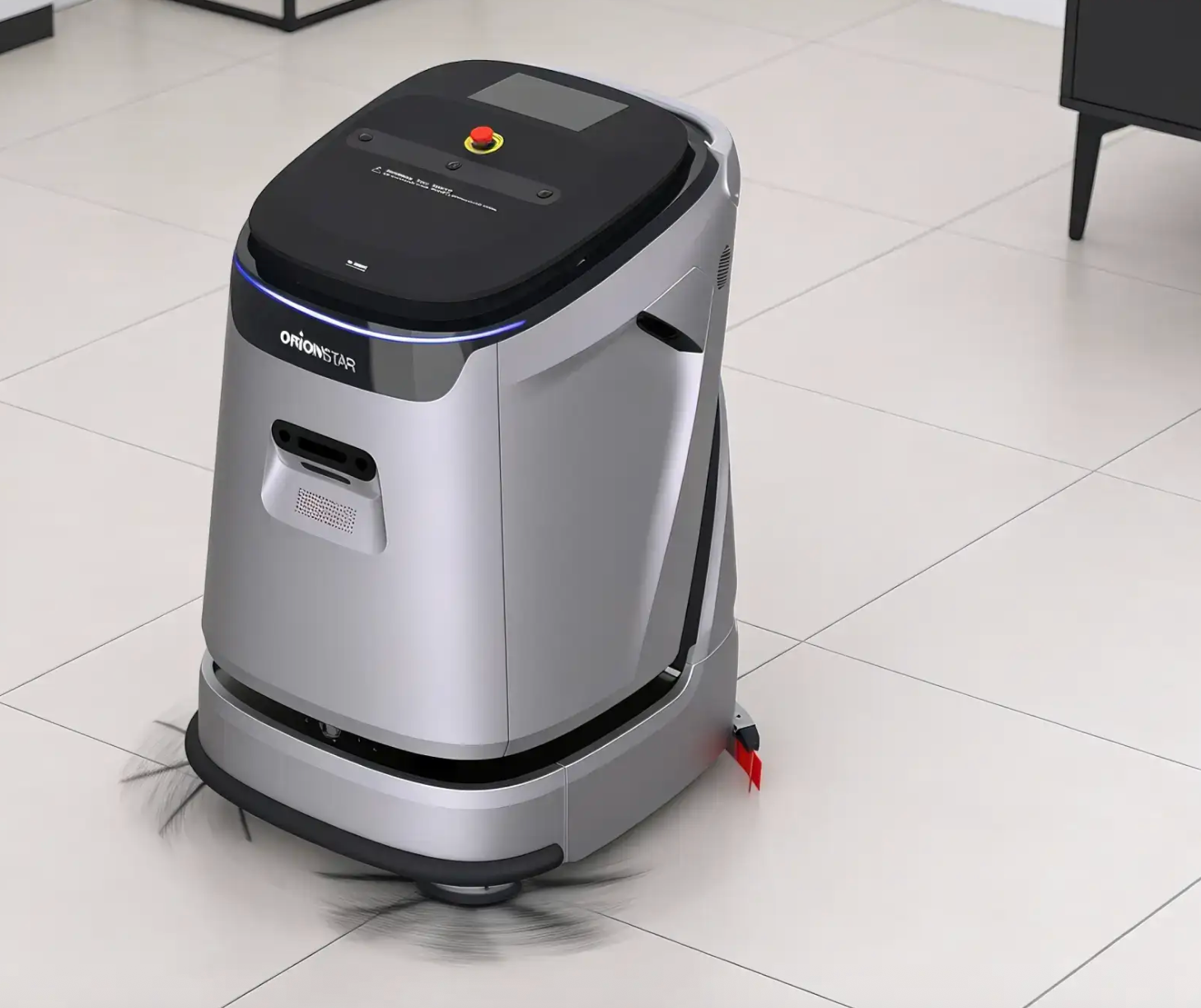
The Supermarket Retail industry faces intensifying pressure to maintain rigorous hygiene standards in high-traffic supermarket bakery and deli sections, balancing rigorous food safety compliance with persistent labor shortages and rising operational costs. As facility managers strive to increase cleaning frequencies without proportionately expanding their workforce or budgets, traditional manual sanitation methods are proving increasingly difficult to scale efficiently. To address these compounding challenges of workforce retention, margin compression, and strict regulatory adherence, operators are turning to commercial cleaning robots as a reliable, automated solution to ensure consistent, high-quality floor maintenance.
Illustrating these automated capabilities in a physical unit, the OrionStar CleaniBot C5 operates as an industrial-grade autonomous floor-scrubbing system designed for heavy-duty environments. According to manufacturer data, it utilizes a dual-rolling-brush system delivering up to 25 kg of downward scrubbing pressure to remove stubborn grime and oil, which is particularly relevant for food preparation zones. The robot is engineered to map an area of up to 10,000 square meters in defined environments for autonomous path planning and features an automated workstation that handles clean-water refilling, battery recharging, and self-cleaning of its 90-liter combined water tank system, ensuring continuous operation with minimal staff intervention between cycles.
These zones generate high volumes of dry debris like flour, sugar, and crumbs, which can easily be tracked into retail aisles. Autonomous robots equipped with sweeping and scrubbing capabilities can effectively lift this fine particulate matter in a single pass to minimize its spread. By scheduling frequent, localized cleaning cycles, store managers can maintain a safer, less slippery floor for bakers and staff.
The floors immediately in front of and behind deli counters are prone to dropped food, liquids, and grease spills that present slip hazards and hygiene risks. Heavy-duty cleaning robots applying high downward scrubbing pressure can effectively lift oily residues from the floor surface. Furthermore, their smart obstacle avoidance ensures they can navigate safely around queuing customers and busy deli attendants during daytime hours.
High-traffic pathways surrounding self-service bakery bins and hot food bars require constant upkeep to maintain an appetizing environment for shoppers. Cleaning robots operate quietly at low decibel levels (<68 dB(A)), allowing them to scrub these aisles without disrupting the customer shopping experience. By continuously patrolling these zones, they quickly address minor spills and maintain the high visual cleanliness standards that consumers expect.
Behind the scenes, food prep areas demand rigorous sanitation to meet strict food safety and HACCP regulations. Automated floor scrubbers provide time-stamped coverage maps after each route, verifying that the entire prep zone floor was cleaned according to schedule. This digital traceability replaces manual paper logs, supporting audit readiness and assisting in consistent compliance with hygiene protocols.
Beyond standalone operation, commercial cleaning robots are increasingly functioning as mobile IoT nodes within broader smart-building ecosystems. Through IoT-enabled communication, these machines can interface directly with Building Management Systems (BMS) for multi-floor navigation and synchronized operations. Additionally, their operational data can flow seamlessly into Computerized Maintenance Management Systems (CMMS) via API connections, enabling demand-based cleaning triggered by store occupancy sensors and automatically generating work orders for consumable replacements or scheduled maintenance.
By combining reduced resource consumption with transparent operational data, autonomous cleaning systems actively advance the retail sector's broader environmental, social, and governance objectives.
Commercial cleaning robots are significantly improving the way the Supermarket Retail industry maintains supermarket bakery and deli sections, shifting facility management from reactive manual labor to proactive, data-driven automation. By addressing critical workforce shortages and ensuring rigorous food safety compliance, these technologies provide a sustainable path forward for modern grocery operations. The OrionStar CleaniBot series offers multiple models to adapt to various spatial constraints and facility requirements, providing supermarket operators with scalable options to evaluate for their specific operational needs.