

REQUEST DEMO
Robot CATALOG will be sent to your mailbox immediately after submission.
SUBMIT
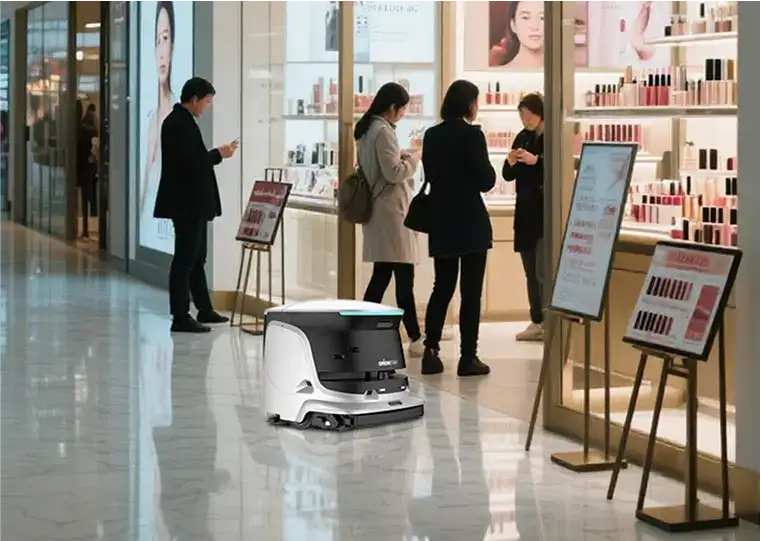
Integrated Facility Management in airports faces extraordinary pressures, operating as nonstop mini-cities where facility teams must maintain vast, heavily trafficked terminal spaces with zero tolerance for disruption. Confronted by persistent labor shortages, rising wages that consume up to 70% of cleaning budgets, and stringent compliance requirements from aviation and health authorities, facility managers struggle to maintain consistent hygiene standards using manual labor alone. In response to these escalating demands, commercial cleaning robots have emerged as a vital solution, offering a way to automate repetitive floor care, optimize resource allocation, and ensure continuous, auditable cleanliness across expansive airport facilities.
Demonstrating how these automated capabilities function in a real-world platform, the OrionStar CleaniBot S55 Pro provides an integrated floor-care system designed for large commercial spaces. According to manufacturer data, the unit utilizes a 15-sensor navigation array—including LiDAR, stereo cameras, and ultrasonic sensors—to map areas up to 10,000 square meters while avoiding obstacles and detecting drops. To support extended airport operations, the robot delivers runtimes of up to 19.5 hours in its ECO vacuum mode and covers up to 1,197 square meters per hour during standard scrubbing tasks. Furthermore, its built-in Wi-Fi and 4G connectivity facilitate the remote data reporting and cloud-based maintenance tracking necessary for centralized facility oversight.
These high-traffic waiting areas experience continuous passenger turnover, accumulating debris and dust on diverse floor surfaces throughout the day. Autonomous sweepers can quietly navigate around seating arrangements using dust mopping or ECO vacuum modes, keeping floors presentable without generating disruptive noise.
Gate areas present immense scheduling challenges, as cleaning must be executed rapidly in the tiny operational windows between boarding and deplaning. Cleaning robots can be orchestrated to automatically deploy to specific gates immediately after passenger clearance, rapidly scrubbing the hard floors before the next flight queue forms.
Passengers pulling wheeled luggage directly from outdoors track significant amounts of dirt, moisture, and debris into these expansive entry points. Heavy-duty robotic scrubbers can continuously patrol these wide-open zones, automatically applying precise water dosing and immediate suction to help keep floors dry and reduce slip risks for heavy foot traffic.
Connecting various terminals and amenities, these massive, elongated stretches of flooring require enormous amounts of manual labor to maintain. Integrated floor-cleaning robots can utilize long-range LiDAR mapping to autonomously scrub or vacuum these straightaways over extended shifts, dramatically reducing the time human crews spend walking back and forth.
Commercial cleaning robots function as connected mobile nodes within an airport’s broader smart building ecosystem. Their digital management and connectivity capabilities allow operational data such as cleaning coverage and machine status to feed into existing facility management infrastructure. Operational data from the robots can support Computerized Maintenance Management Systems (CMMS) by providing runtime-based inputs for predictive maintenance scheduling, which has been shown to reduce unplanned repairs by up to 89% in structured programs. Additionally, through Building Management Systems (BMS) and IoT sensor networks, robots operating during off-peak hours can share occupancy and environmental data, allowing the facility to adjust HVAC and lighting output in cleaned zones to achieve compound energy savings.
Ultimately, the deployment of commercial cleaning robots transforms routine sanitation into a measurable, data-backed driver of an airport’s environmental and sustainability initiatives.
Commercial cleaning robots are significantly improving how Integrated Facility Management operates within airports, shifting the paradigm from reactive manual labor to data-driven autonomous maintenance. By addressing critical labor shortages, improving consistency, and providing verifiable compliance data, these intelligent platforms allow facility teams to master the complexities of nonstop terminal environments. As facilities explore automation, the OrionStar CleaniBot series offers multiple models to accommodate various floor types, noise requirements, and operational scales, providing options for operators looking to integrate smart robotics into their airport management strategies.
Note: Industry statistics cited in this article are drawn from publicly available sources including the Transportation Research Board, Tennant Company, Brain Corp, and Avidbots. Actual cleaning efficiency, runtime, and ROI may vary depending on terminal layout, floor conditions, and operational factors. The CleaniBot S55 Pro is designed for commercial floor cleaning and does not guarantee medical-grade sterilization.