

REQUEST DEMO
Robot CATALOG will be sent to your mailbox immediately after submission.
SUBMIT
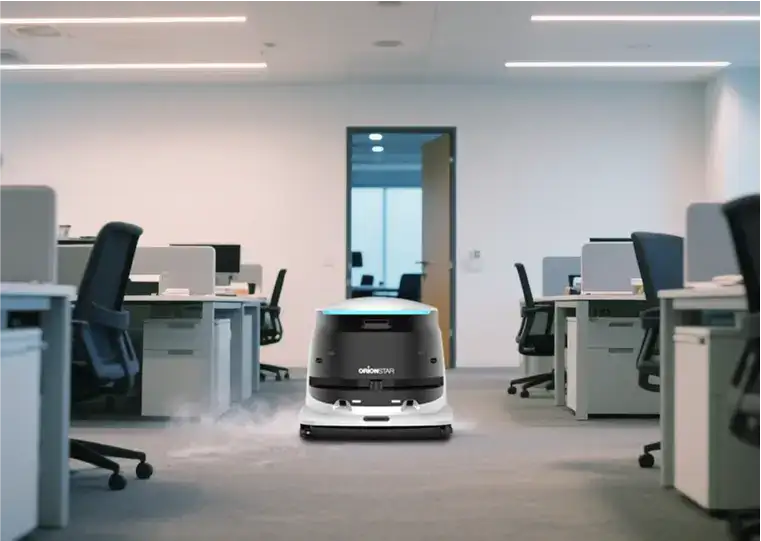
Integrated facility management providers orchestrating operations across commercial buildings, office towers, and mixed-use facilities face complex logistical hurdles when standardizing floor care. Modern service-level agreements demand rigorous, verified proof of execution across multi-site portfolios, transforming basic cleaning routines into heavily scrutinized data points. Deploying commercial cleaning robots for integrated facility management operations addresses these challenges by delivering consistent performance monitoring and consolidating reporting streams into actionable insights for building owners. When autonomous platforms assume repetitive surface maintenance, facility contractors can successfully reallocate human capital toward cross-service line synergy, deploying personnel for preventative maintenance, specialized sanitation, or security oversight. To fully realize this operational shift, procurement teams must evaluate platforms capable of robust building management system and computerized maintenance management system connectivity, ensuring robotic fleets integrate seamlessly into existing digital oversight architectures.
Evaluating autonomous floor care demands a comprehensive analysis of underlying software ecosystems and physical infrastructure requirements. Fleet visibility architectures generally split into two operational routes. Centralized, web-based command center ecosystems provide regional managers with macro-level oversight, generating extensive productivity metrics and sector-level coverage maps necessary for stringent compliance audits. Conversely, mobile-first application platforms paired with cloud dashboards deliver localized, real-time task notifications and digital cleaning visualization directly to on-site personnel, expediting localized scheduling. Infrastructure integration also dictates labor allocation. Standard automated charging systems handle power replenishment but require facility staff to manually empty and refill fluid tanks using modular hardware designs. Advanced automated workstation infrastructure significantly reduces routine human intervention by connecting directly to building plumbing, autonomously managing battery charging, wastewater drainage, and clean water refilling to support continuous overnight operations.
Navigational logic and mechanical versatility further define a platform's suitability for specific commercial zones. Certain platforms utilize proactive spot-cleaning algorithms powered by visual sensors, directing the machine to target identified waste and bypass clean areas, thereby conserving energy in dynamic environments. Other systems prioritize continuous coverage navigation, fusing data from light detection and ranging hardware with ultrasonic sensors to systematically process every accessible square meter of a defined zone. From a mechanical perspective, integrated facility management teams must choose between multi-functional platforms that consolidate sweeping, scrubbing, and vacuuming into a single chassis to handle mixed-floor offices, and single-purpose specialized machines engineered specifically for heavy-duty, high-capacity execution in vast uniform spaces like parking garages or expansive retail concourses.
Positioned as a compact multi-mode platform, this machine serves diverse commercial buildings requiring versatile floor coverage across mixed-use zones. The system integrates six specific cleaning configurations into a single mechanical architecture, consolidating sweeping, scrubbing, vacuuming, mopping, self-cleaning, and disinfection-related workflow steps. Rather than deploying separate machines for hard lobby floors and quiet office corridors, facility operators utilize zone-based digital mapping to trigger automatic mode transitions as the machine navigates different environments. Acoustic management remains a central component of its public-facing deployment, generating sound emissions of up to 55 decibels during active scrubbing and dropping to up to 45 decibels under dust mopping configurations, according to manufacturer data. Navigating through tight spaces with a minimum passing width requirement of 700 millimeters, the platform utilizes multi-sensor fusion including stereo cameras and ultrasonic detectors to map layouts and avoid dynamic obstacles. For continuous power, the unit utilizes a standard automated recharging dock, requiring on-site personnel to periodically interact with its quick-release, washable wastewater tank to manage fluid levels between designated shifts.
Engineered for mid-to-large facilities necessitating extended autonomous operation, this platform operates primarily as a three-in-one system executing scrubbing, sweeping, and dust mopping within a singular route. Integrated facility management providers deploy this unit across expansive corporate headquarters and retail centers where minimizing unnecessary machine travel directly impacts operational efficiency. The unit incorporates an artificial intelligence-driven spot-cleaning mode that uses visual sensors to actively scan for localized debris, prompting the robot to clean specific target areas rather than continually washing uncontaminated surfaces. Operators aiming to drastically reduce human intervention can pair the machine with an optional automated workstation module that connects directly to the facility plumbing infrastructure to automatically manage battery charging, freshwater refilling, and wastewater draining. Furthermore, the internal architecture features a dedicated water recycling filtration system that, according to manufacturer data, significantly diminishes freshwater consumption, allowing the machine to execute prolonged cleaning cycles with minimal resource depletion.
Targeting multi-zone mixed-floor buildings, this system functions as a four-in-one compact platform capable of executing sweeping, scrubbing, vacuuming, and dust mopping tasks. Integrated facility management teams deploy this machine in environments where hard-surface corridors frequently transition into carpeted meeting rooms or reception areas. The platform utilizes intelligent lift control mechanisms that automatically adjust the cleaning implements, allowing it to transition seamlessly onto soft floor coverings when utilizing its specialized carpet vacuuming assembly. Its reduced physical dimensions permit navigation through narrow passageways and tight elevator cabs that typically obstruct larger industrial scrubbers. Facility managers can configure the operational infrastructure to match site constraints, choosing between a standard automated charging dock for power recovery or an optional advanced workstation module that automates fluid management and detergent dispensing. Relying on advanced mapping algorithms, the robot features breakpoint resume logic, enabling it to pause its current task, return for power replenishment, and autonomously navigate back to the exact location to finish incomplete zones.
Built to process large open concourses, transit hubs, and warehouse-adjacent spaces, this heavy-duty scrubber operates exclusively as a dedicated floor washing platform. Facility contractors rely on this substantial machine for expansive, uniform environments where multi-surface versatility takes a secondary position to massive fluid capacity and raw area coverage. According to manufacturer data, the unit combines high-capacity internal tanks with swappable industrial battery packs to deliver extended single-charge runtimes suited for specialized washing unit categories. The navigational intelligence relies heavily on dynamic path planning to identify and circumnavigate floor-level obstacles common in heavily trafficked logistics centers or retail environments. Management teams oversee the active fleet via a highly centralized web-based command center platform that generates comprehensive sector-level coverage maps and detailed productivity metrics. This digital ecosystem empowers remote operators to extract granular compliance reports for building owners, though the platform relies on staff for manual fluid management between shifts rather than integrating with an automated plumbing workstation.
Designed specifically for parking structures, loading docks, and back-of-house dry debris zones, this machine functions as a dedicated high-performance sweeper. It deliberately omits wet scrubbing capabilities, focusing entirely on autonomous dry sweeping to capture coarse dirt, packaging materials, and industrial particulate matter. The navigational architecture utilizes a robust artificial intelligence processor paired with specialized light detection sensors to identify mobile vehicles and navigate safely through dynamic, heavy-traffic transit areas. Facility management providers frequently integrate this unit into a synchronized operational structure using specialized fleet coordination software, which allows the sweeping machine to operate directly ahead of an autonomous scrubber in a continuous sweep-then-scrub sequence. By segregating heavy debris removal from fluid-based polishing, this specialized deployment maximizes the efficiency of each dedicated machine. Operating teams monitor daily execution through connected applications, extracting precise debris-clearing metrics to validate complex service agreements for the external transit and storage zones of commercial properties.
Implementing autonomous floor care requires a rigorous alignment between building topography and robotic capabilities. Integrated facility management providers must determine whether a commercial property demands the multi-functional versatility of a platform capable of handling diverse surfaces, or the raw capacity of a specialized, single-purpose machine. Furthermore, the decision between standard automated charging and fully integrated plumbing workstations dictates the exact degree to which human labor can be reallocated to higher-value building maintenance tasks. Ultimately, success relies heavily on transparent digital connectivity, ensuring that whichever physical asset patrols the corridors, its generated data flows seamlessly into established compliance dashboards to demonstrate verifiable operational value to commercial building owners.
Published operator case studies place annual savings in the range of USD 30,000–150,000 per deployed unit, driven primarily by labor-hour reduction, predictable area coverage, and fewer rework incidents. Payback periods for daily-use facilities with 50,000+ sq ft of hard-floor coverage typically fall in the 9–24 month range, with overnight-shift deployments often achieving the fastest returns because they eliminate premium-rate labor. When modeling ROI, IFM procurement leads should use loaded labor cost (base wage multiplied by roughly 1.35–1.45 to account for benefits, taxes, workers' compensation, and supervision) rather than hourly wage alone, and factor in the robot's annual operating cost, which typically runs USD 4,000–7,000 per unit for consumables, preventive maintenance, and wear-item replacement. The global commercial cleaning robots market was valued at approximately USD 1.35 billion in 2024 and is projected to reach USD 3.95 billion by 2032 (CAGR above 20%), indicating that more FM buyers are clearing the ROI hurdle. For IFM providers specifically, savings are amplified when cleaning data feeds into a centralized compliance platform, reducing the labor previously spent assembling manual SLA evidence for building owners.
SLA compliance evidence is where commercial cleaning robots deliver value beyond the cleaning itself. Most platforms publish cleaning reports and coverage maps to their own cloud console. Avidbots' Command Center provides sector-level coverage maps, per-robot cleaning-plan success rates, and detailed exportable reports. Gausium's cloud platform and Kärcher's KIRA web portal deliver similar reporting with mobile-device notifications. OrionStar's CleaniBot S55 Pro supports Wi-Fi and 4G connectivity with cloud-based data reporting and OTA updates. For an IFM contractor bidding a multi-site SLA, the key differentiator is whether the platform can produce per-shift, per-zone coverage evidence in a format the building owner accepts. Most platforms export PDF or CSV; native API integration with a customer's CMMS or BMS is not yet universal and should be confirmed in writing before contract signature. IFM providers that manage mixed-brand fleets may also consider third-party fleet management platforms (such as ToolSense RoboHub) that normalize data across manufacturers into a single dashboard, enabling consistent client-facing reporting regardless of robot brand. For EU/UK deployments, verify each vendor's GDPR posture—including data controller/processor allocation, sub-processor lists, data residency, and retention policies—before commissioning, since onboard cameras and cloud-based mapping create a data-processing footprint that is contractually relevant.
Commercial cleaning robots can be procured through outright purchase, subscription, Robotics-as-a-Service (RaaS), or leasing. Avidbots sells the Neo 2W primarily through quote-based subscription arrangements tied to its Command Center software and Customer Success mapping service. Kärcher offers KIRA Care and KIRA Care Plus packages that bundle the web portal, software updates, a functional guarantee (including battery), planned service visits, and—on the Plus tier—a fast-response replacement machine. For an IFM contractor, RaaS preserves capital, includes software updates, and shifts battery-replacement and maintenance risk to the vendor, but it locks the customer into a multi-year term, and the per-month cost is typically higher than the amortized cost of an outright purchase over a comparable period. Procurement teams should also verify that the contract includes a service-level agreement covering response time, software updates, parts availability, end-of-lease terms, and a data-processing addendum for EU/UK deployments—especially important when the robot's cloud platform processes data across multiple client sites.
Integration with a customer's BMS or CMMS is still emerging rather than standard across the category. Most platforms publish cleaning reports, coverage maps, and operational telemetry to their own cloud console, and FM teams that want the data inside their existing work-order system typically use API or CSV export rather than a native two-way integration. OrionStar's CleaniBot S55 Pro supports Wi-Fi and 4G connectivity with cloud-based maintenance, OTA updates, and data reporting, which can feed into an IFM provider's centralized reporting workflow. Avidbots' Command Center provides sector-level productivity metrics and exportable reports. Third-party fleet management platforms such as ToolSense RoboHub can connect to multiple manufacturer systems and standardize core operational data—status, battery, errors, utilization, and service history—making it possible to bring robot data into the same view as other facility equipment alongside work orders and asset records. IFM providers planning multi-site rollouts should confirm API availability and data-export formats with each vendor before procurement, and budget for integration development if native CMMS connectivity is required. Plan a 2–6 week deployment window per site, including mapping, safety review, and staff training.
Three architectural patterns support multi-shift autonomy. First, hot-swap batteries: the Avidbots Neo 2W supports swappable industrial-strength batteries with up to 6 hours runtime per pack, and a technician can swap a depleted pack in minutes. Second, autonomous docking stations: robots like the OrionStar CleaniBot S55 Pro support automatic recharging from a charging dock (charging time under 4 hours), and competitors such as Gausium and Pudu offer optional workstations that handle charging, fresh-water refill, and wastewater drainage without human intervention. Third, extended single-charge runtime: the CleaniBot S55 Pro delivers up to 19.5 hours in ECO Vacuum mode and up to 28 hours in Dust Mop mode, enabling nearly continuous operation for light-duty tasks on a single charge. For a true 24/7 deployment, the practical pattern is robot plus docking station plus a small human team for exceptions and consumables; budget for one technician per 4–6 robots to handle pads, brushes, squeegees, and occasional interventions. Water-tank capacity also matters: the CleaniBot S55 Pro carries 22 L clean and 15 L wastewater tanks, while the Avidbots Neo 2W carries 109 L clean and 135 L recovery tanks—larger tanks reduce refill frequency but come with a significantly larger and heavier machine that may not fit narrow corridors or standard passenger elevators.
Physical constraints are the most common reason a planned deployment fails. The OrionStar CleaniBot S55 Pro measures 650 x 580 x 550 mm with a minimum passing width of 700 mm, fitting typical office corridors and standard doorways; the Pudu CC1 is similarly compact at 663 x 568 x 682 mm. The Avidbots Neo 2W, by contrast, measures up to 152 x 94 x 137 cm and weighs up to 688 kg, requiring a service elevator rated for that weight and ruling out narrow aisles or tight corridors. Noise levels also vary: the CleaniBot S55 Pro operates at 55 dB in scrubbing mode and 45 dB in dust-mopping mode, both suitable for daytime office use; the Pudu CC1 operates under 70 dB(A); larger machines like the Avidbots Neo 2W approach 70 dB(A), which may require after-hours scheduling in occupied spaces. On the regulatory side, most autonomous cleaning robots use cameras, LiDAR, and cloud-based mapping, creating a data-processing footprint that is contractually relevant under GDPR in EU/UK markets. IFM providers must verify each vendor's data controller/processor allocation, sub-processor list, data residency, retention policy, and signage requirements before commissioning. Additionally, gradeability and obstacle-clearing specs matter for buildings with ramps or transitions: the CleaniBot S55 Pro handles 20 mm obstacles and 6-degree inclines, while the Gausium Scrubber 50 specifies a 4.6-degree incline rating, requiring facility managers to verify ramp compatibility prior to deployment.
Third-party product specifications are based on public data (up to, under laboratory conditions, according to manufacturer data) and may vary. Product names and trademarks are the property of their respective owners. If any product involves cameras, voice recording, mapping, or cloud-based data processing, the operating entity must verify GDPR compliance prior to deployment.