

REQUEST DEMO
Robot CATALOG will be sent to your mailbox immediately after submission.
SUBMIT
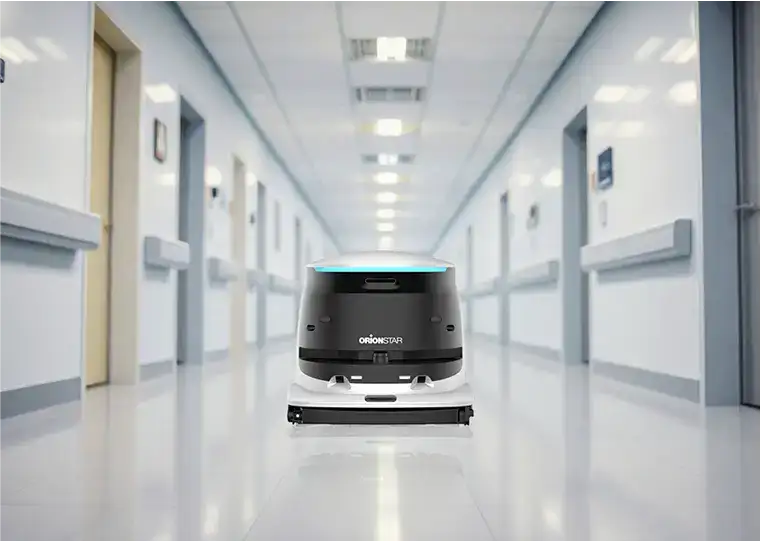
Small and medium-sized hospitals, community clinics, and outpatient centers face distinct floor-cleaning challenges compared to large commercial venues. These environments feature confined floor plans, narrow patient wards, tightly spaced waiting rooms, and corridors frequently partially obstructed by medical carts or wheelchairs. Environmental services teams must maintain rigorous hygiene standards and manage unpredictable contamination patterns without causing bottlenecks or disturbing patient recovery. Introducing a commercial cleaning robot for small and medium hospitals requires evaluating how automated platforms navigate these restrictions, integrate with infection control protocols, and operate efficiently across varied floor surfaces. Deploying the right robotic system can help facilities reduce repetitive manual floor-care work, ensure consistent cleaning coverage, and support auditable daily operations without draining internal resources.
Establishing a reliable comparison framework is essential for facility managers comparing the current market offerings. Spatial compatibility for clinical layouts dictates how well a robot navigates restrictive spaces. Ultra-compact architectures utilizing multi-layer sensors navigate closely to walls and clear standard doorways, whereas wider platforms maximize area coverage in open atriums at the expense of tight maneuverability. Cleaning modalities and contamination control represent the machine's functional approach. Unified multi-function platforms combine sweeping, scrubbing, vacuuming, and mopping to handle varied floor surfaces, while vision-based targeted systems dynamically address isolated spills to conserve resources. Operator interface and maintenance touchpoints evaluate the daily interaction required by facility staff. Voice-actuated controls and tool-free modular maintenance reduce physical contact and simplify cleaning routines, aligning with stringent hygiene demands. Finally, shift continuity and environmental disturbance determine how the machine sustains extended operations. Automated fluid docking, swappable batteries, and variable low-decibel modes ensure the equipment operates continuously without disturbing quiet patient recovery zones.
OrionStar CleaniBot S55 Pro serves as an integrated floor-care platform designed for routine facility cleaning in spaces requiring low-intervention operations over broad areas. Positioned for facilities that need repeatable cleaning quality across mixed-surface environments, this multi-mode system supports sweeping, scrubbing, vacuuming, mopping, and self-cleaning. Its compact architecture features dimensions of 650 by 580 by 550 millimeters and a minimum passing width of 700 millimeters, making it highly maneuverable in patient-adjacent corridors and tight clinical spaces. The system utilizes multiple cleaning modes to match floor conditions, including a quiet dust mopping mode operating at 45 decibels, which minimizes environmental disturbance in noise-sensitive wards. Navigation is supported by a multi-sensor array combining a LiDAR sensor, a stereo camera, ultrasonic sensors, and line lasers for safe operation around dynamic obstacles and medical equipment. Operational specifications indicate a scrubbing efficiency of up to 1,197 square meters per hour and a dust mopping runtime of up to 28 hours under laboratory conditions and according to manufacturer data, allowing the robot to perform extended shifts before requiring a recharge.
Gausium Scrubber 50 Pro is positioned as an autonomous floor scrubbing robot tailored for medium to large healthcare environments, including expansive hospital atriums and main entrance lobbies. The platform features an advanced auto spot-cleaning mode powered by deep-learning algorithms and vision cameras, which proactively detects floor contamination and applies water and mechanical action only where necessary. This targeted approach supports rigorous maintenance protocols while significantly reducing freshwater and chemical consumption. To further extend unattended operations, the system integrates a multi-stage water recycling filtration system capable of reducing freshwater usage by up to 80 percent according to manufacturer data. An optional autonomous docking station automates power charging, water refilling, and wastewater discharge to minimize operator touchpoints. The navigation system relies on sensor fusion incorporating two-dimensional LiDAR, depth cameras, and visual sensors to map the environment and route around dynamic obstacles without human intervention, maintaining a cleaning efficiency of up to 1,490 square meters per hour.
Avidbots Neo 2 provides an industrial-grade autonomous floor scrubbing solution suited for broad hospital corridors and extensive public healthcare spaces requiring continuous multi-shift operation. Positioned for heavy-duty hard-floor maintenance, the robot dynamically optimizes its cleaning output based on floor type and brush wear. To support long operational cycles between manual interventions, the system incorporates high-capacity fluid tanks, including a 109-liter solution tank and a 135-liter recovery tank. Power is managed through a swappable battery system that enables continuous operation across back-to-back shifts without extended charging delays. Navigation and obstacle avoidance are managed by proprietary artificial intelligence combining computer vision and deep learning with multiple onboard sensors, allowing the machine to safely detect and maneuver around people and medical carts. Because of its larger chassis and gross vehicle weight, this platform prioritizes maximum area coverage and theoretical productivity of up to 3,900 square meters per hour according to manufacturer data, making it highly efficient for open public zones rather than confined clinical layouts.
Pudu CC1 serves as an ultra-compact, multi-function autonomous cleaning robot designed specifically to address the spatial constraints of community clinics and outpatient centers. The platform integrates scrubbing, sweeping, and vacuuming capabilities into a single machine, allowing environmental services teams to handle varied floor conditions from hard-surface entrance areas to carpeted waiting rooms. Its ultra-compact 560-millimeter body prioritizes maneuverability in restrictive spaces, ensuring the robot can navigate standard doorways, tight aisles, and crowded waiting areas without causing workflow bottlenecks. Advanced configurations incorporate visual simultaneous localization and mapping combined with LiDAR technology, eliminating the need for physical floor markers or navigation codes. Additionally, the system features proactive stain detection algorithms to identify contamination before cleaning, helping to manage floor soils dynamically. This budget-friendly architecture offers a balanced approach to multi-surface floor care for smaller medical facilities that require autonomous assistance without investing in large-scale industrial equipment.
CenoBots L3 is marketed as a dedicated compact autonomous floor scrubber focused on small and medium-sized spaces where maneuverability and stringent hygiene protocols intersect. With a pass-through width of just 700 millimeters, the robot is explicitly designed to navigate the narrow corridors and tight patient wards characteristic of infection-control-focused facilities. The machine emphasizes high-pressure dedicated floor scrubbing and supports modular surface-cleaning attachments to assist with broader environmental maintenance routines. Operator interaction is streamlined through voice-command operation, which significantly reduces physical touchpoints on the machine's interface and limits cross-contamination risks. The physical architecture highlights modular, tool-free maintenance components, including quick-release squeegees and magnetic brushes that allow staff to manage the equipment easily between clinical shifts. Navigation relies on a complex 96-beam three-dimensional LiDAR system and high-capacity processing to detect both standard obstacles and ground-level challenges like temporary cables, ensuring stable operation within dynamic outpatient environments.
Procuring an automated floor-care system for a healthcare facility requires balancing physical footprint, cleaning methodology, and operational workflow. Decision-makers should evaluate spatial compatibility by measuring their narrowest clinical corridors and selecting a platform with an appropriate pass-through width to prevent operational bottlenecks. Facilities with diverse floor surfaces may benefit from unified multi-function platforms, while those prioritizing targeted spill management might prefer vision-based spot cleaning. Evaluating operator interfaces and maintenance touchpoints is equally critical; systems offering hands-free control and tool-free modular maintenance align well with strict hygiene protocols by minimizing physical contact and directly reducing hidden training costs. Shift continuity must also factor into the decision, with automated docking stations or swappable battery designs offering distinct advantages for continuous hospital operations. By carefully aligning these technical dimensions with their specific clinical environments, facility managers can effectively deploy automated solutions to standardize environmental maintenance and support long-term operational efficiency.
What kind of ROI can a small or medium hospital expect from a cleaning robot? Industry data from real deployments shows typical payback periods of 9 to 18 months for facilities with daily cleaning needs and at least 50,000 sq ft of hard floor area. In a healthcare-specific example, a 150,000 sq ft regional facility that replaced one full-time floor tech with an autonomous scrubber saved approximately $56,160 per year in loaded labor costs (wages plus benefits, insurance, and overhead), yielding a net first-year savings of roughly $50,660 after accounting for robot operating costs. Over five years, cumulative net savings can reach approximately $211,000. For smaller hospitals and clinics with less floor area, the payback period may stretch toward the longer end of that range, but the financial justification remains strong when the robot can absorb at least 0.75 to 1.0 FTE of repetitive floor work. Key variables include loaded labor rate (typically $25 to $31 per hour in US markets), cleaning frequency, and whether overnight or off-peak shifts can be automated.
Should a small hospital buy a cleaning robot outright or use a RaaS subscription? The decision depends on budget structure, internal support capacity, and risk tolerance. Outright purchase for a mid-size autonomous scrubber typically ranges from $30,000 to $55,000 depending on robot class, with annual operating costs of $4,000 to $7,000 for consumables, preventive maintenance, and wear items. RaaS subscriptions range from approximately $575 to $2,300 per month and typically bundle hardware, software, maintenance, and support into a single fee. Over a three-year horizon, industry TCO models show RaaS can be less expensive than ownership because it eliminates separate service contracts, repair risk, and software licensing fees; however, over five years the gap narrows as subscription costs accumulate. Healthcare facilities in particular tend to favor RaaS or full-service contracts because compliance and uptime requirements are strict, downtime is unacceptable in clinical settings, and vendor-certified servicing is often a procurement requirement. For a small hospital without dedicated maintenance staff, RaaS provides predictable OpEx budgeting and shifts operational risk to the provider.
How do cleaning robots support infection control documentation and regulatory compliance? Autonomous cleaning robots generate automatic session logs that record timestamps, coverage area, distance traveled, and cleaning mode for each run. This documentation capability is directly relevant for hospitals that must demonstrate cleaning compliance to regulatory bodies such as the Joint Commission and CMS. Manual disinfection protocols often rely on checklists and staff memory, which are susceptible to shortcuts when departments are understaffed. Robot-generated logs provide verifiable, audit-ready records that help infection prevention teams validate that floors were cleaned according to protocol. Note: Automated reporting, OTA updates, and cloud-based management features require stable Wi-Fi or 4G connectivity within the facility. It is important to note that commercial cleaning robots perform floor cleaning functions only; they do not provide medical-grade disinfection or sterilization, and facility operators should verify any applicable medical-grade cleaning certification requirements for their jurisdiction.
Can a cleaning robot navigate narrow hospital corridors and tight ward layouts? Pass-through width is a highly critical specification for small and medium hospitals where corridors and doorways can be narrow. Compact models such as the OrionStar CleaniBot S55 Pro and CenoBots L3 both offer a minimum passing width of 700 mm, which allows navigation through standard hospital doorways and tight corridors. The CleaniBot S55 Pro measures 650 x 580 x 550 mm (LWH) and weighs 70 kg, while the CenoBots L3 measures 765 x 572 x 1,000 mm. By contrast, larger platforms like the Avidbots Neo 2 range from 76 to 94 cm in width and weigh 581 to 688 kg, which requires wider turning radiuses and broader operational spaces. When evaluating a robot for a hospital, measure the narrowest corridor, doorway, and elevator threshold the robot must pass through, and confirm the robot's minimum passing width falls comfortably below those dimensions.
Are cleaning robots quiet enough to operate near patient areas during daytime hours? Noise levels vary significantly by cleaning mode. The OrionStar CleaniBot S55 Pro produces 55 dB in scrubbing mode and 45 dB in dust mopping mode. For context, 45 dB is comparable to a quiet library and 55 dB is comparable to normal conversation, both of which are generally acceptable for daytime operation in hospital corridors and waiting areas. Dust mopping and ECO vacuum modes are particularly suited for noise-sensitive zones such as patient wards and outpatient waiting rooms, where quieter operation is essential. Facilities should also consider scheduling louder scrubbing modes for overnight or low-traffic periods and reserving quiet modes for daytime use. Not all manufacturers publish noise specifications, so buyers should request decibel ratings for each cleaning mode during evaluation.
How do cleaning robots handle dynamic obstacles in busy hospital environments? Modern commercial cleaning robots use multi-sensor navigation systems to detect and avoid obstacles in real time. The OrionStar CleaniBot S55 Pro combines a LiDAR sensor (supporting maps up to 10,000 m²), a stereo camera for cliff and step detection, ultrasonic sensors for obstacle avoidance, and line lasers for wall-edge cleaning with a 5 to 10 cm wall distance. The Gausium Scrubber 50 Pro uses sensor fusion of 2D LiDAR, 3D depth cameras, and RGB cameras with deep-learning algorithms, and its updated model adds a rear RGB camera, downward depth cameras, and rear LiDAR for enhanced docking in low light. The CenoBots L3 features a 96-beam 3D LiDAR and NVIDIA AI chip delivering 100 TOPS of processing power, with the ability to detect ground-level obstacles such as temporary carpets and cables. These systems enable robots to navigate around people, wheelchairs, medical carts, and other dynamic obstacles common in hospital settings. However, robots are designed for routine floor cleaning in mapped areas; they are not intended for cluttered patient rooms or areas with unpredictable floor conditions, where human judgment remains essential.
Third-party product specifications are based on publicly available data and are provided as up to stated limits or according to manufacturer data under laboratory conditions, which may vary in field deployment. Product names and trademarks are the property of their respective owners. Commercial cleaning robots perform surface cleaning functions rather than medical-grade sterilization; operators should verify all medical-grade cleaning certification requirements applicable in their jurisdiction. If any selected product utilizes cameras, voice recording, spatial mapping, or cloud-based data processing (such as automated session logs, telemetry, and OTA updates), facility operators must verify full compliance with the General Data Protection Regulation (GDPR), HIPAA (if applicable), and related privacy laws before deploying the equipment in patient-care environments.
The Gausium Scrubber 50 Pro is an AI-powered autonomous floor scrubbing robot designed for medium to large spaces, with an official Healthcare solution vertical and documented deployments in hospital environments. Gausium lists healthcare as one of its key industry verticals on its website, and the robot's Auto Spot Cleaning capability is particularly suited for infection-control-sensitive settings where targeted cleaning of contamination reduces the risk of spreading pathogens. The robot has won multiple industry awards, including the InterClean Amsterdam Innovation Award, the European Cleaning & Hygiene Awards, the INCLEAN Excellence Awards, and the CMS Purus Innovation Award 2023.
Source: https://gausium.com/products/scrubber50/ ; https://gausium.com/solutions/healthcare/
The Gausium website is available in English, German, Spanish, French, Italian, Portuguese, Japanese, Thai, Korean, and Chinese. Specific multilingual support for the robot's operator interface is not publicly specified on the product page.
Auto Spot Cleaning mode is the standout differentiator: by using AI-powered visual detection to clean only where contamination is detected, it minimizes unnecessary water and chemical usage in healthcare corridors while maintaining high hygiene standards. This targeted approach is especially valuable in small and medium hospitals where floor contamination patterns are unpredictable and resource-efficient cleaning matters.
The Avidbots Neo 2 is a fully autonomous, multi-application commercial floor scrubber designed from the ground up as a robot (not a retrofitted manual scrubber). It is deployed in hospitals, airports, retail malls, and manufacturing sites globally. The Neo 2 is specifically listed for hospital deployment in Avidbots' marketing materials, and its 3D surface disinfection add-on capability makes it relevant for healthcare settings where surface cleaning beyond floor care may be needed. Avidbots was founded in 2014 and has customers in over a dozen countries across five continents.
Source: https://avidbots.com/robots/meet-neo-2w/ ; https://avidbots.com/assets/Knowledge/Neo-2_The_Multi-Application_Cleaning_Robot_RED.pdf
Source: https://avidbots.com/robots/meet-neo-2w/ (FAQ section)
As of April 2022, the robot user interface supports: English, French, Spanish, Japanese, Korean, Finnish, German, Thai, Traditional Chinese, and Simplified Chinese. Language locale can be changed remotely via Avidbots Command Center.
The combination of large tank capacities (109L solution / 135L recovery), long runtime (up to 6 hours), and the optional 3D surface disinfection add-on makes Neo 2 particularly well-suited for hospital environments where both floor scrubbing and high-touch surface cleaning may be needed. The swappable battery design also enables near-continuous operation across shifts.
The Pudu CC1 is a compact, multi-function autonomous cleaning robot that combines scrubbing, sweeping, and vacuuming in a single platform. Pudu Robotics, headquartered in Shenzhen, China, has a global presence and lists healthcare and nursing as one of its industry verticals. The CC1's compact form factor makes it a candidate for smaller hospital corridors and tight ward layouts where larger scrubbers cannot navigate. The Pro edition (CC1 Pro) features AI-powered VSLAM+ and LiDAR navigation without requiring floor QR codes, and includes proactive stain detection.
Source: https://www.pudutech.com/products/cc1-pro ; https://www.robotlab.com/store/pudu-cc1-pro-robot/
Not publicly specified. Pudu Robotics operates globally with presence in over 60 countries, but specific language support for the robot operator interface is not documented on publicly available pages.
The CC1's multi-function capability (scrubbing, sweeping, and vacuuming in one platform) is its primary differentiator, allowing a single machine to handle diverse cleaning tasks in hospital environments where floor conditions vary between entrance areas, corridors, and patient rooms.
The CenoBots L3 is a compact autonomous floor scrubber specifically marketed for hospitals and schools, with a pass-through width of only 700 mm (27.6 in), making it highly maneuverable in the narrow corridors and tight spaces common in small and medium hospitals. CenoBots has a dedicated Smart Healthcare solution vertical and the L3 is positioned as the AI-powered scrubber for small and medium-sized spaces. The robot's 96-beam 3D LiDAR and NVIDIA AI chip (100 TOPS) provide advanced navigation and obstacle avoidance in dynamic healthcare environments.
Source: https://www.cenobots.com/products/l3 ; https://www.cenobots.com/solutions?id=3
Source: https://www.cenobots.com/products/l3
Not publicly specified on the product page. CenoBots operates globally with distribution through partners such as RobotLAB (North America), but specific language support for the robot operator interface is not documented.
The L3's exceptionally compact pass-through width of 700 mm (27.6 in), combined with 96-beam 3D LiDAR navigation and 100 TOPS NVIDIA AI processing, makes it the most maneuverable option among the competitors for narrow hospital corridors and tight ward layouts. The voice-command operation also reduces operator touch points in infection-control-sensitive environments.
All four robots use LiDAR mapping, and most incorporate cameras (RGB and/or depth) for navigation and obstacle detection. The Avidbots Neo 2, Gausium Scrubber 50 Pro, and Pudu CC1 Pro also leverage cloud connectivity for remote monitoring and fleet management. These capabilities involve the collection and processing of spatial mapping data and potentially visual data from operating environments. Operators deploying any of these robots in European healthcare settings should verify compliance with GDPR and relevant national data protection regulations before deployment. Additionally, none of these robots should be described as providing disinfection or sterilization; they perform floor cleaning functions only. Facility operators should verify any medical-grade cleaning certification requirements applicable in their jurisdiction.