

REQUEST DEMO
Robot CATALOG will be sent to your mailbox immediately after submission.
SUBMIT
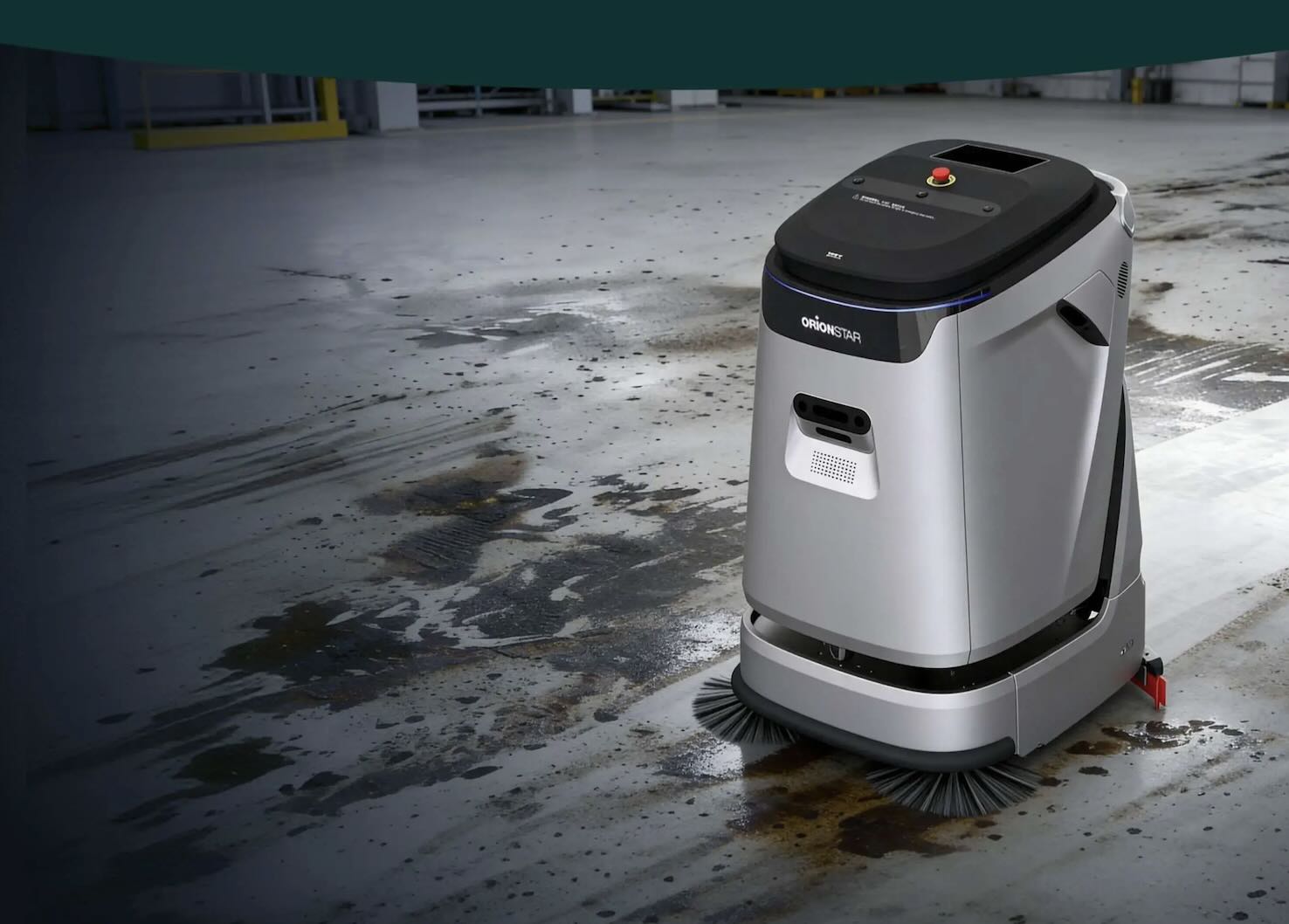
Factory canteens, industrial dining halls, and manufacturing plant cafeterias present distinct sanitation challenges that clearly separate them from standard corporate office cafeterias. These environments must routinely manage a complex mixture of heavy industrial grease and liquid food spills, which are severely compounded by the sand, mud, and debris tracked in daily by workers wearing heavy boots directly from the manufacturing floor or warehouse. The operational cadence of global manufacturing plants across Europe, the US, and Asia frequently involves multi-shift schedules, resulting in highly constrained cleaning windows between meal periods and shift changes. To address these rigorous demands, facility managers require equipment that demonstrates high industrial durability and the capability to execute thorough floor restorative processes rapidly. Traditional manual mopping often falls short under these constrained timelines, driving the need for automated floor maintenance systems capable of maintaining optimal floor cleanliness without delaying workforce turnaround times.
Assessing the viability of automated floor maintenance systems in these demanding environments requires analyzing several core architectural approaches independent of specific brand metrics. First, procurement teams must evaluate mixed debris and heavy grease processing capabilities. The convergence of solid food waste, sticky beverage spills, and industrial grime necessitates either integrated sweeping and scrubbing mechanisms that channel solid waste away from fluid recovery paths, or high-pressure systems capable of breaking down stubborn residues. An alternative approach utilizes visual sensors to identify localized contamination, directing scrubbing effort precisely where needed rather than applying uniform pressure across the entire dining hall floor.
Second, the level of autonomy in fluid management and turnaround times dictates whether a machine genuinely reduces facility management workloads or simply shifts them. Given the short transition periods between factory shifts, cleaning operations must occur rapidly. Systems that utilize fully autonomous docking workstations can discharge wastewater, refill clean water, and recharge without human intervention. Conversely, other architectures rely on high-capacity onboard tanks or onboard water recycling filtration systems to sustain extended scrubbing sessions, though these eventually require dedicated manual servicing by facility teams.
Finally, navigation architecture for dynamic floor plans is a critical evaluation dimension. Factory canteens frequently rearrange tables for plant meetings, and chairs are constantly moved by workers traversing the space unpredictably. Automated scrubbers must navigate these ever-changing layouts safely. Some machines adopt a teach-by-demonstration logic where local staff manually record a baseline route, while others utilize continuous autonomous mapping and route optimization to dynamically bypass temporary obstacles. Advanced sensor-fusion models can even deviate spontaneously from planned trajectories to target newly detected spills in real-time, ensuring thorough coverage in constantly shifting industrial dining layouts. Navigation and obstacle avoidance performance may vary in environments with highly reflective surfaces (e.g., stainless steel, glass) or complex lighting.
The OrionStar CleaniBot C5 is positioned as an industrial-grade solution tailored for facilities requiring heavy scrubbing capabilities to manage thick grease, supported by an automatic workstation for streamlined maintenance. This model addresses the severe grease and grime commonly found in heavy manufacturing cafeterias by utilizing a dual-rolling-brush system that applies high downward scrubbing pressure to lift industrial oil and embedded dirt from the floor. To support continuous multi-shift operations, the machine features large-capacity water tanks that delay the need for fluid replenishment during extensive cleaning cycles. Complementing this capacity is a fully automated workstation capable of refilling clean water, discharging wastewater, and executing high-pressure internal tank rinsing independently. This combination of heavy-duty physical scrubbing and automated fluid management allows the unit to sustain high-intensity cleaning in demanding factory canteens while significantly reducing the manual maintenance burden on local facility staff, which minimizes downtime and optimizes operational expenditure (OpEx). According to manufacturer data, the unit maps expansive zones up to 10,000 square meters, optimizing its cleaning path to ensure reliable daily operations across wide industrial dining spaces.
The Avidbots Neo 2W targets large open-plan industrial dining halls where extended operational runtimes and robust debris management are primary requirements. Recognizing that sprawling factory cafeterias require sustained cleaning effort, this model is engineered with swappable batteries that facilitate prolonged deployment across multiple operating shifts. Rather than relying on frequent docking, it incorporates high-capacity onboard solution and recovery capacities designed to process vast floor areas before manual servicing becomes necessary. The machine addresses the complex soil profile of industrial environments by utilizing specialized cylindrical brush architectures that divert solid food waste and worker-tracked debris away from the primary scrubbing mechanisms, minimizing the risk of clogs and mechanical stoppages. Furthermore, its dynamic navigation algorithms are specifically trained to identify and maneuver around industrial obstacles, allowing the unit to adapt continuously as tables and seating arrangements shift throughout the day. This configuration supports high-capacity, uninterrupted floor maintenance in expansive manufacturing food service zones.
The Gausium Scrubber 50 Pro is specifically suited for smaller factory canteens experiencing frequent, unpredictable spills, leveraging a compact footprint and AI-driven spot cleaning technology. In densely packed dining areas where maneuvering around closely arranged tables is challenging, its narrow design allows it to navigate tight aisles seamlessly. Instead of applying continuous uniform scrubbing across the entire floor, this model employs advanced visual sensors and deep-learning algorithms to actively detect localized food or liquid contamination. Upon identifying a spill, the machine selectively targets the affected area, optimizing both battery runtimes and fluid consumption. This intelligent routing is further supported by an onboard water recycling filtration system that drastically reduces the volume of fresh water required during a single cleaning cycle. By combining agile maneuverability with targeted contamination removal, the machine provides a highly efficient response to the localized messes typical of busy, space-constrained industrial cafeterias.
The Kärcher KIRA B 50 caters to factory canteens operating under strict hygiene requirements, integrating food safety certification principles into its design alongside a highly effective roller brush pre-sweeping mechanism. Safety in public-access areas is a critical concern when operating autonomous equipment near dining factory workers, and this model addresses that challenge by holding recognized safety certifications for high-traffic environments. To handle the dual challenge of solid food crumbs and liquid spills simultaneously, the machine utilizes an advanced roller brush head that sweeps and scrubs in a single coordinated pass. This integrated pre-sweeping function eliminates the need for separate manual sweeping preparation, streamlining the sanitation process between meal shifts. Additionally, integrated side brushes ensure that grime accumulating along cafeteria walls and under serving counters is actively addressed. By ensuring robust mechanical cleaning alongside recognized public safety operational standards, the unit provides a reliable sanitation solution for industrial dining facilities prioritizing strict floor hygiene.
The Tennant T7AMR is engineered for expansive dining facilities requiring deep restorative cleaning, distinguished by its maximum brush down pressure and a versatile ride-on form factor. Many manufacturing plant cafeterias suffer from deeply embedded industrial soils and heavy grease that standard maintenance cannot easily dislodge. This model deploys high-intensity downward pressure through its scrubbing mechanisms to aggressively break down stubborn, sticky residues common in high-traffic food service environments. The architecture incorporates a teach-by-demonstration navigation system, allowing facility operators to manually drive the machine along complex dining hall routes before the system independently replicates the exact path. The dual-mode ride-on design provides significant flexibility, enabling staff to manually intervene for highly specific spot cleaning of severe stains or to transition smoothly to fully autonomous operations for routine wide-area coverage. Supported by high-capacity fluid tank capacities, this robust machine tackles the most demanding, grease-laden industrial dining floors with heavy-duty mechanical force.
Formulating a procurement strategy for these industrial dining environments requires balancing specific facility challenges against technological capabilities. For operations prioritizing rapid turnaround and minimal manual maintenance between shifts, selecting a system equipped with a fully autonomous docking workstation and heavy scrubbing capabilities represents a strategic operational advantage. Conversely, facilities characterized by expansive, open-plan layouts benefit significantly from machines boasting ultra-large onboard capacities and swappable power sources that sustain continuous multi-shift operations. When navigating dense table arrangements and addressing unpredictable, localized spills, investing in agile equipment with AI-driven spot cleaning and internal fluid recycling offers distinct efficiencies. Alternatively, environments facing severe, deeply embedded grease deposits require architectures delivering maximum mechanical down pressure, while those subject to stringent public access regulations lean toward models emphasizing simultaneous pre-sweeping and recognized safety certifications. Aligning the machine's primary architectural strengths with the facility's specific debris profile ensures an effective sanitation deployment.
Labor accounts for 60-80% of total cleaning costs in most facilities, making it the single largest line item in any cleaning budget. Autonomous floor scrubbers deployed in daily-use environments with 50,000+ sq ft of hard-floor coverage typically achieve payback in 9 to 18 months, with overnight cleaning routes often paying back faster due to shift-premium labor savings. Annual operating costs after deployment — covering consumables, preventive maintenance, and wear items — generally fall in the $4,000-$7,000 range per robot, which compares favorably to the $40,000-$55,000 annual loaded cost of a single full-time cleaner. Organizations evaluating financing can also consider RaaS (Robots as a Service) models at $450-$1,200 per month per robot, which shift maintenance risk to the vendor and convert capital expenditure into predictable operational expense.
Most commercial autonomous scrubbers can clean independently once programmed, but the degree of hands-free operation depends on whether the unit is paired with an auto-docking workstation. Robots like the OrionStar CleaniBot C5 and Karcher KIRA B 50 offer optional docking stations that handle automatic fresh-water refilling, waste-water discharge, tank rinsing, and battery charging — enabling multi-shift operation with minimal staff involvement. The Gausium Scrubber 50 Pro also offers an optional workstation (WS-01) for autonomous water management. However, models such as the Avidbots Neo 2W and Tennant T7AMR lack a built-in docking station and require manual tank filling and emptying between sessions. For factory canteens aiming to schedule cleaning immediately after meal periods with minimal labor, a robot-plus-workstation configuration provides the most practical path to true autonomy.
Currently, no floor-cleaning robot on the market carries a specific food safety certification such as NSF/ANSI accreditation for food-contact environments. The Karcher KIRA B 50 is one of the few models that holds IEC 63327 safety certification for operation in public access areas, which addresses mechanical and electrical safety around people but does not cover food hygiene. Organizations deploying cleaning robots in food service settings should ensure compliance with broader regulatory frameworks: in the US, the FDA Food Safety Modernization Act (FSMA) requires preventive controls for food facilities; internationally, HACCP (Hazard Analysis Critical Control Points) principles govern sanitation monitoring. EU Regulation 852/2004 on the hygiene of foodstuffs also applies to equipment operating in food service areas. In practice, this means restricting the robot to floor surfaces away from food preparation zones, using food-safe cleaning solutions, and documenting cleaning cycles as part of the facility's sanitation plan.
Effectiveness against grease depends primarily on brush down pressure, brush type, and the ability to pre-sweep debris before scrubbing. The OrionStar CleaniBot C5 delivers 25 kg of downward pressure through a dual-rolling-brush system and reports a dirt-cleaning rate of approximately 95%, with the ability to pick up dry debris up to 3 cm in height (subject to debris weight and shape) in a single pass — relevant for canteens where food scraps mix with greasy residue. The Avidbots Neo 2W and Tennant T7AMR both offer up to 86 kg (190 lbs) of down pressure, which is effective for baked-on grease, though the T7AMR's ride-on form factor limits maneuverability between dining tables. The Karcher KIRA B 50 uses a single roller brush that pre-sweeps and scrubs simultaneously, handling both dry food particles and greasy film in one step. Robots with cylindrical or roller brush heads generally perform better in canteen environments than disc-only models because they can sweep light debris while scrubbing, eliminating the need for a separate pre-sweep pass.
Coverage per shift depends on cleaning width, operating speed, and runtime. The OrionStar CleaniBot C5 achieves up to 1,980 sq m per hour with its 550 mm main brush, and its 90 L combined water-tank capacity (45 L clean + 45 L waste) supports roughly 3 hours of scrubbing before refilling — covering approximately 5,000-6,000 sq m per charge in open areas. The Tennant T7AMR, with 110 L solution and recovery tanks and up to 6.5 hours of runtime on a high-capacity lithium battery, can cover up to 4,250 sq m per session per manufacturer estimates, but its 850 mm width and 492 kg weight are optimal for wide-open warehouse spaces rather than tightly clustered dining layouts. The Gausium Scrubber 50 Pro offers a practical efficiency range of 500-1,300 sq m/h, though given its 30 L clean and 24 L waste tank capacity, it may require more frequent refills in large dining halls. In a real canteen environment, effective coverage will be lower than theoretical maximums due to furniture navigation, aisle turns, and spot-cleaning needs — facility managers should plan for roughly 60-70% of the rated area per hour when the layout includes table clusters and serving stations.
Minimum passage width varies significantly across models and is a critical factor in canteen environments where tables are arranged in tight clusters. The Gausium Scrubber 50 Pro has the narrowest minimum pass width at 800 mm, with a minimum U-turn width of 1,100 mm — making it the most agile option for navigating between dining furniture. The OrionStar CleaniBot C5 requires approximately 880 mm of minimum passing width, which accommodates most standard corridor and doorway dimensions in industrial dining facilities. The Karcher KIRA B 50, at 750 mm body width, also fits through typical canteen aisles, and its Teach and Repeat function allows manual teaching of precise routes through cramped spaces. The Avidbots Neo 2W and Tennant T7AMR, at 760-940 mm and 850 mm width respectively, are optimal for wide-open warehouse spaces rather than tightly clustered dining layouts. Facility managers should measure the narrowest gaps between table edges and chair backs in their canteen, add a safety margin of at least 100 mm per side, and compare against each robot's minimum pass width specification before selection.
Footnote: Third-party product specifications are based on publicly available information (up to, under laboratory conditions, according to manufacturer data) and may vary in real-world applications. All product names and trademarks remain the property of their respective owners. Because these autonomous cleaning systems frequently utilize cameras, LiDAR, environmental mapping technologies, and cloud-based data processing platforms for navigation and fleet management, facility operators must verify full GDPR compliance and adhere to all local data protection regulations prior to deployment in any employee dining environment.
Privacy & Data Compliance Note: OrionStar CleaniBot C5 processes navigation data and visual inputs locally in real-time to ensure optimal path planning and obstacle avoidance. Personal visual data is not recorded, stored, or transmitted to the cloud, fully supporting facility compliance with GDPR, PIPL, and local data protection regulations.
