

REQUEST DEMO
Robot CATALOG will be sent to your mailbox immediately after submission.
SUBMIT
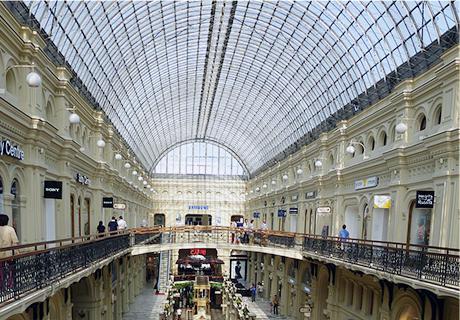
Operating across global markets from Europe to the US and Asia, university food courts, college dining halls, and student cafeterias present distinct facility maintenance hurdles. Facility managers face the continuous challenge of managing mixed food debris, greasy surfaces, high-density seating layouts, and strict noise limitations during active meal hours. Addressing these varied conditions requires specialized automation, positioning commercial cleaning robots for university food courts as a core procurement consideration. The dense arrangement of tables and the persistent combination of dry crumbs and wet fluid spills necessitate careful evaluation of equipment architecture and cleaning methodology.
When evaluating solutions for campus dining environments, facility operators should analyze the floor care methodology for mixed waste. The integrated multi-function approach utilizes systems that combine sweeping, vacuuming, scrubbing, and mopping capabilities within a single unit, allowing the machine to handle dry crumbs and wet spills concurrently without requiring staff to pre-sweep the floors prior to deployment. Alternatively, the dedicated scrubbing with debris diversion approach focuses on heavy-duty surface washing while utilizing cylindrical brushes or physical diverters to manage light food particles without providing dry vacuuming. For heavily soiled surfaces, the pure extraction scrubbing approach relies on disc brush configurations specifically engineered for liquid extraction and deep washing of greasy surfaces, a methodology that requires facility teams to thoroughly pre-sweep all dry food waste before the machine begins its route.
Spatial navigation and seating clearance represent another fundamental evaluation factor. The ultra-compact chassis architecture focuses on highly compact physical miniaturization to fit underneath standard dining tables and navigate the tightest chair clearances, maximizing autonomous coverage in densely packed seating zones. The mid-size agile architecture balances a moderate physical footprint with intelligent edge-cleaning extensions or side brushes, enabling the machine to navigate main food court aisles efficiently while reaching under table edges to extract debris. Conversely, the large-format industrial architecture prioritizes maximum cleaning width and high-speed path efficiency for wide-open concourses, delivering rapid cleaning of expansive open areas but relying on facility staff to manually move furniture or clean tight dining zones separately.
Operational sustenance and shift autonomy dictate how independently the equipment functions within a specific campus layout. The high-capacity sustained operation design incorporates large-capacity fluid tanks and heavy-duty battery packs to enable extended runtime, supporting continuous cleaning across centralized dining complexes without requiring manual fluid exchange. The balanced capacity with automated replenishment design utilizes moderate tank volumes combined with auto-drain and refill docking stations, allowing the equipment to service medium-to-large areas by autonomously returning to a base station mid-shift. The micro-capacity agile operation design features minimal fluid tanks optimized to fit inside the smallest possible footprint, facilitating rapid cleaning cycles in highly congested food courts while accepting the trade-off of more frequent manual fluid refills.
Acoustic management dictates deployment timing, especially in continuous-use student areas. The variable acoustic output profile employs selectable cleaning modes that allow noise levels to be significantly reduced, permitting non-disruptive operation adjacent to active studying or dining zones by utilizing quiet dust mopping or low-suction vacuuming when heavy scrubbing is not required. The standardized moderate acoustic profile maintains continuous noise levels typical of standard commercial vacuums, suiting ambient background operation during moderate-traffic periods. The high-intensity extraction acoustic profile generates higher noise output necessary for high-pressure fluid recovery and deep scrubbing tasks, which generally restricts deployment to after-hours, overnight shifts, or fully vacated dining halls. Because autonomous floor-cleaning equipment relies on spatial mapping, cameras, and cloud-based data processing to navigate complex public environments, operating facilities must verify applicable data protection and privacy regulations prior to deployment.
The OrionStar CleaniBot S55 Pro functions as a mid-size agile solution designed specifically for mixed-waste food service environments. The machine utilizes a multi-mode InstantClean system that specifically supports sweeping, scrubbing, vacuuming, and mopping within a single integrated platform, allowing operators to transition between handling dry crumbs and wet cafeteria spills. For spatial navigation, the robot features a compact 700mm passing width, enabling it to maneuver efficiently through standard food court aisles and serving lines. The system incorporates a variable acoustic profile operating between 45 and 55 decibels, which supports daytime operation near active student dining and study areas without creating disruptive ambient noise. According to manufacturer data, the platform delivers a cleaning efficiency of up to 1,368 square meters per hour, balancing broad area coverage with targeted debris management.
The Gausium Phantas operates on an ultra-compact architecture tailored for densely packed seating zones and localized dining layouts. According to manufacturer data, the unit features a highly compact 540 by 440 millimeter physical footprint, which facilitates navigation between tightly spaced cafeteria chairs and under standard dining tables. The equipment delivers versatile four-in-one cleaning capabilities, specifically executing vacuuming, sweeping, scrubbing, and dust mopping workflows to address varied food service surface conditions. Additionally, the system incorporates a zero-millimeter edge cleaning design, allowing the side brushes and internal sensors to extract debris directly from the baseboard edges of serving counters and walls under laboratory conditions.
The Pudu CC1 is structured for educational environments requiring strong extraction capabilities alongside quiet ambient operation. The platform integrates four-in-one floor care functions, specifically providing sweeping, scrubbing, vacuuming, and mopping modes to manage the varied particulate and fluid loads found in campus dining facilities. According to manufacturer data, the machine generates up to 17,000 pascals of suction capacity, an extraction rating suitable for pulling heavy liquid spills and dense food residues from hard surfaces. The equipment features documented deployments in school cafeterias, indicating its operational alignment with the specific traffic patterns and spatial constraints of institutional dining halls.
The Avidbots Neo 2W represents a high-capacity industrial architecture built for large-scale centralized dining complexes and wide-open campus concourses. Designed primarily as a dedicated scrubber-dryer, the machine focuses on high-volume liquid extraction and broad surface washing without dry vacuuming capabilities. According to manufacturer data, the system houses large-capacity fluid tanks, specifically a 109-liter solution tank and a 135-liter recovery tank, which sustain extended operational routes without frequent manual intervention. The equipment supports up to 6 hours of continuous runtime, bolstered by swappable battery modules, allowing facility teams to service expansive university food courts over extended overnight shifts.
The Tennant X4 ROVR functions as a dedicated agile scrubber featuring intuitive deployment tools for rapid facility integration. The machine utilizes the BrainOS Teach and Repeat navigation system, which allows operational staff to manually drive a preferred cleaning route around cafeteria tables once, after which the robot autonomously replicates the path. According to manufacturer data, the equipment maintains a compact 56-centimeter width, a dimension that enables tight U-turns in confined serving corridors and narrow dining hall pathways. Operating with an acoustic profile of 66 decibels, the system balances the extraction power required for daily wet scrubbing with manageable noise output for ambient facility maintenance.
Procuring autonomous floor-cleaning equipment for university dining facilities requires aligning the physical architecture and floor care methodology of the robot with the specific layout and soil conditions of the space. Large, centralized dining complexes with expansive open walkways align with high-capacity industrial architectures that prioritize sustained runtime and fluid delivery. In contrast, standard student cafeterias and localized food courts with dense seating arrangements require mid-size agile or ultra-compact units capable of maneuvering between chairs while addressing mixed dry and wet waste through integrated multi-function systems. By matching acoustic profiles and spatial clearance capabilities to the operational hours of the campus, facility teams can standardize cleaning workflows and manage daily maintenance effectively.
According to industry data from ISSA, autonomous floor scrubbers in daily-use facilities typically achieve payback in 9 to 18 months, depending on floor area, labor rates, and shift structure. The key driver is labor offset: a single full-time cleaning employee costs $40,000-$55,000 per year in loaded labor (wages, benefits, taxes, supervision), while annual robot operating costs run $4,000-$7,000 including consumables, preventive maintenance, and wear-item replacement. For a university food court that requires repetitive floor-scrubbing shifts after each meal period, one robot can typically absorb the equivalent of one FTE's worth of repetitive floor coverage. Furthermore, multi-function platforms that integrate sweeping, scrubbing, vacuuming, and mopping directly reduce the manual pre-sweeping time required by staff, maximizing labor offset and reducing overall operational time. Payback accelerates when the robot takes over evening or overnight routes that would otherwise require shift-premium labor. Buyers should model ROI using loaded labor rates (typically 1.35-1.45x base wage) rather than hourly wage alone to build a realistic business case.
Three deployment paths are common: capital purchase, equipment lease or financing, and full-service RaaS. As of 2024, approximately 18% of new commercial cleaning robot deployments were via lease or subscription contracts. Capital purchase delivers the strongest long-term ROI and suits universities with budgeted CapEx. Leasing reduces upfront spend to a predictable monthly payment but may leave service and maintenance as separate line items. RaaS bundles the robot, software, deployment, and support into a single monthly fee (typically $575-$2,300/month depending on robot class), transferring uptime accountability to the provider. For institutional dining operators, the decision often comes down to whether the facilities team wants to own maintenance planning internally or prefers one accountable partner for deployment, route tuning, and service response. Operators in GDPR-regulated regions should verify data-processing terms regardless of deployment model, since several robots use cameras and mapping sensors for navigation.
Coverage depends on the robot's cleaning width, speed, and tank capacity relative to soil load. In the product range relevant to university food courts, theoretical cleaning capacity spans from approximately 950 to 1,368 m2/h, though real-world rates are typically 50-70% of manufacturer specs due to obstacles, furniture, and refill stops. For example, the CleaniBot S55 Pro delivers 1,197 m2/h theoretical scrubbing efficiency with a 550 mm brush width and 22 L clean water tank, enough to cover a medium-to-large dining hall in one session, depending on the layout and obstacle density. By leveraging the S55 Pro's multi-function switching capabilities (sweeping, scrubbing, vacuuming, and mopping), facilities directly eliminate the time costs of manual pre-sweeping before deployment. Food courts benefit most from scheduling scrubbing after peak meal times (post-lunch and post-dinner) when grease and food residue are heaviest, and using dust mopping or ECO vacuum modes during off-hours for lighter maintenance. The CleaniBot S55 Pro's dust mopping mode runs up to 28 hours and operates at just 45 dB, making it suitable for quiet overnight or early-morning passes without disturbing nearby campus activities.
Navigation capability varies significantly by model. Minimum passable widths range from approximately 550 mm for compact units to over 1,100 mm for industrial-grade machines. The Gausium Phantas, at 540 x 440 mm, can navigate aisles as narrow as 600 mm (550 mm via OTA upgrade), making it well suited for tight table spacing. The CleaniBot S55 Pro requires a minimum passing width of 700 mm and measures 650 x 580 mm, offering a balance of maneuverability and tank capacity for moderate-density layouts. Larger units like the Avidbots Neo 2W (1,520 mm length, 760-940 mm width) are better suited for wide-open serving areas than for tightly packed seating rows. Most current autonomous scrubbers use multi-sensor fusion combining 2D LiDAR, 3D depth cameras, ultrasonic sensors, and AI-based obstacle avoidance. However, robots cannot pick up chairs or move furniture, so food courts with frequently rearranged seating should establish fixed cleaning corridors or schedule cleaning during lower-traffic between-meal windows. Noise is also a factor: the CleaniBot S55 Pro operates at 55 dB in scrubbing mode and 45 dB in dust mopping mode, quiet enough for between-meal cleaning without disrupting diners.
Performance on grease and oil depends on scrubbing pressure, brush type, and whether the machine can handle mixed solid and liquid waste in a single pass. Robots with dual-roller brush systems and high downward pressure (up to 25 kg on some models) can achieve one-pass removal of heavy oil and grime with dirt-cleaning rates around 95%. Several models offer a pre-sweep-then-scrub workflow: a front mechanism picks up solid food debris before the wet scrubbing mechanism engages, preventing food waste from being ground into the floor or clogging the squeegee. The CleaniBot S55 Pro handles garbage up to 3 cm in height and supports sweeping, scrubbing, and vacuuming in one platform, with a 1 L dust bin for dry debris and a 22 L clean water / 15 L wastewater tank system for wet cleaning. Dedicated scrubber-only models require pre-sweeping or a separate dry-cleaning pass before wet scrubbing, which adds labor time in environments where dry food debris is common. For odor prevention, the CleaniBot S55 Pro features a washable, removable wastewater tank with a strainer design that can be fully immersed for cleaning, helping reduce bacterial buildup and odor during daily operation.
Hygiene is a critical concern in food-handling areas, and wastewater management directly affects whether a robot can be deployed without creating odor or contamination issues. When robots scrub food particles, grease, and dairy spills, the resulting organic slurry enters the wastewater tank; if left to stagnate, it leads to rapid bacterial growth and odors. Several models address this through different approaches. The CleaniBot S55 Pro features a removable, washable wastewater tank with a strainer design and low-curvature piping that can be cleaned with a brush, allowing operators to flush the system thoroughly after each shift. Some competing models offer automated self-cleaning docking stations that perform high-pressure internal tank rinsing (e.g., cleaning the wastewater tank in roughly 4 minutes), or multi-stage water recycling filtration systems that reduce freshwater consumption by approximately 80%. Facilities should verify that any docking station's water connections comply with local plumbing and food-safety regulations, and confirm that the station's footprint fits available utility space near the dining area. Regardless of the system chosen, daily or per-shift tank cleaning is essential in food service deployments to prevent biological buildup and maintain hygiene compliance.
Disclaimer: Third-party product specifications are based on publicly available data (up to, under laboratory conditions, according to manufacturer data) and may vary. Product names and trademarks are the property of their respective owners. If any product involves cameras, voice recording, spatial mapping, or cloud-based data processing, operating facilities must verify GDPR compliance prior to deployment.