

REQUEST DEMO
Robot CATALOG will be sent to your mailbox immediately after submission.
SUBMIT
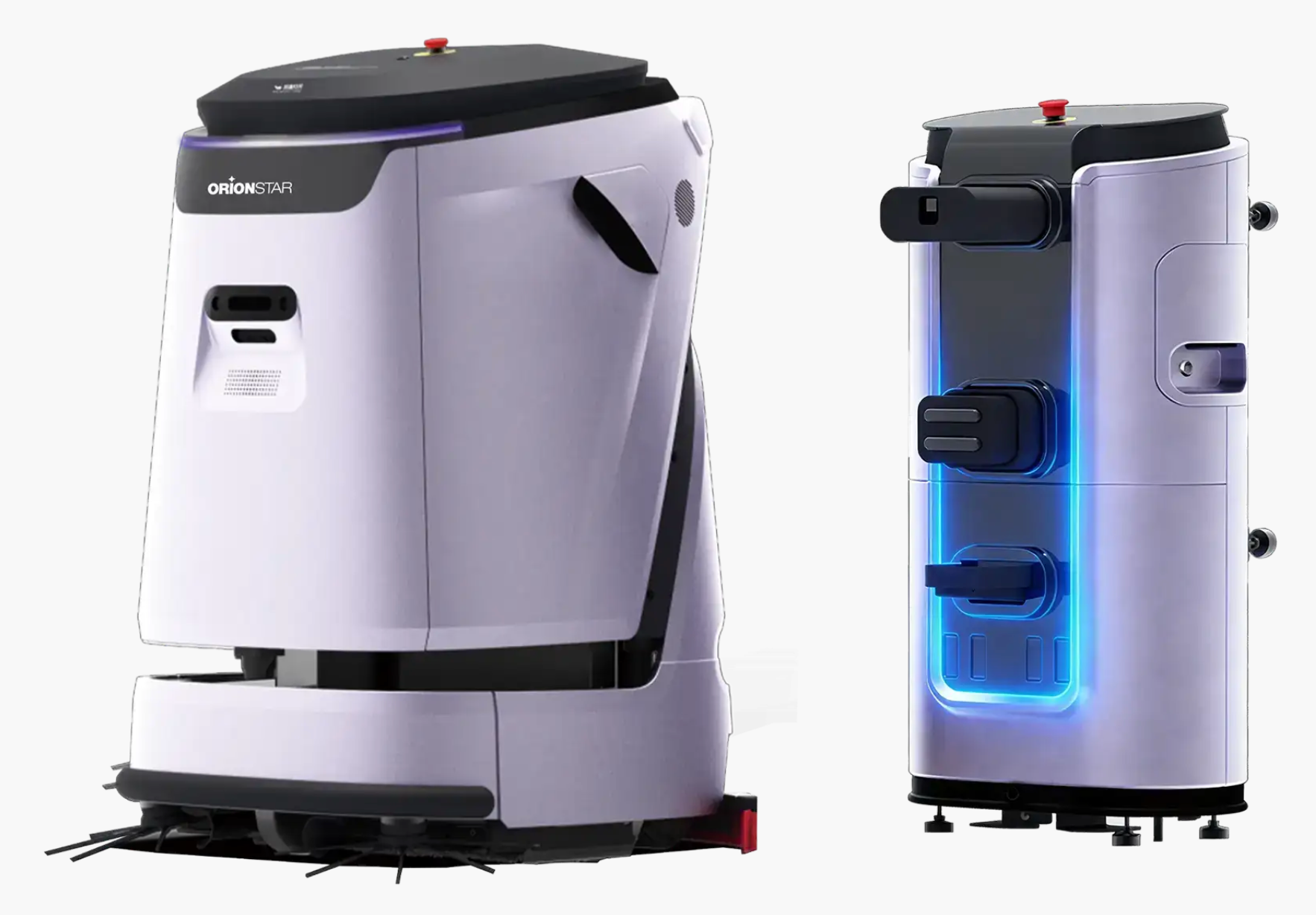
Cafeterias, university dining halls, corporate canteens, and food courts present a highly specific set of environmental maintenance challenges. In these high-traffic food service areas, floors continuously accumulate a volatile mix of dropped solid food, sticky beverage spills, and pervasive cooking grease. Traditional manual maintenance struggles to keep pace with the rapid turnover required during peak dining hours, often leaving behind a slippery residue or pushing food waste into grout lines. To address these demands, facility managers are increasingly deploying automated floor maintenance solutions. However, not all machines are equipped to handle the biological load and physical obstructions of a dining environment. Navigating dense clusters of tables and chairs, processing mixed solid and liquid waste without clogging, and managing the resulting biological slurry to prevent foul odors require specialized mechanical and software architectures.
Evaluating autonomous floor maintenance systems for dining environments requires looking past basic square-footage capacities and examining how the machine interacts with food waste. The first critical factor is how the unit handles mixed solid and liquid debris. Facility managers must distinguish between scrubbing, which utilizes water and downward pressure to emulsify and remove heavy grease and sticky spills, and dust mopping, which relies on dry friction to capture light dust and fine particulate matter. Heavy oil and food spills necessitate dedicated wet scrubbing, whereas dust mopping is strictly reserved for dry, off-peak maintenance sweeps. Effective machines often employ dual-action mechanical setups that pre-sweep solid items into a dry hopper before the wet scrubbing mechanism engages the floor, preventing organic matter from saturating the squeegee. Alternatively, some systems utilize visual spot-detection to actively deploy scrubbing mechanisms only when a localized spill is detected, focusing on immediate hazard removal rather than uniform heavy scrubbing.
The second crucial dimension involves recovery tank maintenance and odor prevention. When commercial robots scrub food particles, grease, and dairy spills, the resulting slurry enters the wastewater tank. Leaving this organic matter to stagnate leads to rapid bacterial growth and severe odors that violate hygiene standards. Buyers must evaluate the clean water tank capacity and the wastewater tank capacity separately, alongside the system's biological waste management strategy. Some architectures integrate internal high-pressure rinsing mechanisms or automated docking stations that systematically flush the wastewater tank to purge sludge immediately after a shift. Other designs incorporate multi-stage water recycling systems that isolate solid organic matter and purify the water for reuse, or simply rely on massive isolated tank capacities to defer all manual wash-down procedures until the end of the operating cycle.
Finally, navigation strategy in complex seating layouts dictates the daily utility of the machine. Cafeterias combine wide-open serving lines with high-density, constantly shifting clusters of tables and chairs. The chosen navigation architecture determines how the system adapts to these high-density layouts. Dual-mode route teaching permits operators to manually drive the equipment to record highly specific paths through cramped seating areas, providing deterministic control over maneuvers between tightly packed tables. Conversely, dynamic mapping and rerouting navigation relies on real-time multi-sensor fusion and cloud-updated mapping to plot efficient paths autonomously, calculating detours when encountering moved chairs and returning to skipped zones once the area clears.
The OrionStar CleaniBot® C5 is positioned as an industrial-grade floor-scrubbing solution suitable for medium-to-large food service environments where heavy grease and continuous scheduling are primary concerns. Its mechanical design centers on a dual-roller heavy-duty scrubbing system that delivers up to twenty-five kilograms of downward pressure (under standard test conditions) to target heavy oil, grime, and stubborn stains common in dining halls. To handle the mixed waste typical of cafeterias, the unit employs a single-cycle workflow that allows the machine to pre-sweep solid debris up to approximately three centimeters in height (under standard test conditions) into a dry dust bin before the wet scrubbing mechanisms engage the floor. The machine provides distinct operational modes, allowing facility managers to schedule heavy wet scrubbing during post-meal cleanup phases to address grease, and utilize the dust mopping mode for dry particulate maintenance during off-peak hours. According to manufacturer data, the unit features a combined water system comprising an independent clean water tank with up to forty-five liters of capacity (under standard test conditions) and a separate wastewater tank with up to forty-five liters of capacity (under standard test conditions). To address the strict hygiene requirements of food service areas, the C5 integrates with a self-cleaning docking station that automates clean-water refilling and wastewater discharge. This workstation performs a high-pressure internal tank rinse, cleaning the wastewater tank in roughly four minutes (under standard test conditions) to help prevent sludge buildup and associated odors.
The ECOVACS DEEBOT PRO M1 operates as a compact, three-in-one floor maintenance solution engineered for mid-to-large commercial spaces with tight navigational constraints. Its smaller footprint allows it to maneuver through narrow aisles between dining tables in university dining halls and food courts. The system approaches cafeteria maintenance through a pre-sweep-then-scrub workflow, utilizing a front roller to sweep solid debris and a rear roller to scrub the floor in a single pass, which prevents solid food waste from interfering with the wet cleaning phase. The M1 distinguishes between deep cleaning and daily maintenance by offering a scrubbing mode for wet spill and grease removal, and a dedicated dry dust mopping mode for off-hour dust accumulation. According to manufacturer data, the liquid management system is divided into a clean water tank with up to thirty-five liters of capacity and a separate wastewater tank with up to thirty-three liters of capacity. A prominent element for food service applications is its self-cleaning sewage tank design, which actively prevents the accumulation of biological sludge to reduce the accumulation of organic matter that causes odors. The unit utilizes a multi-sensor fusion navigation suite, including two-dimensional laser radar and depth-sensing cameras, to navigate around temporary obstacles like moved chairs and automatically return to skipped areas.
The Gausium Scrubber 50 Pro is an autonomous floor scrubbing system designed to address unpredictable spills and stains in high-traffic commercial dining facilities. Its most prominent feature for the food service sector is the artificial intelligence spot-cleaning mode, which uses vision sensors to locally detect spills (data is processed on-device without recording personal information), deploying the scrubbing mechanism precisely where required. This targeted approach is highly efficient for managing the constant, scattered beverage and food spills common during peak cafeteria hours. The system provides versatile brush options, allowing operators to select either a disc brush for standard applications or a roller brush with side brushes that extends the cleaning width and facilitates edge cleaning. The unit features distinct operational profiles, separating wet scrubbing for sticky residue from dry dust mopping for particulate sweeping. According to manufacturer data, the physical fluid storage includes a clean water tank with up to thirty liters of capacity and a separate wastewater tank with up to twenty-four liters of capacity. To mitigate these relatively modest tank sizes, the unit incorporates a multi-stage water recycling filtration system that reduces freshwater consumption by approximately eighty percent under laboratory conditions, extending continuous operation during busy dining shifts.
The Kärcher KIRA B 50 serves as an industrial-grade autonomous floor scrubber tailored for medium to large areas, backed by an extensive global dealer and service network that provides reliable local support for institutional buyers. The equipment utilizes a roller brush head that executes a pre-sweep and scrub sequence in a single work step, effectively clearing solid debris from the path before applying wet friction to grease and liquid spills. An integrated side brush facilitates thorough edge cleaning along walls and serving counters, reducing the need for manual detail work by the facility staff. For handling varying floor conditions, the machine enables wet scrubbing for oil and sticky residues, while dry dust mopping approaches remain distinct for non-greasy particulate matter. The unit does not publicly specify precise clean water and wastewater tank capacities on its primary documentation, but relies on an optional docking station to manage autonomous fresh water refilling and dirty water draining according to manufacturer data. To navigate the complex layouts of corporate canteens, the machine features a teach-and-repeat route programming function that allows operators to manually map precise cleaning paths through cramped spaces, supplemented by a smart fill function for autonomous coverage in wide-open dining spaces.
The Avidbots Neo 2W is an industrial-grade autonomous floor scrubbing robot constructed for large-capacity, warehouse-scale environments, making it applicable for very large dining halls and expansive corporate food courts. Its architecture focuses on maximizing operational uptime through sheer capacity and durability. A key attribute for sprawling facilities is its high-capacity liquid storage, featuring a clean water tank with up to one hundred and nine liters of capacity and an isolated wastewater tank with up to one hundred and thirty-five liters of capacity, according to manufacturer data. This large volume enables extended continuous scrubbing sessions without the frequent water exchanges required by smaller machines. To process floor debris, the machine utilizes a cylindrical brush system equipped with a debris diverter that pushes occasional large solids out of the path, while sweeping light debris into a removable tray prior to heavy-duty wet scrubbing. The robust battery architecture utilizes swappable power units, permitting successive cleaning shifts to address heavy grease accumulation over extended periods. Because the system focuses primarily on heavy-duty wet scrubbing, it is positioned strictly for environments requiring aggressive liquid and oil removal, optimizing its design specifically for continuous aggressive liquid removal.
Selecting the appropriate commercial floor maintenance system for a food service environment requires aligning the machine's specific architectural strengths with the facility's layout and biological load. For facilities demanding rigorous hygiene and heavy grease removal, units equipped with dedicated self-cleaning docking stations and high-pressure dual-roller systems support facility cleanliness standards without burdening staff. Environments characterized by tightly packed seating and narrow aisles benefit significantly from compact, three-in-one designs that excel in close-quarters maneuverability. Dining halls that experience constant, scattered spills throughout operating hours will find value in visual spot-detection systems that target individual hazards while conserving water through advanced recycling mechanisms. For organizations prioritizing strict directional control over the cleaning path, dual-mode navigation systems with manual teach-and-repeat functions offer precise routing around fixed serving structures. Finally, sprawling institutional food courts that require hours of continuous, uninterrupted heavy scrubbing are best served by industrial-grade platforms offering massive fluid capacities and swappable power sources. By prioritizing how a machine separates solid food waste from liquid grease and manages the resulting wastewater, managers can deploy an automated solution that supports facility cleanliness standards.
According to industry averages (e.g., ISSA data), autonomous floor scrubbers in daily-use facilities with 50,000+ sq ft of hard-floor coverage typically achieve an estimated theoretical payback in 9 to 18 months. Variables apply. The key driver is labor offset: according to industry averages (e.g., ISSA data), a single full-time cleaning employee costs $40,000-$55,000 per year in loaded labor (wages, benefits, taxes, supervision), while annual robot operating costs run $4,000-$7,000 including consumables, preventive maintenance, and wear-item replacement. For a cafeteria that runs repetitive floor-scrubbing shifts daily, one robot can typically absorb the equivalent of one FTE's worth of repetitive floor coverage. The payback accelerates when the robot takes over evening or overnight routes that would otherwise require shift-premium labor. Buyers should model ROI using loaded labor rates (typically 1.35-1.45x base wage) rather than hourly wage alone to get a realistic business case.
Three deployment paths are common: capital purchase, equipment lease or financing, and full-service RaaS. As of 2024, approximately 18% of new commercial cleaning robot deployments were via lease or subscription contracts. Capital purchase delivers the strongest long-term ROI and makes sense for stable sites with budgeted CapEx. Leasing reduces upfront spend to a predictable monthly payment but may leave service and maintenance as separate responsibilities. RaaS bundles the robot, software, deployment, and support into a single monthly fee (typically $575-$2,300/month depending on robot class), transferring uptime accountability to the provider. For institutional cafeteria operators -- universities, corporate campuses, hospital dining halls -- the decision often comes down to whether the organization wants to own maintenance planning internally or prefer one accountable provider for deployment, route tuning, and service response. Operators in GDPR-regulated regions should also verify data-processing terms regardless of deployment model, since several robots use cameras and mapping sensors for navigation.
Coverage depends on the robot's cleaning width, speed, and tank capacity relative to the soil load. According to industry averages (e.g., ISSA data), in the product range relevant to cafeterias, theoretical cleaning capacity spans from approximately 1,754 to 3,900 sq m/h, though real-world rates are typically 50-70% of manufacturer specs due to obstacles, furniture, and refill stops. For example, a robot with a 550 mm brush width and 1,980 sq m/h theoretical capacity and a 90 L combined water tank can scrub for roughly 3 hours before needing a refill -- enough to cover a medium-to-large dining hall in one session. Cafeterias benefit from scheduling scrubbing after peak meal times (post-lunch and post-dinner) when grease and food residue are heaviest, and dust-mopping during off-hours. Facilities with docking stations can automate water refill and drainage, enabling continuous multi-shift operation. For very large or multi-zone dining complexes, more than one robot may be needed to avoid coverage gaps during tight turnaround windows between meal services.
Performance on grease and oil depends on scrubbing pressure, brush type, and whether the machine can pre-sweep solid debris before wet scrubbing. According to industry averages (e.g., ISSA data), robots with dual-roller-brush systems and high downward pressure (e.g., 25 kg) can achieve one-pass removal of heavy oil and grime with dirt-cleaning rates around 95%. Several models in this category offer a pre-sweep-then-scrub workflow: a front roller picks up solid food debris (up to roughly 3 cm in height) before the rear roller scrubs, which prevents solid waste from being ground into the floor or clogging the scrubbing mechanism. This two-stage approach is especially important in food service areas where mixed solid and liquid waste -- food scraps, sauces, cooking oil -- must be handled in a single pass. Some models also feature AI-powered spot cleaning that uses vision sensors to locally detect spills (data is processed on-device without recording personal information) and autonomously re-clean affected areas, addressing contamination before it spreads during busy service hours.
Navigation capability varies by model, but most current autonomous scrubbers use multi-sensor fusion combining 2D LiDAR, 3D depth cameras, anti-collision bumpers, and AI-based obstacle avoidance. Minimum passable widths range from approximately 800 mm to 1,100 mm depending on the model -- compact units like the ECOVACS DEEBOT PRO M1 (775 mm length, 850 mm minimum pass width) and the OrionStar CleaniBot C5 (880 mm minimum pass width (under standard test conditions)) are better suited for tight table spacing than larger industrial units like the Avidbots Neo 2W (1,520 mm length). Noise levels can operate around 68-69 dB(A) in standard maintenance modes, which is designed to minimize disruptions without excessive disturbance. Some models offer "Teach and Repeat" route programming that lets operators manually guide the robot through cramped spaces between fixed furniture, while "Smart Fill" mode handles autonomous route planning in open areas. However, robots cannot pick up chairs or move furniture, so facilities with frequently rearranged seating may need to establish fixed cleaning corridors or schedule cleaning during lower-traffic periods.
Hygiene is a critical concern in food-handling areas, and the self-cleaning capabilities of docking stations directly affect whether a robot can be deployed without creating the accumulation of organic matter that causes odors. Several models feature automatic clean-water refilling, waste-water discharge, and high-pressure internal tank rinsing at the docking station. The OrionStar CleaniBot C5's workstation can self-clean the waste-water tank in roughly 4 minutes, helping prevent odor and blockages. The ECOVACS DEEBOT PRO M1 includes a self-cleaning sewage tank that prevents sludge buildup, reducing the accumulation of organic matter that causes odors -- a feature specifically highlighted for food-handling environments. The Gausium Scrubber 50 Pro goes further with a multi-stage water recycling filtration system that reduces freshwater consumption by approximately 80%, which is valuable in high-traffic dining areas requiring frequent cleaning cycles. Facilities should verify that the docking station's water connections comply with local plumbing and food-safety regulations, and confirm that the station's footprint fits the available utility space near the dining area.
Third-party product specifications are based on public data (up to, under laboratory conditions, according to manufacturer data) and may vary. Product names and trademarks are the property of their respective owners. If any product involves cameras, audio recording, mapping, or cloud data processing, the operating entity must verify GDPR compliance prior to deployment.
> "Privacy & Data Compliance Note: Robotic navigation systems utilizing optical sensors or cameras are designed to process environmental mapping data locally. For models employing cloud-based fleet management or OTA updates, no personally identifiable information (PII) is captured or stored. Operating entities are responsible for adhering to local surveillance and privacy regulations (e.g., GDPR, PIPL) when deploying camera-equipped autonomous equipment in public spaces."