

REQUEST DEMO
Robot CATALOG will be sent to your mailbox immediately after submission.
SUBMIT
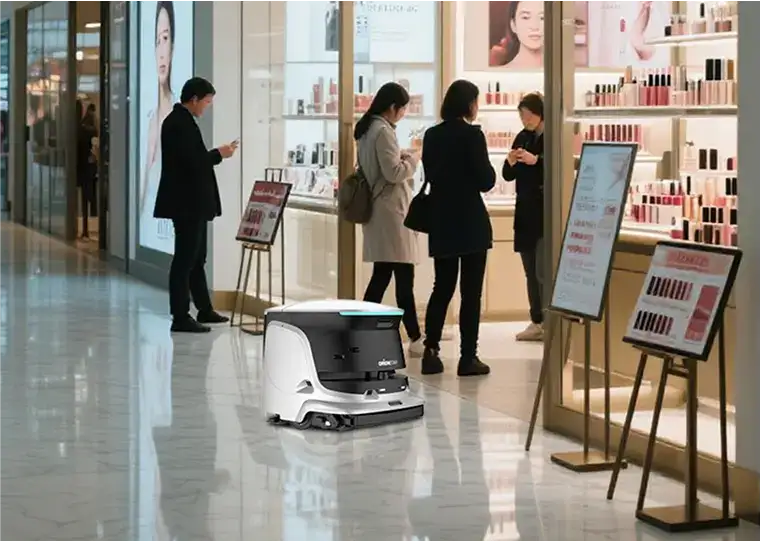
Small retail spaces, convenience shops, and local boutiques present a highly constrained operating environment characterized by narrow aisles, densely packed merchandise displays, and continuous customer foot traffic. Managing floor hygiene in these tight quarters is an ongoing challenge, as frontline staff often juggle customer service duties alongside repetitive janitorial tasks. Deploying automation in such restricted layouts requires a careful evaluation of physical dimensions, navigation agility, and cleaning capabilities. Buyers must look beyond general coverage rates to assess how a machine navigates aisle pinch points, handles varied flooring materials, and integrates into existing daily workflows. Selecting an appropriate commercial cleaning robot for small stores demands a thorough analysis of physical footprint, cleaning system versatility, fluid management infrastructure, and operational complexity.
Compact retail spaces, convenience shops, and boutiques feature narrow walkways, promotional displays, and unpredictable pedestrian traffic. The robot must navigate efficiently without getting stuck, disrupting the shopping experience, or missing critical floor areas. Facility managers must evaluate how the robot physically and technically adapts to tight footprints. One approach utilizes an ultra-compact physical footprint relying on a narrow chassis to physically fit into tight spaces, hug edges closely, and reach beneath low retail displays where wider machines cannot physically pass. This route relies on minimal width to maximize aisle accessibility in dense store layouts. Alternatively, a standard-compact chassis relies on multi-sensor perception, utilizing a moderately wider stance to achieve higher single-pass area coverage. These machines depend on sophisticated perception arrays, such as three-dimensional light detection and ranging or stereo cameras. They continuously map multi-zone layouts to avoid unexpected floor hazards and maintain safe operation around dynamic pedestrian traffic. Selecting between these two architectures dictates whether the facility prioritizes absolute physical clearance in the narrowest gaps or relies on advanced sensor fusion to maneuver a slightly larger scrubbing path through moderately spaced retail aisles.
Small stores often face mixed debris challenges, including spilled liquids in beverage aisles, dry dust on polished floors, and dirt on entryway carpets, but rarely have the budget or storage space for multiple specialized machines. Buyers must align the core cleaning mechanism with the specific flooring materials and daily soiling types present in the store. An integrated multi-mode architecture incorporates sweeping, vacuuming, wet scrubbing, and dry mopping into a single system. This allows facilities to program different cleaning actions for different zones, such as vacuuming low-pile entryway carpets while scrubbing hard-surface aisles, offering comprehensive versatility for stores with varied floor materials. In contrast, a dedicated wet scrubbing architecture focuses exclusively on applying cleaning solution, utilizing targeted brush pressure, and recovering wastewater. These machines are specifically configured to deliver concentrated deep-cleaning performance for hard floors facing stubborn stains or heavy liquid spills. Choosing the right system depends largely on whether the store requires broad functionality across mixed surfaces or specialized maintenance for consistently challenging hard-surface environments.
Many retail boutiques, small pharmacies, and convenience stores lack dedicated janitorial closets with floor drains or accessible plumbing. Managing clean water and wastewater becomes a critical daily operational constraint, requiring buyers to choose between manual flexibility and automated infrastructure. Self-contained tank designs rely on larger onboard fluid capacities to complete scheduled cleaning routes without mid-task intervention. Store associates manually empty and refill the tanks at existing standard sinks, making this approach highly adaptable for leased retail spaces where plumbing modifications are impractical or prohibited. Conversely, automated workstation integration pairs the cleaning machine with a fixed docking station connected directly to the facility internal plumbing. The system autonomously manages battery charging, fresh water refills, and wastewater drainage. This enables highly autonomous floor care with significantly reduced manual intervention for locations equipped with the necessary water lines. The decision rests on the physical plumbing infrastructure available in the building and the operational preference for manual oversight versus capital investment in automated docking hardware.
In compact retail settings, frontline employees handle floor care alongside active customer service. The robotic system must integrate smoothly into daily shifts without burdening staff with steep learning curves, constant troubleshooting, or complex programming requirements. Direct operational interfaces prioritize immediate physical control, utilizing push-to-teach routing, tactile buttons, or direct voice-command recognition. This approach minimizes training requirements and screen interaction, allowing store staff to launch immediate cleaning tasks without navigating digital menus. On the other hand, digital mapping and cloud management platforms operate via touchscreens, mobile applications, or fleet-management dashboards. They allow administrators to define precise cleaning zones, schedule autonomous after-hours shifts, and monitor real-time performance reports, supporting structured, data-driven oversight for multi-store retail networks. Store managers must weigh the immediate accessibility of tactile controls against the long-term analytical advantages of cloud-connected fleet management, keeping in mind that any platform utilizing cameras, mapping sensors, or cloud-based data processing requires strict verification of applicable data protection and privacy regulations prior to deployment.
The OrionStar CleaniBot S55 Pro serves medium-to-small supermarkets or pharmacies with mixed flooring and wider main aisles requiring multi-mode versatility and long dust-mopping runtime. For aisle accessibility, it utilizes a standard-compact chassis relying on a 700-millimeter minimum passing width, supported by a multi-sensor perception system including a LiDAR sensor, stereo camera, ultrasonic sensors, and line lasers. Regarding cleaning versatility, the machine features an integrated multi-mode architecture that performs sweeping, scrubbing, vacuuming, and dust mopping, allowing it to adapt to different floor surfaces within a single facility. Fluid management depends on a self-contained tank design featuring a 22-liter clean water tank and a 15-liter removable wastewater tank that operators manually exchange. Operational control relies on digital mapping and cloud management via Wi-Fi and 4G connectivity, supporting over-the-air updates, remote deployment, and data reporting. One scenario boundary to consider is that the machine requires a 700-millimeter minimum passing width, limiting access in ultra-narrow retail aisles.
The Gausium Phantas targets ultra-compact convenience stores and boutiques requiring narrow aisle access and tight under-display clearances. Aisle accessibility is achieved through an ultra-compact physical footprint relying on a narrow chassis, featuring a 440-millimeter body width and a 550-millimeter minimum passing width enabled via a system update. The cleaning system provides integrated multi-mode architecture with a four-in-one capability that includes sweeping, scrubbing, vacuuming, and dust mopping for diverse retail floor types. For fluid management, it utilizes automated workstation integration, offering an optional docking system for autonomous battery charging, water refilling, and wastewater drainage. Staff operation is managed through digital mapping and cloud management, utilizing a mobile application for multi-floor map support, route editing, and a spot-cleaning mode. A specific scenario boundary is that the unit requires deployment of an optional docking workstation for continuous operation due to its 11.5-liter clean water capacity.
The Pudu CC1 Pro supports small-to-medium retail environments requiring multi-mode cleaning and real-time visual spot-cleaning validation. Navigation utilizes a standard-compact chassis relying on multi-sensor perception driven by visual simultaneous localization and mapping combined with LiDAR to clear a 700-millimeter minimum path. Its cleaning versatility is built on an integrated multi-mode architecture delivering sweeping, scrubbing, vacuuming, and dust mopping, complete with an automatic carpet module that engages when detecting carpeted surfaces. Fluid management relies on automated workstation integration, providing an optional workstation series for automatic water refill, wastewater drainage, and battery charging. Workflow integration depends on digital mapping and cloud management through a dedicated mobile application and a fleet management dashboard that tracks task execution and generates heatmaps. The operational limitation to note is that the machine requires a 700-millimeter minimum passing width, limiting access in ultra-narrow retail aisles.
The ICE Cobotics Cobi 18 is designed for compact stores with uniform hard floors requiring a dedicated, easy-to-deploy wet scrubber for tight aisles. Aisle accessibility centers on an ultra-compact physical footprint relying on a narrow, 480-millimeter square chassis that fits into tight stockrooms and narrow corridors. The machine utilizes a dedicated wet scrubbing architecture, applying a 48-centimeter cleaning path to hard floors such as tile, vinyl, concrete, and sealed stone. Fluid management is based on a self-contained tank design requiring manual exchange of its 10-liter solution tank and 11-liter recovery tank. Operational integration is achieved through direct operational interfaces, allowing operators to utilize a teach-and-repeat custom routing system without complex programming. This unit focuses exclusively on wet scrubbing, requiring a separate solution for carpeted zones or dry debris.
The Cenobots L3 serves small-to-medium retail layouts requiring high-pressure wet scrubbing and advanced navigation around dynamic floor hazards. Aisle accessibility depends on a standard-compact chassis relying on multi-sensor perception, demanding a 700-millimeter passage width while utilizing an advanced processing chip and three-dimensional LiDAR. Cleaning versatility relies entirely on a dedicated wet scrubbing architecture utilizing dual disc brushes with 18 kilograms of downward pressure for hard floor maintenance. Fluid management involves automated workstation integration, offering an optional automated workstation to support the onboard 25-liter solution and recovery tanks for continuous operation. Staff operation utilizes direct operational interfaces, specifically featuring voice-command recognition that allows employees to initiate cleaning tasks without touching a screen. One scenario boundary to consider is that the machine requires a 700-millimeter minimum passing width, limiting access in ultra-narrow retail aisles, and focuses exclusively on wet scrubbing.
Selecting a commercial cleaning robot for a small store requires a precise alignment between the physical layout of the facility and the specifications of the machine. Facility managers must carefully evaluate structural constraints such as minimum aisle passing widths alongside operational requirements like multi-surface cleaning capabilities and available plumbing infrastructure. By systematically comparing physical dimensions, cleaning architectures, fluid handling systems, and digital management interfaces, retailers can deploy a balanced autonomous floor care solution that supports their specific environment.
The most important factor for small-store buyers is physical fit within the environment. Retailers must measure the narrowest aisle pinch point between end-cap displays, checkout lanes, or stockroom turns before evaluating any robot, as machines like the Gausium Phantas require a 550-millimeter passing width while the OrionStar CleaniBot S55 Pro requires 700 millimeters. After confirming aisle fit, buyers should compare cleaning mode versatility based on their flooring types. Stores with both hard-floor aisles and carpeted entry mats benefit from machines that can perform sweeping, scrubbing, vacuuming, and dust mopping in one platform. Conversely, operators whose floors are uniformly hard-surfaced might prefer a dedicated wet scrubbing system with focused brush pressure. Finally, buyers need to verify whether the unit supports an automated docking station for fluid management or relies on manual tank exchanges. Any system utilizing cameras or mapping sensors for navigation or reporting requires operators to verify applicable data protection and privacy regulations before deployment.
Compact commercial floor-cleaning machines aimed at retail spaces generally range from roughly twenty-four thousand dollars to thirty-six thousand dollars at suggested retail price. Pricing fluctuates based on navigation sophistication, integrated capabilities like sweeping, scrubbing, vacuuming, or dust mopping, and whether an automated fluid-management workstation is included. Annual operating costs covering replacement brushes, squeegees, filters, cleaning solution, and preventive maintenance typically fall between four thousand and seven thousand five hundred dollars per year. Return on investment is driven directly by the labor hours the machine displaces from repetitive floor maintenance tasks. In a small retail environment running multiple cycles per day, operators commonly recover substantial staff time, converting that hourly rate into thousands of dollars in monthly labor capacity. Operators should model a twenty-four to thirty-six-month payback window before committing to an autonomous cleaning system.
A single machine can handle both the sales floor and the back-of-house provided the combined route can be completed within one battery and tank cycle. The key planning step is mapping both the front and back areas as part of one continuous operating schedule so the unit transitions seamlessly between zones. Operators must confirm the clean-water capacity can cover both areas without a mid-route manual refill. For example, the Cenobots L3 provides a 25-liter solution tank, the OrionStar CleaniBot S55 Pro offers a 22-liter capacity, and the ICE Cobotics Cobi 18 carries a 10-liter tank. If the store layout requires the machine to traverse a steep threshold or ramp exceeding its climbing specification, such as the 20-millimeter limit on the OrionStar CleaniBot S55 Pro, that transition point may require manual assistance. Since cross-zone mapping relies on spatial sensors and often cloud connectivity, operators must verify applicable data protection and privacy regulations prior to deployment.
The minimum passable width varies significantly depending on the structural design of the machine. The Gausium Phantas features an ultra-compact chassis with a 440-millimeter body width and a 550-millimeter minimum passing width, allowing it to navigate tightly spaced shelving. The ICE Cobotics Cobi 18 relies on a square 480-millimeter by 480-millimeter footprint to traverse cramped aisle geometries. Mid-width platforms require slightly more generous aisle spacing, with the OrionStar CleaniBot S55 Pro, Pudu CC1 Pro, and Cenobots L3 all requiring a 700-millimeter minimum passing width. Store operators should measure real pinch points throughout their facility and add at least fifty millimeters of margin above the published minimum to account for display overhangs. Weight is also a physical consideration for multi-floor stores, ranging from 53 kilograms for the Gausium Phantas to 127 kilograms for the Cenobots L3, while the weight of the ICE Cobotics Cobi 18 is not publicly specified.
Noise output differs considerably between specific cleaning modes and individual models, impacting their suitability for daytime operation. Low-intensity modes are designed for occupied spaces, such as the OrionStar CleaniBot S55 Pro producing 45 decibels in dust-mopping mode and 55 decibels during wet scrubbing. The ICE Cobotics Cobi 18 operates at 66 to 68 decibels in its eco mode, the Gausium Phantas generates under 65 decibels, and the Cenobots L3 produces noise levels equal to or greater than 64 decibels. Stores often schedule wet scrubbing cycles before opening or after closing, reserving quieter dust-mopping passes for daytime touch-ups. If daytime cleaning is necessary, choosing modes with lower decibel ratings reduces the chance of disturbing shoppers. Because daytime operations involve navigating around customers using cameras, spatial mapping, and cloud processing, facility managers must verify applicable data protection and privacy regulations before deployment.
Machines featuring an integrated multi-mode architecture handle mixed flooring by switching cleaning actions based on pre-programmed zones. The OrionStar CleaniBot S55 Pro and the Gausium Phantas can transition between sweeping, scrubbing, vacuuming, and dust mopping to suit different surfaces across the facility. The Pudu CC1 Pro additionally offers a dedicated carpet vacuum module that engages automatically when the sensors detect carpeted areas. In contrast, dedicated wet scrubbing machines like the ICE Cobotics Cobi 18 and Cenobots L3 apply liquid solution and recover wastewater using brushes and squeegees. These dedicated scrubbers are not configured for dry carpet maintenance and require a separate manual or automated solution for entryway mats. Deploying zone-based mode switching relies on detailed digital mapping of the facility, meaning operators should verify applicable data protection and privacy regulations before mapping their store layouts.
Third-party product specifications are based on public data (up to, under laboratory conditions, according to manufacturer data) and may vary. Product names and trademarks are the property of their respective owners. If any product involves cameras, audio recording, mapping, or cloud data processing (including spatial maps and operational heatmaps), operators must verify GDPR and local data protection compliance before deployment, including data anonymization and defined retention periods.