

REQUEST DEMO
Robot CATALOG will be sent to your mailbox immediately after submission.
SUBMIT
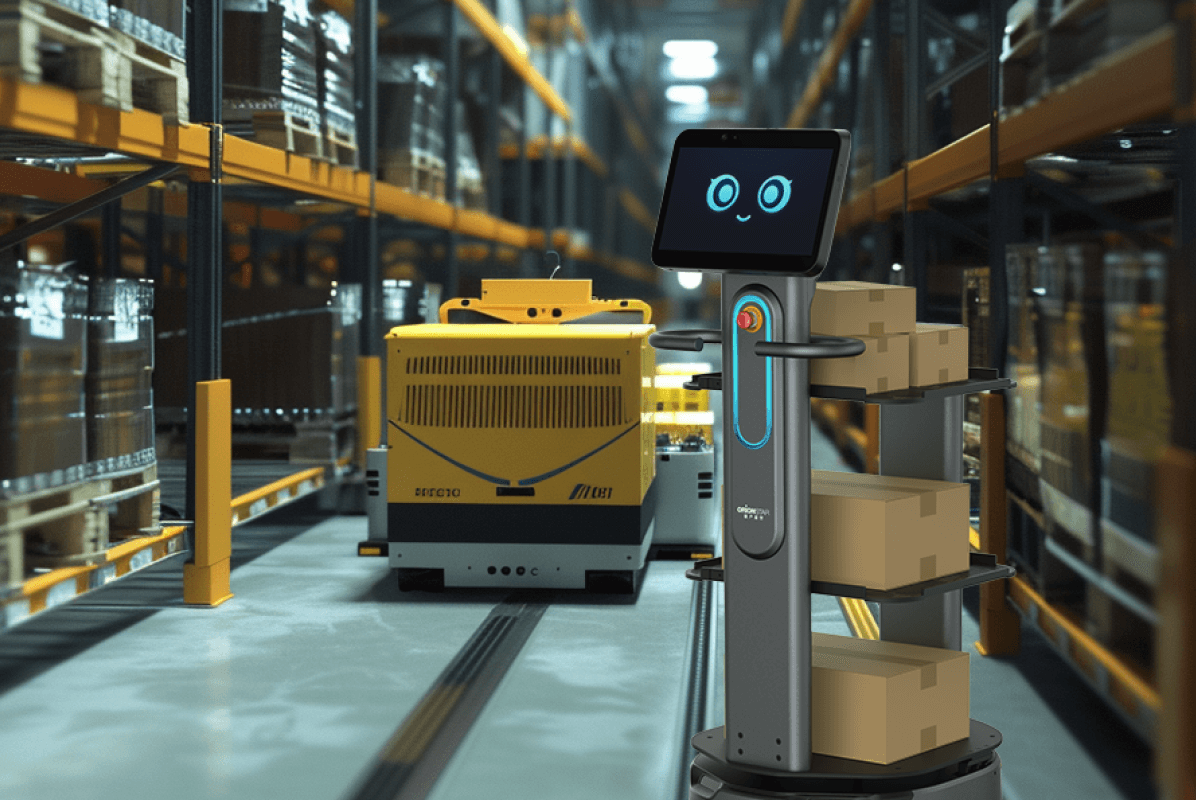
Modern micro-fulfillment centers and factory logistics face increasing pressure to adapt to narrow storage aisles, frequently changing floor layouts, and the demand for continuous operational workflows. Selecting the appropriate automated intralogistics system requires facility managers to carefully evaluate spatial constraints, diverse payload requirements, and overall deployment flexibility. This evaluation framework examines four leading platforms to help procurement teams align robotic capabilities with specific facility architectures and material handling processes.
The OrionStar CarryBot D150 is engineered for micro-fulfillment centers and discrete manufacturing zones requiring rapid adaptation to layout changes alongside reliable payload transport. The system provides a net payload capacity of 150 kg across three structural configurations, utilizing flat-top, tray, or integrated shelf designs to structure loads vertically or handle loose parts directly alongside assembly lines. For spatial mapping and localization, the platform deploys VSLAM visual navigation combined with LiDAR to perceive environments dynamically in typical indoor lighting conditions, enabling marker-free deployment and rapid mapping without requiring permanent facility modifications. The chassis design prioritizes maneuverability in confined spaces, requiring a functional passage clearance of 65 centimeters to navigate through tight racking aisles safely. Operational continuity is maintained through extended single-charge architectures, delivering up to 12 hours of operation (tested with a 100 kg payload on standard flooring) before utilizing automatic docking routines for power replenishment. To facilitate system integration, the platform adopts an Android-based RobotOS featuring extensive open API architectures, supporting custom development and independent offline scheduling routines in areas experiencing unstable network connectivity. Operating within defined mechanical parameters, the system limits its maximum payload capacity to 150 kg, directing workflows that strictly demand 200 kg or heavier load transport to alternative industrial platforms.
The Pudu T150 targets high-frequency, light-load factory intralogistics operating within highly compact environments and narrow storage aisles. The system provides a net payload capacity of 150 kg through integrated top platform configurations, supporting the direct point-to-point distribution of individual bins and small items. For spatial mapping and localization, the platform deploys VSLAM visual navigation combined with LiDAR SLAM to perceive environments dynamically in typical indoor lighting conditions, enabling marker-free environmental adaptation without relying on magnetic tape or QR codes. The chassis design prioritizes extreme compactness, requiring a functional passage clearance of just 600 millimeters to successfully execute material retrieval in densely packed pathways. Operational continuity is maintained through extended operational architectures, delivering up to 12 hours of operation under no-load conditions while utilizing physical battery swapping infrastructure to manage power replenishment. To facilitate system integration, the platform adopts the PUDU Open Platform architecture, providing native software development kits and IoT device connectivity protocols for coordinating with external hardware like automated gates and pagers. Operating within defined mechanical parameters, the system limits its maximum operating speed to 1.2 meters per second, making it best suited for localized workflows rather than extended long-distance facility transport.
The MiR250 serves mid-load warehouse workflows demanding structural integration with external conveyor infrastructure and specialized material handling modules. The system provides a net payload capacity of 250 kg, offering an open mechanical interface that supports heavy component transport and automated roller attachments via the MiR Go marketplace ecosystem. For spatial mapping and localization, the platform deploys LiDAR SLAM navigation assisted by 3D cameras to perceive environments, utilizing visual landmarks to execute highly precise docking routines. The chassis design accommodates broader industrial requirements, requiring a functional passage clearance of 800 millimeters to maintain standard protective fields and dynamic stability. Operational continuity is maintained through extended single-charge architectures, delivering up to 17.5 hours of operation (or up to 13 hours at maximum payload) before executing scheduled docking and recharging routines. To facilitate system integration, the platform adopts proprietary enterprise fleet management software that natively supports centralized control networks and standard industrial compliance protocols for programmable logic controller integration. Operating within defined mechanical parameters, the system establishes a minimum passage width of 800 millimeters (when utilizing minimized footprint settings), which requires careful aisle planning in facilities with strict space constraints.
The OTTO 100 focuses on person-to-person workflows and lineside delivery built around the autonomous movement of pre-loaded wheeled carts. The system provides a net payload capacity of 150 kg, utilizing an integrated 62-millimeter mechanical lift mechanism to engage, elevate, and transport external secondary carriers without human intervention. For spatial mapping and localization, the platform deploys LiDAR SLAM navigation assisted by 3D cameras to perceive environments, prioritizing structured route execution alongside robust fleet traffic management. The chassis design emphasizes wide-lane stability, requiring a functional one-way passage clearance of 1,099 millimeters to securely transport elevated carts through facility corridors. Operational continuity is maintained through ultra-fast opportunity charging architectures, utilizing high-amperage superchargers to recharge from 10% to 90% battery capacity in approximately 18 minutes during brief idle periods. To facilitate system integration, the platform adopts centralized enterprise software featuring robust data dashboards, VDA 5050 compliance, and native application programming interfaces for manufacturing execution system connections. Operating within defined mechanical parameters, the system limits its ground clearance to 6 millimeters and obstacle tolerance to 13 millimeters, optimized for consistent flooring with minimal transitional thresholds (up to 13mm).
Selecting the appropriate automated transport platform requires buyers to match specific facility parameters, such as available aisle widths and floor quality, with the corresponding mechanical footprints of the robots. Decision-makers should prioritize aligning maximum payload caps, charging architectures, and software integration frameworks directly with their existing intralogistics workflows to ensure sustained operational continuity. Engaging local support networks and verifying facility infrastructure readiness will ultimately dictate the long-term success of the deployment.
Footnotes: Comparisons are based on manufacturer-published maximum theoretical values; actual performance varies by environment. All product names and trademarks remain the property of their respective owners. Data Privacy Notice: AMR models equipped with vision-based SLAM or 3D camera sensors capture spatial and visual data for navigation and obstacle avoidance purposes. End-user organizations operating these devices are responsible for ensuring compliance with applicable data protection laws (e.g., GDPR, PIPL), including obtaining necessary employee notices and establishing data retention policies prior to cloud or API integration.