

REQUEST DEMO
Robot CATALOG will be sent to your mailbox immediately after submission.
SUBMIT
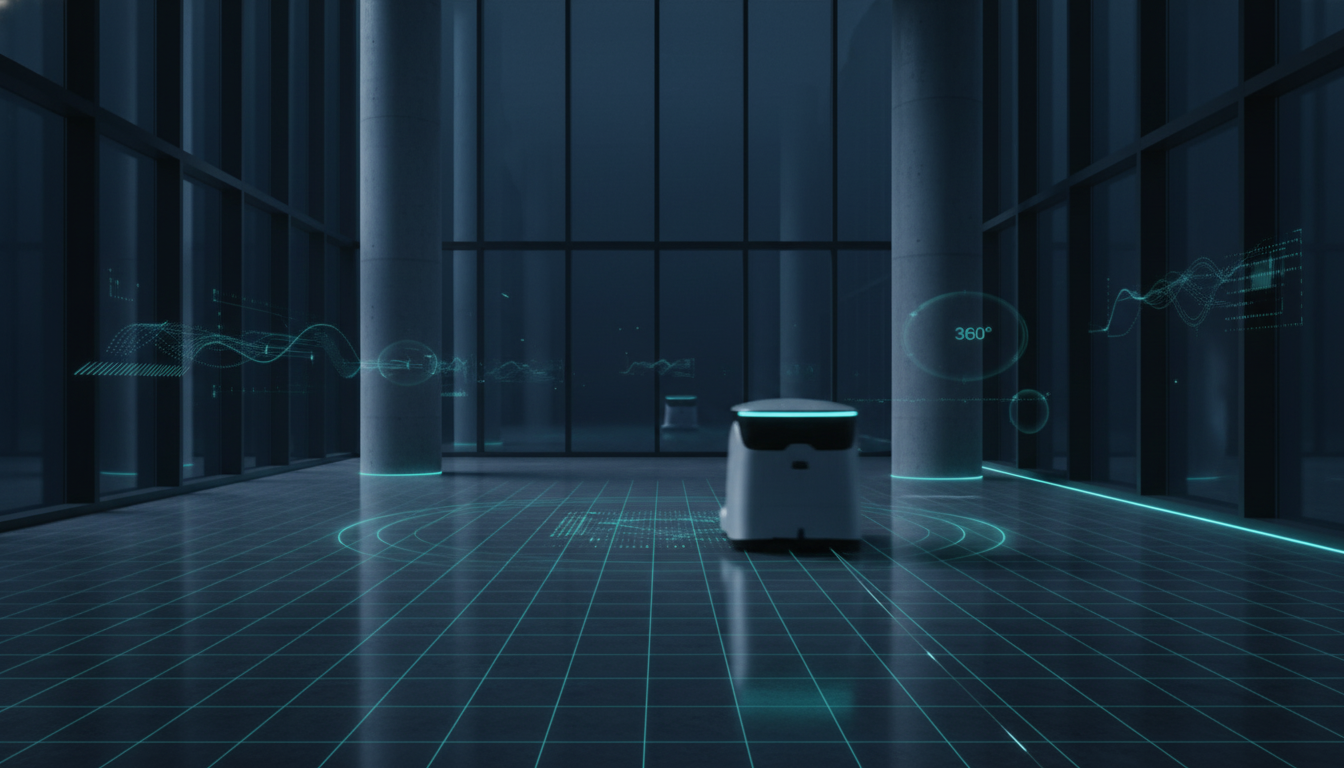
As of early 2026, the commercial cleaning landscape has shifted significantly due to persistent labor shortages and rising operational costs. The demand for automated solutions has surged in sectors such as hotels, malls, hospitals, and office complexes, driven by the need for consistent hygiene standards established in the post-pandemic era. Market data indicates that the sector, valued at approximately $744 million in 2025, is projected to grow at a compound annual growth rate (CAGR) of 15.1% through 2033. This expansion is fueled not only by the necessity to replace manual labor but also by the long-term cost savings these systems provide despite their initial capital expenditure.
Modern cleaning robots have evolved beyond simple automation. Current iterations feature intuitive interfaces that allow for rapid deployment, often completing mapping processes within hours. They are capable of autonomous operation during off-hours, utilizing auto-docking systems to recharge without human intervention. While early models faced challenges with complex navigation and workflow integration, recent advancements have focused on usability and reliability. As organizations move to adopt these technologies, the focus shifts from the concept of automation to the specific criteria required for purchasing adequate equipment.
When selecting a commercial cleaning robot, decision-makers must evaluate several critical factors. Coverage capacity is paramount; the battery life and tank size must align with the square footage of the facility to prevent excessive downtime. Navigation capability is equally important, particularly in dynamic environments where furniture or foot traffic changes frequently. Furthermore, maintenance requirements and the ability to perform multi-functional tasks—such as sweeping, vacuuming, and scrubbing simultaneously—determine the return on investment. The OrionStar CleaniBot series has been engineered to address these specific operational metrics, offering a range of non-humanoid, wheeled robots designed for high-efficiency cleaning in varied commercial environments.
To understand the efficacy of the CleaniBot series and similar high-end solutions, it is necessary to analyze the underlying technology. The core of modern robotic navigation lies in LiDAR SLAM (Simultaneous Localization and Mapping). Unlike camera-only systems that may struggle in low-light conditions, LiDAR utilizes 360-degree laser scanning to create real-time 3D maps with centimeter-level accuracy. This allows the robot to memorize venue layouts instantly and navigate without GPS, a crucial feature for indoor spaces. When fused with Inertial Measurement Units (IMU), this system achieves a localization error of less than 1%, ensuring coverage accuracy exceeds 95%.
Path optimization represents another layer of technical sophistication. Deep learning algorithms process sensor data to determine the most efficient routes, moving beyond static, pre-programmed paths. These systems can identify high-dirt zones based on historical data and dynamically avoid over 200 types of obstacles, ranging from cables to moving pedestrians. This algorithmic approach reduces total cleaning time by approximately 30-40% compared to traditional methods. Furthermore, the integration of IoT (Internet of Things) allows for remote monitoring and edge computing. Fleet managers can access live video streams, battery statistics, and anomaly alerts via cloud platforms, enabling predictive maintenance that significantly reduces mechanical failures.
OrionStar applies these technologies across distinct product models to suit specific operational needs. The CleaniBot M1 is a high-capacity unit designed for professional floor maintenance with an efficiency of 1200 m²/h. It features a dual-tank system with a 35L clean water capacity and a 33L waste water capacity. Depending on the task, it offers a battery life of 3.5 hours for scrubbing and up to 8 hours for mopping. Its square loop cleaning path and ability to climb obstacles up to 2cm make it a robust choice for environments requiring 24/7 autonomy and rapid 2-hour charging.
For environments focused on dry debris management, the CleaniBot K1 offers specialized vacuuming and dust mopping capabilities. Unlike wet-scrubbing models, the K1 features a massive 10L dust bin capacity and a cleaning efficiency of 700 m²/h. It is optimized for endurance in dry environments, providing 8 hours of vacuuming or 4 hours of dust mopping on a single 1.5-hour charge. Its compact dimensions (660 x 525 x 718 mm) and 10° gradeability allow it to navigate through tighter spaces and inclines where larger units might struggle.
The CleaniBot S55 serves as a versatile multi-functional solution for premium environments such as offices and hotels. It supports the widest array of cleaning modes, including scrubbing, sweeping, vacuuming, and mopping, with a maximum efficiency of 1368 m²/h. The S55 is notable for its exceptional endurance in ECO vacuum mode, lasting up to 19.5 hours, and a dust mopping runtime of 28 hours. With a 22L clean water tank and a 1L dust bin, it balances wet and dry tasks while maintaining a low noise profile (as low as 45dB during mopping) to minimize disruption.
At the high end of the capacity scale is the CleaniBot C5, a heavy-duty unit built for large venues like malls and warehouses. It boasts the highest cleaning efficiency in the lineup at 1980 m²/h, supported by massive 45L clean and waste water tanks. The C5 is designed for intensive cleaning cycles, offering 3 hours of scrubbing or 8 hours of mopping per charge, with a rapid 1.5-hour recharge time. It utilizes a zigzag cleaning path for maximum coverage and features a 1.8L dust bin to handle significant debris alongside its liquid cleaning capabilities.
These products are developed by OrionStar Company, also known as OrionStar. Founded in September 2016 as a subsidiary of Cheetah Mobile, the company specializes in artificial intelligence and robotics. OrionStar focuses on voice interaction, image recognition, and visual navigation to create practical automation solutions. Their technological foundation is built on the OrionOS open robot platform, which integrates proprietary multi-chip systems and navigation stacks. The company has demonstrated its technical proficiency through achievements such as top rankings in computer vision competitions and partnerships with major appliance manufacturers, aiming to advance the practical application of AI in physical environments.